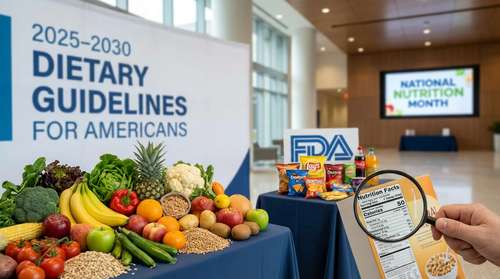
The American dinner plate is undergoing its most radical transformation in decades. Following the highly anticipated release of the 2025-2030 Dietary Guidelines for Americans, federal health agencies are explicitly taking aim at the country's chronic disease epidemic. For the first time in history, the government is advising the public to drastically reduce their intake of highly processed, packaged goods in favor of nutrient-dense, whole ingredients. The shift represents a massive departure from decades of industry-influenced food pyramids, signaling a new era where public health takes precedence over corporate food interests.
How the 2025-2030 Dietary Guidelines for Americans Target Factory-Made Foods
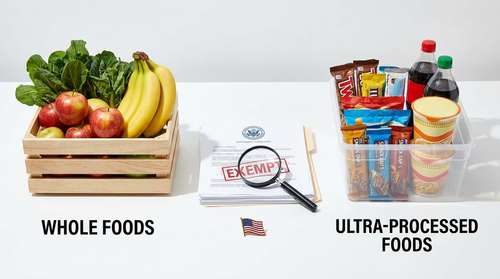
For years, public health advocates have sounded the alarm about the center aisles of the grocery store, pointing to alarming statistics showing that 55% of the average American's daily calories come from factory-made products. Now, federal policy is finally catching up. The updated 2025-2030 Dietary Guidelines for Americans urge consumers to avoid the heavily modified, sweet, and salty snacks that dominate our current food supply.
Instead of focusing solely on isolated nutrients—a tactic that previously allowed junk food to masquerade as health food—the new framework targets manufacturing methods. State legislatures are actively backing this federal momentum. States like California and West Virginia have recently moved to restrict specific synthetic ingredients and define what constitutes a heavily manufactured snack in public schools. This legislative push is effectively establishing an evolving ultra-processed foods list 2026. Schools and public institutions are actively purging refined carbohydrates, high-fructose corn syrup, and artificial preservatives that have long been staples in children's lunchboxes.
Stricter FDA Healthy Food Label Requirements
Navigating the grocery store is also changing on a visual level. The updated FDA healthy food label requirements are forcing manufacturers to prove their products are actually beneficial before slapping a coveted "healthy" claim on the front packaging. To comply with the new federal standard, brands must now ensure their products:
- Contain meaningful amounts of foundational food groups like dairy, vegetables, or whole grains.
- Adhere to strict new limits on added sugars, saturated fat, and sodium.
- Avoid masking highly processed carbohydrates with synthetic vitamin fortifications.
This means a sugary cereal fortified with isolated vitamins can no longer trick consumers with a healthy halo. Meanwhile, naturally nutrient-dense items that were previously penalized for their fat content, like salmon, avocados, and mixed nuts, are finally getting the official green light. Food companies face a looming deadline to reformulate their recipes or strip these marketing claims entirely, leveling the playing field for shoppers trying to make better choices.
Decoding the RFK Jr Nutrition Policy Impact
You cannot discuss this sweeping nutritional overhaul without examining the political forces driving the change. Secretary of Health and Human Services Robert F. Kennedy Jr. has made the "Make America Healthy Again" (MAHA) initiative a cornerstone of current federal oversight. The RFK Jr nutrition policy impact is already rippling through the FDA and the USDA, fundamentally changing how these agencies interact with corporate food giants.
Kennedy recently announced his intention to act on a citizen petition filed by former FDA Commissioner David Kessler. The petition seeks to revoke the "Generally Recognized as Safe" (GRAS) status of several processed refined carbohydrates and industrial seed oils. By challenging this longstanding regulatory loophole, the administration is forcing the food industry to actually prove the safety of their synthetic ingredients.
Beyond targeting these foundational additives, the administration is heavily backing state and federal efforts to enact a comprehensive processed food additive ban. This initiative aims to phase out petroleum-based food dyes—specifically Red No. 40 and Yellow No. 5—by the end of the year. This aggressive regulatory stance signals an end to the "war on saturated fats" and a direct confrontation with the chemical additives driving metabolic dysfunction.
Embracing National Nutrition Month 2026 Trends
Timing this massive policy rollout with the Academy of Nutrition and Dietetics' annual March campaign is no coincidence. The prevailing National Nutrition Month 2026 trends center entirely around the theme "Discover the Power of Nutrition". Registered dietitians across the country are using this national spotlight to highlight the undeniable whole food diet benefits that are now officially backed by the federal government.
Rather than obsessing over strict calorie counting and restrictive eating, the 2025-2030 Dietary Guidelines for Americans push for abundance in the right categories. The guidelines feature a historic increase in recommended protein consumption—advising 1.2 to 1.6 grams per kilogram of body weight—along with a strong endorsement of unrefined, healthy fats. Nutritionists are encouraging families to replace empty-calorie snacks with nutrient-dense alternatives like farm-fresh eggs, lean poultry, beans, and vibrant local produce.
The ultimate message for the spring of 2026 is unambiguous: real food is the most potent medicine available. By prioritizing single-ingredient foods and keeping a sharp eye out for hidden chemical additives, everyday consumers can align their daily meals with the latest nutritional science. The grocery store landscape is shifting rapidly, and for the first time in a generation, those changes are designed to protect your long-term health rather than corporate profit margins.