As the country observes National Nutrition Month 2026 this March, a fierce and highly publicized debate is dominating the medical, political, and public health spheres. The recently released 2026 Dietary Guidelines for Americans—officially the 2025-2030 edition unveiled by the Departments of Health and Human Services (HHS) and Agriculture (USDA)—have completely upended five decades of traditional federal nutrition advice. Branded heavily with the administration's 'Eat Real Food' slogan, the new framework features a radically inverted food pyramid. This new visual prioritizes animal proteins, healthy fats, and full-fat dairy at its widest point, while significantly shrinking the recommended role of whole grains. But while some health advocates applaud the aggressive, long-overdue stance against heavily manufactured grocery products, a growing coalition of cardiologists and dietitians is sounding the alarm over alleged food industry bias and contradictory science.
In the latest healthvot nutrition news dispatch, we are breaking down exactly why these sweeping federal policy changes have polarized the scientific community over the past several days. From the controversial push for heavier meat consumption to the government's unprecedented attack on artificial ingredients, here is everything you need to know about what these guidelines mean for your daily plate.
Unpacking the Controversial Protein Intake Requirements
Perhaps the most heavily scrutinized shift in the nutrition recommendations 2026 is the dramatic and unexpected increase in suggested protein consumption. For years, the baseline recommended dietary allowance stood firmly at 0.8 grams of protein per kilogram of body weight—about 54 grams daily for a 150-pound adult. That standard has been effectively tossed out. In its place, the updated framework establishes aggressive new protein intake requirements of 1.2 to 1.6 grams per kilogram daily, essentially doubling the target for the average American.
However, it is not just the volume of protein that has sparked national outrage—it is the recommended source. The new guidelines prominently endorse full-fat dairy, red meat, and even beef tallow, placing them at the wide top of the inverted pyramid. This visual emphasis has drawn intense fire from major health institutions. Experts point out a glaring contradiction: while the written guidelines retain the longstanding rule to limit saturated fat to 10 percent of daily calories, the visual promotion of butter and beef tallow sends the exact opposite message.
Organizations like the Physicians Committee for Responsible Medicine have sharply criticized this pivot. Critics argue that elevating saturated-fat-heavy foods undermines decades of cardiovascular research. Furthermore, many public health officials note that the final guidelines largely ignored the 2025 advisory committee’s earlier science-based advice to prioritize plant-based proteins. Consequently, many experts suspect heavy lobbying from the meat and dairy industries played a decisive role in shaping the final messaging, framing it as a victory for corporate agriculture rather than public health.
The War on Highly Processed Foods: A Welcome Shift?
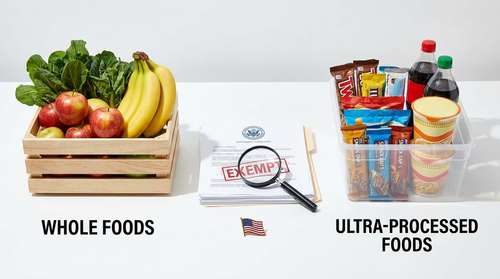
Despite the fierce controversy surrounding meat and dairy recommendations, there is widespread scientific agreement on another major update: the unprecedented federal crackdown on manufactured, hyper-palatable foods. For the first time in history, federal policy explicitly advises Americans to avoid highly processed packaged items, salty convenience snacks, and sugar-sweetened beverages.
While the government has yet to publish a formalized, itemized ultra-processed foods list, the broader guidance pulls no punches. The text strictly recommends zero added sugars or non-nutritive sweeteners for a healthy diet, marking a stark and definitive departure from past iterations that merely suggested moderation. The guidelines specifically call on parents to completely avoid added sugar for children aged four and under. Nutrition experts universally praise this specific directive. Medical professionals have long pointed to energy-dense, nutrient-poor packaged foods as the primary drivers of the nation’s obesity and metabolic disease epidemics.
The Missing Piece: Gut Health Fiber Benefits
As proteins and fats dominate the headlines and the top tier of the new pyramid, dietitians warn that an essential macronutrient is being dangerously sidelined. With whole grains squeezed into the smallest section at the bottom of the inverted graphic, fiber is arguably the biggest loser in the 2026 update.
Currently, an estimated 90 percent of Americans fail to consume adequate daily fiber. While the text of the guidelines briefly acknowledges the importance of a robust microbiome and fermented foods, the visual de-emphasis of complex carbohydrates threatens to overshadow crucial gut health fiber benefits. High-fiber diets are instrumental in preventing chronic diseases, managing blood sugar, and supporting digestion. Yet, the loud, controversial messaging around meat and butter has largely drowned out these foundational principles, leaving many gastroenterologists concerned about the long-term impact on the American digestive system.
Navigating the Future of American Dieting
With conflicting messages dominating the news cycle, figuring out what to put in your grocery cart can feel more complicated than ever. The key is to treat this updated federal framework as a general compass rather than a rigid, individualized prescription. Prioritize whole, minimally processed ingredients and dramatically reduce your intake of foods laden with artificial additives, excessive sodium, and added sugars.
If you choose to align with the higher protein targets, remember that you do not have to rely solely on animal products. Incorporating lentils, beans, nuts, and seeds can help you meet elevated protein goals without overloading your system with saturated fats. Ultimately, cooking at home and eating a diverse array of real, nutrient-dense foods remains the most science-backed strategy for long-term health and vitality.