The American College of Sports Medicine (ACSM) has officially released its landmark 20th annual Worldwide Survey of Fitness Trends for 2026, signaling a transformative shift in the global health landscape. While wearable technology secured the #1 spot for another year, the report's most significant revelation is the industry's rapid pivot toward "medicalized" fitness. For the first time, the convergence of healthcare and exercise science has taken center stage, driven by the exploding popularity of GLP-1 weight loss medications and an urgent focus on active aging. This year's rankings paint a clear picture: the future of fitness is data-driven, clinically integrated, and essential for longevity.
The Unstoppable Reign of Wearable Technology
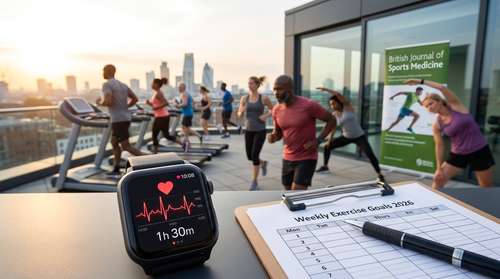
For the 2026 rankings, wearable technology has once again claimed the top spot, a position it has held for nearly a decade. However, the wearables of 2026 are far more advanced than the simple step counters of the past. The ACSM report highlights a critical evolution toward devices that offer clinical-grade monitoring. Modern smartwatches and rings are now integral health partners, capable of tracking blood glucose trends, heart rate variability (HRV), skin temperature, and even fall detection for older adults.
Industry experts note that the dominance of top wearable technology in 2026 is fueled by artificial intelligence. "We are no longer just collecting data; we are interpreting it in real-time to predict health outcomes," notes the report. This shift allows fitness professionals to prescribe exercise with surgical precision, bridging the gap between a gym workout and a medical prescription. The data collected is increasingly being shared directly with healthcare providers, cementing wearables as the cornerstone of the new medicalized fitness ecosystem.
The "Medicalized" Shift: Exercise for Weight Management and GLP-1s
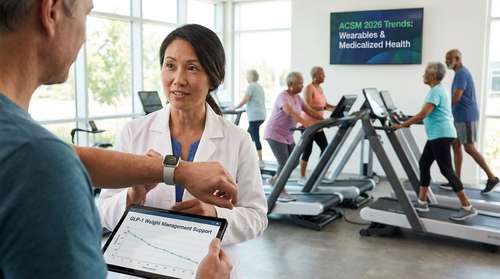
Perhaps the most defining trend of the 2026 fitness trends ACSM report is the surge of "Exercise for Weight Management," which has climbed to the #3 spot. This rise is directly linked to the global phenomenon of anti-obesity medications, specifically GLP-1 receptor agonists like Ozempic and Zepbound. As millions of patients turn to pharmacotherapy for weight loss, the fitness industry is responding with a specialized focus on preserving muscle mass.
The report emphasizes that while these medications are effective for reducing weight, they can also lead to significant muscle loss if not paired with structured strength training. This has created a massive demand for exercise for weight management GLP-1 protocols. Fitness professionals are now expected to understand the physiological impacts of these drugs, positioning themselves as essential partners in a patient's medical journey. This trend marks the official arrival of the medicalized fitness industry 2026, where gyms are becoming extensions of the doctor's office.
The Silver Tsunami: Prioritizing Fitness for Older Adults
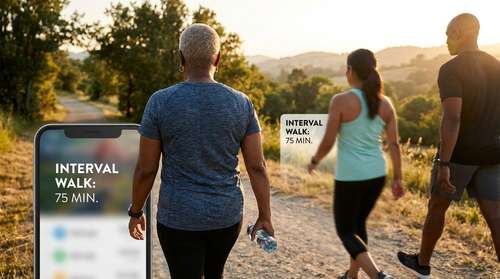
Ranking #2 this year is fitness programs for older adults, reflecting the demographic reality of an aging global population. With the Baby Boomer generation fully entering their senior years, the demand for "active aging" programming has reached an all-time high. The 2026 survey results underscore a move away from gentle, chair-based exercises toward robust functional training designed to build "antifrail" bodies.
The focus has shifted from merely extending lifespan to extending "healthspan"—the number of years lived in good health. Programs emphasizing power, balance, and preservation of independence are surging. Facilities are increasingly tailoring their offerings to this demographic, recognizing that fitness for older adults trends are not just a niche market but a primary driver of industry growth. This demographic is also the most likely to utilize medicalized fitness services, further intertwining the top trends.
Mental Health and Community: The Human Element
While technology and medicine drive the top of the list, the human element remains vital. Ranking #5 is "Balance, Flow, and Core Strength," a category that encompasses yoga, Pilates, and mindfulness-based movement. This trend highlights the enduring importance of mental health in fitness. In a high-tech world, the need for somatic practices that reduce stress and improve mental well-being is stronger than ever.
New to the Top 20: Social Fitness
An interesting newcomer to the top rankings in the ACSM worldwide survey results 2026 is "Adult Recreation and Sport Clubs." Breaking into the top 20, this trend reflects a growing desire for community and social connection post-pandemic. Activities like pickleball leagues and community run clubs are booming, proving that while people want high-tech health data, they also crave the motivation that comes from sweating alongside others.
A defining Moment for the Industry
The release of the 20th anniversary ACSM report confirms that the fitness industry has graduated from aesthetics to healthcare. The convergence of future of fitness technology, pharmaceutical weight loss support, and longevity programming suggests that in 2026, exercise is no longer just a lifestyle choice—it is a fundamental component of modern medicine. For fitness professionals and gym owners, the message is clear: adapt to the medicalized model or risk obsolescence.