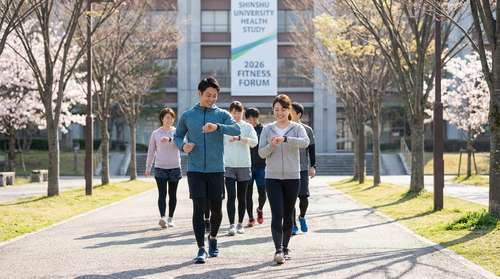
If you have been scrolling through TikTok or reading the latest wellness headlines in early 2026, you have likely encountered a surge of interest in "Japanese walking." According to PureGym's latest annual fitness report, search interest for this specific method has skyrocketed by nearly 3,000% this year, cementing it as the breakout longevity exercise of 2026. But this isn't just another fleeting social media challenge. Rooted in decades of rigorous science from Shinshu University, Japanese walking—clinically known as Interval Walking Training (IWT)—is proving that how you walk matters far more than how many steps you take. By alternating three-minute bursts of high-intensity movement with recovery periods, this method is revolutionizing low-impact cardio workouts for metabolic health.
The Science Behind the 3-Minute Interval
The concept of Japanese walking was originally developed by Dr. Hiroshi Nose and Associate Professor Shizue Masuki at the Shinshu University Graduate School of Medicine in Matsumoto, Japan. Their research, which began in the early 2000s and has gained renewed global attention in 2026, sought to address a common problem: traditional steady-state walking often isn't intense enough to significantly improve aerobic capacity or lower blood pressure.
The core of the Shinshu University walking study lies in its simplicity. The protocol requires alternating between three minutes of fast walking (at roughly 70% of your maximum effort) and three minutes of slow walking (at about 40% effort). This cycle is repeated for five sets, totaling just 30 minutes. Dr. Nose's team discovered that this specific interval structure triggers a physiological response that steady walking simply cannot match.
Key Findings from the Research
The data supporting interval walking benefits is compelling. In the landmark studies involving hundreds of participants, researchers found that those who practiced this method for five months experienced:
- Increased Aerobic Capacity: Participants saw their VO2 peak (a key marker of cardiovascular fitness) increase by approximately 10%.
- Enhanced Muscle Strength: Thigh muscle strength improved by roughly 13% for extension and 17% for flexion, crucial for preventing falls and maintaining mobility as we age.
- Lower Blood Pressure: Resting systolic blood pressure dropped by an average of 9 mmHg, and diastolic by 5 mmHg—reductions comparable to some hypertension medications.
Why 2026 is the Year of 'Japanese Walking'
Why is this decades-old research suddenly dominating 2026 fitness trends? The answer lies in a cultural shift toward time-efficient, science-backed longevity exercises. As we move away from the "no pain, no gain" mentality of the early 2020s, people are seeking sustainable ways to improve metabolic health without the joint stress of running or HIIT classes.
Viral platforms have rebranded IWT as "Japanese walking," highlighting its accessibility. Unlike complex gym routines, it requires no equipment and can be done anywhere. Furthermore, with an aging global population, the focus on healthspan—living healthier for longer—has pushed metabolic health walking to the forefront. The method's ability to regulate blood sugar and improve insulin sensitivity makes it a powerful tool against lifestyle-related diseases.
Interval Walking vs. The 10,000 Steps Myth
For years, the gold standard for daily activity was hitting 10,000 steps. While consistent movement is good, quality often trumps quantity. Steady-state cardio, like a casual long walk, utilizes slow-twitch muscle fibers and burns calories but does not necessarily challenge the cardiovascular system enough to induce significant fitness adaptations.
Japanese walking changes the equation by recruiting fast-twitch muscle fibers during the high-intensity intervals. This rapid switch forces the heart to pump harder and the muscles to utilize oxygen more efficiently. You can achieve superior cardiovascular and metabolic results in just 30 minutes of interval walking compared to an hour of low-intensity strolling. It is the ultimate efficiency hack for busy professionals.
How to Execute the Perfect Session
Ready to try 2026’s top fitness trend? Here is how to structure your walk for maximum benefit, following the Shinshu protocol:
- Warm Up: Start with a casual 5-minute stroll to loosen up your joints.
- The Fast Interval (3 Minutes): Walk briskly. You should be moving fast enough that having a conversation feels somewhat difficult (somewhat hard, or a 7/10 effort). Swing your arms and lengthen your stride.
- The Slow Interval (3 Minutes): Slow down significantly to a leisurely pace. Allow your breathing to recover. This recovery phase is just as critical as the work phase.
- Repeat: Complete 5 cycles of this fast/slow pattern.
- Cool Down: Finish with a 3-5 minute easy walk.
Aim to perform this routine four days a week. It’s low-impact enough to be sustainable but intense enough to drive real change.
A Longevity Tool for Everyone
Whether you are a fitness enthusiast looking to optimize your active recovery or someone just starting their health journey, Japanese walking offers a scientifically validation path to better health. By embracing the power of the 3-minute interval, you are not just walking; you are training your body for longevity, better blood pressure control, and improved metabolic function.