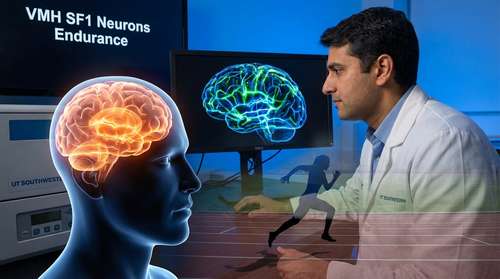
When you hit a plateau in your workout routine, the standard advice usually focuses on muscle recovery, cardiovascular capacity, or nutrition. However, groundbreaking new research shifts the spotlight from our limbs directly to our heads. According to a landmark paper published this week on April 6, 2026, the secret to athletic stamina is governed by a highly specific cluster of brain cells. Researchers have pinpointed that the activation of VMH SF1 neurons endurance pathways is the true catalyst. These tiny "fitness neurons" serve as a master control hub, determining exactly how your body responds to physical strain and how much stamina you build for your next session.
The Groundbreaking UT Southwestern Exercise Study 2026
For decades, sports scientists assumed that the physical adaptations resulting from running, swimming, or weightlifting occurred primarily in the periphery—meaning the heart, lungs, and muscle tissue. A paradigm-shifting UT Southwestern exercise study 2026, co-led by Dr. Kevin Williams and Dr. J. Nicholas Betley from the University of Pennsylvania, completely upends this traditional model.
The research team focused on the ventromedial hypothalamus (VMH), a region deep inside the brain known to regulate energy expenditure, body weight, and blood sugar. By monitoring neural activity during rigorous treadmill protocols, they discovered that a distinct group of cells—steroidogenic factor-1 (SF1) neurons—fired up dramatically as physical activity increased. To fully comprehend this phenomenon, the scientists subjected mice to a structured athletic regimen: running five days a week with one progressively faster endurance run. Their physical stamina consistently peaked at around three weeks into the trial.
As the training program progressed over these three weeks, the firing rate of the SF1 neurons didn't just adapt; it compounded. The neurons were effectively learning from the physical stress, illustrating precisely how the brain programs endurance by creating a functional, long-lasting memory of past workouts.
Unlocking the Neuroscience of Physical Stamina
The most astonishing discovery from the study involves what happens after you drop the weights or step off the track. The researchers observed that SF1 neurons remain hyperactive for at least a full hour post-workout. This sustained neural "afterburn" is the exact mechanism driving the brain-body fitness connection.
To isolate the importance of this post-workout window, the scientific team conducted a fascinating intervention. They allowed the subjects to complete their entire workout flawlessly—exhibiting normal neuronal function during the run—but then specifically blocked the VMH SF1 neurons from firing during the immediate post-exercise recovery phase.
The results were immediate and entirely disruptive: the subjects demonstrated zero gains in stamina over the two-week training period. The muscles were stimulated, but without the brain's post-exercise authorization, the body failed to adapt. Conversely, when the researchers artificially stimulated these same neurons following a workout, the subjects broke through typical physiological plateaus and exhibited extraordinary endurance improvements well beyond the three-week mark. The neuroscience of physical stamina dictates that without this critical post-exercise neural signaling, the body essentially ignores the physical work it just performed.
The Systemic Impact: Moving Beyond Muscle
Understanding the role of these neurons clarifies why some people struggle to build stamina while others seemingly adapt overnight. The post-workout firing of SF1 neurons acts as a systemic broadcast signal. It reaches far beyond the brainstem, actively directing the peripheral nervous system and metabolic pathways to initiate recovery and adaptation protocols.
Metabolic Benefits of Exercise Brain Research
In evaluating the metabolic benefits of exercise brain research, scientists noted a distinct shift in how the body processes fuel. When SF1 neurons are active post-exercise, they command the peripheral tissues to alter their energy consumption. Subjects showed a marked shift toward using carbohydrates earlier during subsequent exercise and optimizing glucose stores. This intricate energy management is what allows the heart and lungs to operate efficiently without succumbing to early exhaustion.
By continuously sending signals down through the central nervous system, these neurons ensure several vital adaptations occur simultaneously:
- Muscle fibers undergo the necessary gene expression changes for enhanced fatigue resistance.
- The cardiovascular system increases its oxygen delivery capacity to keep up with physical demand.
- Metabolic pathways adjust their baseline fuel utilization, preventing systemic energy crashes.
Essentially, you are not just training your muscles when you push through a tough run; you are actively rewiring your hypothalamic circuitry.
The Promise of Exercise Mimetic Treatments
While optimizing athletic performance is a thrilling prospect for sports scientists, the clinical implications of this April 2026 discovery carry profound weight for modern medicine. Dr. Williams emphasized that understanding this exact neural circuitry could be a massive leap forward for populations who cannot safely engage in rigorous physical activity.
By mapping the precise neural pathways that govern stamina, scientists are laying the necessary groundwork for highly targeted exercise mimetic treatments. These theoretical therapies would artificially trigger the VMH SF1 neurons through pharmacological or electroceutical means, essentially "tricking" the body into believing it just completed a grueling workout.
For individuals suffering from severe injuries, chronic illness, neuromuscular diseases, or age-related mobility limitations, activating this brain-body pathway could be nothing short of revolutionary. It could provide the metabolic and cardiovascular benefits of a five-mile run without requiring a single step, staving off muscle atrophy and metabolic decline. As research continues to unravel the hidden complexities of our brain's fitness circuitry, one paradigm is undeniably shifting: your capacity to push physical limits begins, and ultimately ends, with your neurology.