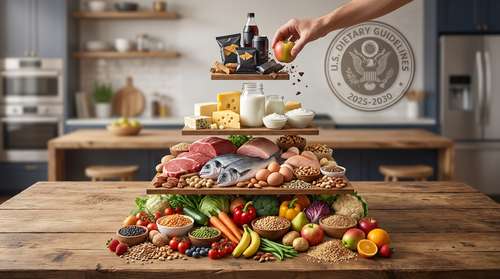
The era of MyPlate is officially over. In a historic shift that is already sending shockwaves through the food industry and public health sectors, the federal government has released the 2025-2030 Dietary Guidelines for Americans, marking a decisive pivot toward the MAHA nutrition policy agenda. The new standards, championed by HHS Secretary Robert F. Kennedy Jr. and USDA Secretary Brooke Rollins, completely overhaul federal advice by replacing the MyPlate graphic with a new inverted food pyramid that prioritizes high-quality protein and healthy fats while declaring war on ultra-processed foods.
The New 'Real Food' Pyramid: A Visual Revolution
For the first time since 2011, the familiar MyPlate icon has been retired. In its place stands a bold new visual: an inverted pyramid designed to emphasize nutrient density. Unlike the grain-heavy base of the 1992 pyramid, this new model features a broad top tier dominated by animal and plant proteins, full-fat dairy, and vegetables. The tapered bottom significantly demotes grains, signaling a major departure from the carbohydrate-centric advice of the last three decades.
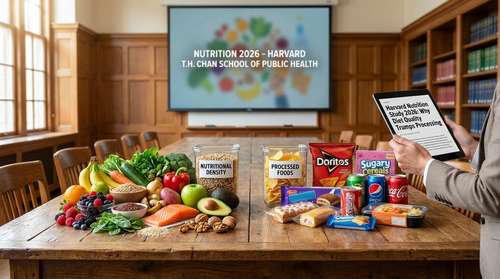
This "Real Food" framework explicitly categorizes foods based on processing levels rather than just macronutrients. The guidelines encourage Americans to build their plates around whole, single-ingredient foods—steaks, eggs, avocados, and raw dairy—while relegating refined carbohydrates and industrial grain products to the margins of the diet.
Protein Intake Requirements 2026: Doubling Down on Muscle Health
One of the most radical changes in the 2025-2030 Dietary Guidelines for Americans is the new recommendation for daily protein intake. Shattering the previous minimum of 0.8 grams per kilogram of body weight, the new standards advise a target of 1.2 to 1.6 grams per kilogram. For an average 180-pound adult, this effectively doubles the recommended daily intake to between 98 and 130 grams of protein.
Officials argue this boost is essential to combat the rising tide of metabolic dysfunction and sarcopenia (muscle loss) in an aging population. "We are moving from a survival minimum to an optimal thriving target," the guidelines state, explicitly endorsing red meat, poultry, and eggs as "high-quality" primary sources alongside beans and legumes.
Full-Fat Dairy and the End of the 'Low-Fat' Era
Perhaps the most consumer-friendly shift is the vindication of full-fat dairy benefits. The new guidelines officially strip the "low-fat or fat-free" qualifier from dairy recommendations. Citing emerging research that dissociates dairy fat from cardiovascular risk, the policy now encourages whole milk, butter, and cheese as part of a healthy diet, provided they are free from added sugars.
Saturated Fat Contradictions
Despite the embrace of butter and beef tallow, the guidelines inexplicably retain the cap on saturated fat at 10% of daily calories. Critics and nutritionists have already pointed out this mathematical contradiction, noting that following the new "meat and butter" heavy pyramid would almost certainly push most consumers over the 10% limit. This inconsistency reflects the intense internal tug-of-war between the new MAHA administration advisors and the legacy scientific committee members.
Crackdown on Ultra-Processed Foods and Seed Oils
The eat real food movement has found its way into federal policy with a vengeance. The guidelines introduce the strictest-ever warnings against ultra-processed food health risks. For the first time, specific additives, including certain food dyes and "industrial seed oils" (like soybean and corn oil), are flagged for reduction. The text advises consumers to "avoid foods with ingredients a child cannot pronounce," a direct nod to the populist health rhetoric that swept the 2024 election.
The policy also sets a hard cap on added sugars, recommending no more than 10 grams per meal—a standard that effectively blacklists most commercial sodas, sweetened yogurts, and breakfast cereals from school lunch programs.
What This Means for Your Grocery Cart
As these guidelines trickle down to federal programs like school lunches and WIC, Americans can expect to see a transformation in what is considered "healthy." Expect school cafeterias to swap skim milk for whole milk and replace sugary cereals with egg-based breakfasts. While the debate between traditional nutritionists and the new administration's advisors continues to heat up, the message to the consumer is unambiguous: buy ingredients, not products.