Fresh data released just yesterday confirms a grim milestone for U.S. public health: the nationwide measles tally has officially reached 1,362 confirmed infections across 31 jurisdictions. This alarming surge comes precisely as doctors nationwide escalate their defiance of newly implemented federal immunization guidelines. The resulting fracture over the 2026 childhood vaccine schedule has left families navigating an unprecedented landscape of conflicting medical guidance. With the Centers for Disease Control and Prevention (CDC) no longer aligned with the nation's leading pediatricians, parents are caught in the crossfire of a historic public health dispute.
The Core Conflict: CDC vs AAP Vaccine Recommendations
For decades, the CDC and the American Academy of Pediatrics (AAP) worked in lockstep to protect children from preventable diseases. That partnership fractured earlier this year when the CDC controversially reduced its universally recommended childhood immunizations from 17 diseases down to 11.
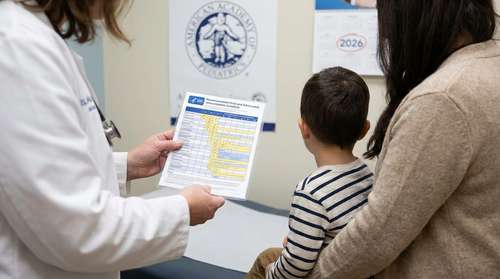
In a move that has sparked widespread clinical pushback, the American Academy of Pediatrics 2026 schedule explicitly breaks from the federal government. The nation's top pediatric group is holding firm, continuing to routinely recommend protection against 18 diseases. This includes critical, life-saving safeguards for respiratory syncytial virus (RSV), rotavirus, influenza, meningitis, and hepatitis A and B. Dozens of major medical associations, representing over a million healthcare professionals, have formally endorsed the AAP's robust schedule over the CDC's pared-down version.
RFK Jr Health Policy Impact and the Shared Decision Shift
The driving force behind this dramatic pivot is the immediate RFK Jr health policy impact. After dismissing the longstanding scientific experts on the Advisory Committee on Immunization Practices (ACIP), the Department of Health and Human Services modeled the revised U.S. framework heavily on Denmark's leaner immunization schedule.
This overhaul introduced a massive procedural shift in how doctors must practice. The CDC moved six previously standard vaccines into a new framework of shared clinical decision making vaccines or restricted them entirely to high-risk groups. Rather than universally recommending these immunizations, federal guidance now dictates that parents and providers must negotiate their necessity case-by-case.
Doctors warn this approach is highly problematic in the United States. Unlike Denmark, the U.S. lacks universal healthcare. Treating critical immunizations as negotiable options creates massive logistical barriers for low-income families, limits what pediatric offices stock, and sets the stage for dangerous coverage gaps.
A Real-Time Crisis: Measles Outbreak 2026 Cases
This policy chaos coincides with a severe, immediate infectious disease crisis that is dominating emergency rooms this week. The measles outbreak 2026 cases have spiraled completely out of control, reflecting the highest infection rates in 35 years. Health officials confirmed yesterday that 94% of current infections are directly tied to active outbreaks, with the virus spreading rapidly through schools and communities.
South Carolina continues to battle the largest cluster with nearly a thousand cases, while states like Utah, Texas, and Florida face their own fast-moving transmission chains. Epidemiologists tracking the virus stress a critical data point: over 90% of current patients are unvaccinated or have an unknown immunization status.
The disease is hitting the most vulnerable populations hardest. Nearly a quarter of all cases are occurring in children under age five. Measles is not a mild virus; in 2025, 11% of confirmed patients required hospitalization, and local health departments are increasingly overwhelmed by the 2026 surge.
Lawsuits and Pediatrician Vaccine Advice
The legal and political battles over this public health divide are only intensifying. A coalition of 15 states recently filed a federal lawsuit to block the new CDC guidelines, arguing the sweeping changes lack scientific backing, rely on fringe theories, and unnecessarily gamble with children's lives.
While the courts review the litigation, parents are understandably overwhelmed. However, frontline doctors are attempting to cut through the noise. Current pediatrician vaccine advice strongly encourages families to adhere to the comprehensive AAP schedule rather than the scaled-back federal list. Physicians emphasize that the AAP's recommendations are based on an established framework of rigorous safety data and epidemiology specific to the United States.
Until the regulatory dust settles, medical professionals urge parents to consult directly with their pediatricians to ensure no critical immunizations fall through the cracks. In an era where public health messaging is fragmented, trusting the historical, evidence-based consensus of your local doctor remains your family's strongest defense.