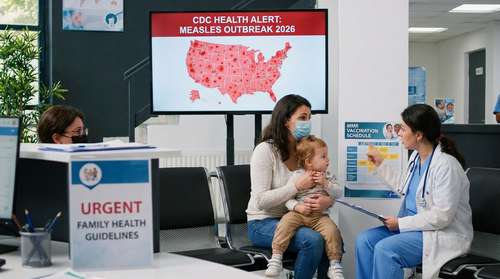
The United States is facing an unprecedented public health emergency this spring, as the ongoing measles outbreak 2026 has prompted the Centers for Disease Control and Prevention (CDC) to issue a sweeping national family health alert. With the nationwide tally officially surpassing 1,700 infections—and late-April updates pushing the figure to nearly 1,800 confirmed cases—health officials are warning that immediate intervention is essential. The highly contagious virus is now circulating aggressively across more than 30 states, placing the country on the precipice of losing its hard-won 'measles eliminated' status. In response to widespread community transmission and travel-related spread, pediatricians and public health advocates are urgently calling on parents to prioritize vaccinations, especially for infants and school-aged children.
The Expanding Scope of the Pediatric Health Emergency
As of late April 2026, the epidemiological statistics paint a stark picture of the current crisis. The CDC’s latest weekly update confirmed 1,792 measles cases, with the vast majority tied to active, localized outbreaks. Utah has emerged as a major epicenter, reporting over 400 cases, while significant infectious clusters continue to plague Arizona, South Carolina, and Florida. This rapid viral spread dominates pediatric health news 2026, highlighting a troubling vulnerability in national herd immunity.
Recent data reveals that a staggering 94% of patients involved in these outbreaks are either unvaccinated or have an unknown immunization history. The demographic most severely impacted includes children and teenagers. While no fatalities have been reported domestically this year, approximately 6% of patients—over 100 individuals—have required hospitalization due to severe complications. Experts note that the virus is spreading silently through tight-knit communities, schools, and even domestic travel hubs, making containment efforts increasingly difficult.
CDC Measles Travel Alert: Protecting Families on the Move
A major driver of the 2026 surge has been international and interstate travel, prompting health authorities to revise their disease prevention guidance drastically. The newly expanded CDC measles travel alert now explicitly advises that all Americans traveling internationally ensure they are fully vaccinated, regardless of their specific destination. Previously, guidance focused primarily on regions with known active outbreaks. However, officials recognize that exposure is increasingly happening in transit—on airplanes and inside bustling international airports.
The implications for young families are critical. Under updated family health safety guidelines, doctors strongly recommend the MMR vaccine for infants as young as six to eleven months if they will be traveling abroad. Although this early dose provides essential short-term protection, parents must remember that these infants will still need the standard two-dose series starting at 12 to 15 months of age to secure long-term immunity. The MMR vaccine remains a highly effective intervention; a single dose provides about 93% protection against the virus, while the full two-dose schedule increases that efficacy to 97%. For domestic travelers hitting the road or skies this spring, officials advise delaying trips if anyone in the family is exhibiting a fever or overt signs of illness.
Recognizing Measles Symptoms in Toddlers
Because the virus has been exceptionally rare in the U.S. for decades, many parents—and even some younger clinicians—have never seen a live case. Early recognition is vital to preventing further community transmission and securing prompt medical care.
Early Warning Signs
Measles is notoriously infectious and typically begins with a high fever, persistent cough, runny nose, and conjunctivitis, commonly known as pink eye. These initial indicators often mimic standard respiratory viruses or seasonal allergies, making early diagnosis challenging for families.
The Tell-Tale Rash
Two to three days after the onset of initial symptoms, tiny white spots may appear inside the mouth. This is quickly followed by the classic measles rash, which usually breaks out on the face and hairline before cascading downward over the neck, torso, arms, and legs. Parents monitoring for measles symptoms in toddlers should contact their pediatrician immediately if a rash develops alongside a fever. Crucially, caregivers must call ahead before bringing a symptomatic child into a clinic waiting room to avoid exposing vulnerable patients.
Defending the Measles Elimination Status US
The stakes for the nation's public health infrastructure have never been higher. The U.S. officially achieved measles elimination in the year 2000, meaning the disease was no longer continually circulating within its borders. However, to maintain the measles elimination status US, the country must successfully interrupt endemic transmission for a continuous period of 12 months.
Advanced molecular sequencing and forensic evidence suggest the virus has been spreading silently in certain U.S. communities for extended periods. Dr. Noel Brewer, chairing the committee advising the CDC on this issue, has warned that the current spread is showing no signs of stopping. If the transmission chain remains unbroken, the Pan American Health Organization (PAHO) is poised to officially revoke the United States' elimination status during a critical evaluation scheduled for November.
Losing this status would not merely be a symbolic defeat; it represents a tangible regression in pediatric healthcare and a heightened risk for immunocompromised individuals who rely entirely on community immunity. Public health officials emphasize that reversing this trajectory is entirely possible, but it requires immediate, collective action. Restoring high community vaccination rates and adhering strictly to medical guidelines for those exposed remains the absolute best defense against this preventable disease.