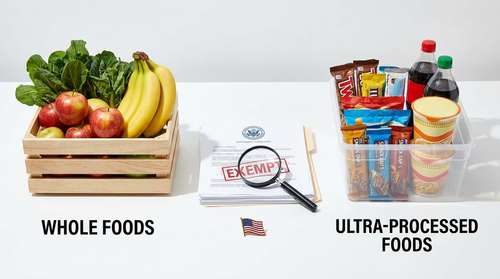
For Americans relying on the convenience of packaged snacks and frozen meals, a major new report offers a sobering warning. A sweeping multi-ethnic study of over 6,800 adults has identified a stark, linear relationship between ultra-processed foods and heart disease. Researchers found that those consuming the highest amounts of these heavily manufactured products are 67 percent more likely to suffer a fatal or non-fatal heart attack, stroke, or resuscitated cardiac arrest.
The research, published this week in JACC: Advances and presented at the American College of Cardiology's Annual Scientific Session, offers a granular look at the cardiovascular toll of modern diets. It is part of the latest heart health nutrition news making waves in the medical community, illustrating exactly how incremental dietary choices compound over time.
The Dose-Response Danger of Ultra-Processed Foods
While previous research largely focused on European populations, this new UPF cardiovascular risk study 2026 utilizes data from the Multi-Ethnic Study of Atherosclerosis (MESA) to reflect a diverse U.S. demographic. The study tracked 6,814 adults aged 45 to 84 who had no known history of cardiovascular issues when they enrolled. By analyzing food questionnaires through the NOVA classification system, scientists were able to group participants based on their daily intake of ultra-processed foods.
The MESA study itself is a landmark longitudinal research effort initially designed to investigate the characteristics of subclinical cardiovascular disease. By tapping into this rich dataset, researchers bypassed the limitations of smaller, homogenous cohorts to capture a more accurate snapshot of how modern eating habits are actively reshaping cardiovascular health.
The findings outline severe processed food health risks. Individuals in the highest quintile consumed an average of 9.3 servings of ultra-processed foods each day. Compared to those in the lowest quintile—who averaged just 1.1 servings—the heavy consumers faced a 67 percent greater risk of major cardiac events.
Perhaps most alarming is the dose-response relationship uncovered by the team. Each additional daily serving of an ultra-processed item was associated with a 5.1 percent increased risk of adverse cardiac events. Dr. Amier Haidar, lead study author and a cardiology fellow at the University of Texas Health Science Center at Houston, emphasized that the data held strong even after adjusting for overall diet quality, calorie intake, and existing conditions like diabetes or high blood pressure.
A Stark Reality for Dietary Health Disparities
The health burden of these ultra-processed foods does not impact all demographics equally. The study revealed deep dietary health disparities, with Black Americans facing significantly amplified cardiovascular risks.
While non-Black individuals saw a 3.2 percent increase in heart risk per additional daily serving of UPFs, Black Americans experienced a 6.1 percent spike in risk for every extra serving consumed. Researchers point to systemic issues driving this gap, rather than biology alone. Minority-targeted food marketing and restrictive neighborhood environments—often characterized by a lack of access to fresh, minimally processed groceries—are prime suspects in driving both higher UPF consumption and its resulting health consequences.
In a related editorial comment, Dr. Kim Allan Williams Sr. pointed out that these stronger associations among Black Americans highlight an urgent need for structural solutions at the public health level.
What This Means for Metabolic Health Trends in 2026
Ultra-processed items make up a massive portion of the standard American diet. The NOVA system defines these as industrial formulations made mostly from substances extracted from foods—like starches, added sugars, and hydrogenated fats—alongside artificial flavorings and preservatives. Common examples include chips, packaged baked goods, sugary cereals, and cold cuts.
As part of the broader metabolic health trends 2026, medical professionals are increasingly viewing the food environment as a primary driver of chronic disease. The convenience and shelf-stability of these products often prompt overeating, which drives inflammation, weight gain, and fat accumulation. The study could not pinpoint the exact biological mechanisms, but previous research strongly suggests that the high concentration of refined carbohydrates, sodium, and synthetic additives found in UPFs directly fuels systemic inflammation and endothelial dysfunction.
Actionable Steps and the Push for Transparent Labeling
Among the critical ACC.26 cardiology updates is a strong push for better consumer education and regulatory action. While completely eliminating convenience foods may be unrealistic for many families, moderation is a powerful tool. "While many of these products may seem like convenient on-the-go meal or snack options, our findings suggest they should be consumed in moderation," Dr. Haidar advised.
Dr. Williams and other experts argue that putting the onus entirely on the consumer is insufficient when the food environment is saturated with highly palatable, heavily marketed junk food. To support healthier choices, the American College of Cardiology recently endorsed a standardized front-of-package labeling system. This transparent labeling aims to provide clear, biologically meaningful information at the point of purchase, ensuring consumers immediately recognize high levels of added sugars, salts, and unhealthy fats. This is seen as a crucial step toward dismantling the dietary inequities that leave marginalized communities vulnerable.
Until structural changes reshape the grocery store aisles, the most effective defense is a proactive approach to nutrition. Prioritizing whole ingredients—such as fresh produce, beans, plain nuts, and whole grains—can substantially lower daily UPF intake, helping to protect your heart against the compounding risks of the modern food supply.