Notification fatigue has finally pushed the fitness industry in a radical new direction. Over the past 48 hours, the wearable tech world has been buzzing after NBA superstar Steph Curry strategically revealed Google's latest hardware pivot on Instagram. The highly anticipated Fitbit screen-free tracker is officially on the horizon, confirming rumors that the tech giant is ready to embrace the "Joy of Missing Out" (JOMO) fitness movement. By ditching the display, this upcoming band prioritizes 24/7 background data collection and high-fidelity biometrics over incessant wrist vibrations.
The Steph Curry Fitbit Leak: What The Footage Reveals
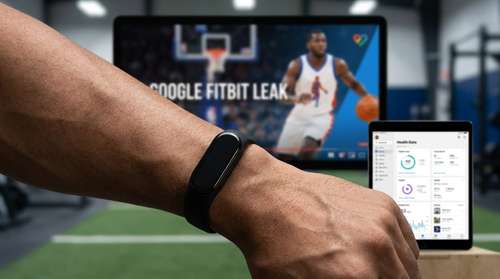
The recent Steph Curry Fitbit leak provides our best look yet at what Google has been developing behind closed doors. Sourced from Curry’s social media channels and further analyzed by tech watchdogs just yesterday, the leaked images and video clips showcase a minimalist, ultra-sleek design. The device features a woven gray fabric strap accented with vibrant orange piping and a sturdy metallic clasp. In the voiceover for the sponsored tease, Curry describes the band as "the first of its kind," hinting at a seamless integration with Google's broader ecosystem.
Beyond the hardware aesthetics, the leak also revealed a modified version of the Fitbit app running on a Google Pixel phone. The software was actively tracking a "Sport" activity with live, real-time data streaming directly from the band—a feature not currently supported by the existing Fitbit application. This suggests the upcoming tracker will act as a pure data-gathering node, offloading the visual interface entirely to your smartphone.
Distraction-Free Wearables and the JOMO Movement
We are witnessing a massive cultural shift toward distraction-free wearables. While smartwatches like the Pixel Watch cater to users who want connectivity at a glance, many athletes find glowing screens and notification pings actively detrimental to their focus. This screenless design philosophy allows users to tune out digital noise while still capturing critical physiological data.
Advanced Hardware Meets AI Coaching
To make this invisible tracking effective, hardware needs to be flawless. Interestingly, this isn't Fitbit's first foray into this territory. Long-time fitness enthusiasts might remember the Fitbit Flex from 2013, a rudimentary display-free band that relied on simple LED indicators. The 2026 iteration, however, is lightyears ahead. Industry experts anticipate the inclusion of next-generation metabolic health sensors capable of continuously monitoring heart rate variability, blood oxygen levels, and temperature fluctuations without draining the battery. Combined with Fitbit's newly introduced Gemini-powered AI health coach, users will receive hyper-personalized insights into their daily performance, cycle tracking, and sleep hygiene, effectively translating raw background data into actionable advice.
The Ultimate Showdown: Fitbit vs Whoop 2026
For years, Whoop has maintained a virtual monopoly on the screenless, performance tracking market. However, the battle of Fitbit vs Whoop 2026 is shaping up to be a tectonic clash. Google brings immense brand recognition and an established, user-friendly app infrastructure that budget competitors—like the Amazfit Helio Strap or the Polar Loop—simply cannot match.
Reports from Bloomberg indicate Google will likely adopt a hybrid monetization model. The Fitbit screen-free tracker is expected to offer core biometric stats and basic functionality straight out of the box for free, which represents a massive competitive advantage. Unlocking the device's heavyweight capabilities, however, will require a Fitbit Premium subscription. What sets this upcoming tracker apart from the current market leaders?
- Hybrid Subscription Model: Unlike Whoop, which requires a paid membership to function, the new Fitbit device will reportedly offer basic metrics without a mandatory monthly fee.
- Ecosystem Integration: It will sync natively with the heavily refined Google Pixel and Fitbit app environment.
- Advanced AI Coaching: Leveraging Google's AI capabilities, the app will deliver contextual recovery advice rather than just raw numbers.
Adding more fuel to the fire, Garmin is also reportedly preparing to launch its own rival device, the Garmin Cirqa, making the screen-free wearable space the most fiercely contested tech category of the year.
A New Era for Fitness Recovery Technology
Step counting is no longer the gold standard; modern athletes demand comprehensive fitness recovery technology. The industry has realized that the time spent resting is just as critical as the time spent sweating. Devices that prioritize recovery scores and readiness metrics help users understand exactly when to push their physical limits and when to prioritize rest. By relying on a lightweight fabric form factor that is comfortable enough to wear seamlessly during both high-intensity training and deep REM sleep, Google is positioning its new wearable as a true 24/7 companion. It completely eliminates the bulky discomfort often associated with sleeping in a premium smartwatch.
As we edge closer to the official Google Fitbit launch later this year, the tactical deployment of Steph Curry as a performance advisor signals a clear focus on athlete-grade metrics. Whether you are a professional basketball player or a casual runner trying to optimize your sleep cycle, the return of the display-free tracker proves that sometimes, less truly is more.