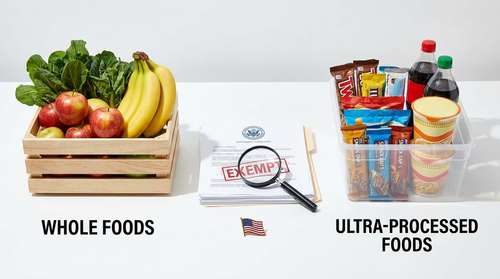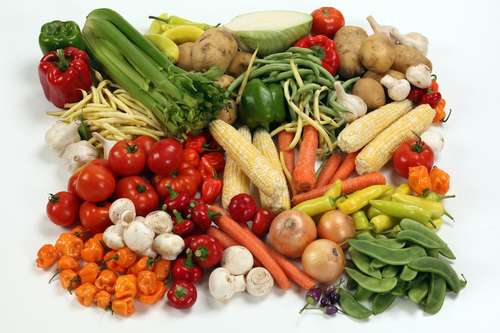
In a historic overhaul of federal nutrition policy, the U.S. government has officially implemented the 2025-2030 Dietary Guidelines for Americans, introducing a radical "inverted" food pyramid that completely upends decades of nutritional advice. Released earlier this month and now taking full effect across federal programs, the new standards mark a decisive victory for the "Real Food" movement championed by Department of Health and Human Services (HHS) officials. The guidelines prioritize whole-food proteins and healthy fats while declaring an explicit war on ultra-processed foods (UPFs), headlined by a strict new 10-gram added sugar limit per meal that is set to reshape the American food landscape.
The "Pyramid Flip": A Protein-Forward Revolution
The most striking visual change in the 2025-2030 guidelines is the introduction of the "Inverted Food Pyramid." Moving away from the carbohydrate-heavy base of the 1990s and the generalized "MyPlate" model, the new graphic places protein, full-fat dairy, and healthy fats at the broad top tier, signaling they should form the foundation of the American diet. Vegetables and fruits share this top-tier status, emphasizing nutrient density.
Conversely, grains—once the bedrock of federal advice—have been demoted to the narrow bottom tip, with a specific warning to minimize refined carbohydrates. "These guidelines return us to the basics," stated officials during the rollout. "We are prioritizing nutrient-dense inputs that fuel metabolic health, rather than empty calories that drive chronic disease." This shift includes a controversial but science-backed recommendation to embrace saturated fats from whole food sources like grass-fed beef, butter, and tallow, marking the official end of the "low-fat" era.
The Strict 10-Gram Sugar Rule
Perhaps the most aggressive policy change is the new 10-gram sugar rule. Unlike previous guidelines that suggested a vague daily percentage limit, the new policy mandates that no single meal should contain more than 10 grams of added sugar. This specific, per-meal cap is designed to blunt dangerous insulin spikes and combat the metabolic crisis.
This rule poses an existential challenge to the breakfast cereal and beverage industries. A typical bowl of sugary cereal or a single can of soda far exceeds this limit. Federal feeding programs, including school lunches and military dining halls, are already scrambling to reformulate menus to comply. The guidelines explicitly state that "no amount of added sugar is considered part of a healthy diet," framing the 10-gram limit not as a target, but as a hard ceiling for damage control.
Ultra-Processed Foods: A Public Health Threat
For the first time in history, federal policy has formally categorized ultra-processed foods (UPFs) as a public health threat. The guidelines adopt the term "highly processed foods" and advise Americans to "avoid" products containing artificial flavors, petroleum-based dyes, and non-nutritive sweeteners. This language goes beyond the "limit" or "moderate" phrasing of the past, effectively labeling common shelf-stable snacks as hazardous.
New Labeling Standards Expected
Industry analysts predict that this designation will pave the way for warning labels similar to those on tobacco products. The guidelines link UPF consumption directly to the nation's skyrocketing rates of obesity, diabetes, and autoimmune disorders. By distinguishing between "processing" (like cheese-making or cooking) and "ultra-processing" (industrial formulations), the government is arming consumers with a new definition of food safety focused on ingredients rather than just calories.
Focus on Metabolic and Gut Health
Underpinning these changes is a new focus on metabolic health and the gut microbiome. The 2025-2030 text acknowledges the critical role of gut bacteria in immune function and mental health, recommending fermented foods and warning against the emulsifiers and additives found in UPFs that disrupt the microbiome.
The guidelines also recommend a higher protein intake than ever before—1.2 to 1.6 grams per kilogram of body weight—to combat sarcopenia and support metabolic function. This "protein-forward" approach aligns with modern research suggesting that higher protein intake promotes satiety and stable blood sugar, further supporting the move away from a grain-centric diet.
A New Era of "Real Food"
The 2025-2030 Dietary Guidelines represent a seismic shift in philosophy. By validating full-fat dairy, demonizing added sugars, and inverting the food pyramid, the federal government has aligned itself with the growing public demand for real, whole foods. As these changes take root in schools and supermarkets over the coming months, Americans are facing a new nutritional reality—one that finally prioritizes health over industrial convenience.