For decades, the ultimate goal of longevity science was extending human lifespan. Soon after, the medical community's focus logically shifted to healthspan—maximizing the years we live free of chronic disease. But as of April 2026, a wave of profound geroscience breakthroughs has introduced a far more demanding and revolutionary longevity benchmark: the Peakspan health metric. Defined as the specific age interval during which an individual maintains at least 90% of their absolute maximum functional performance in a given physical or cognitive domain, Peakspan is rapidly becoming the defining framework for how we approach biological aging and optimize human capability.
Peakspan vs Healthspan: Closing the Functional Gap
To understand the sudden shift in healthy aging trends 2026, you must first look at the distinct limitations of traditional health metrics. Healthspan measures the time you spend without major, debilitating illnesses like diabetes, cancer, or heart disease. However, a person can be entirely disease-free yet still experience a profound decline in physical and mental capacity. Researchers analyzing multi-system biology note that most human biological systems reach their maximal capacity in early adulthood, typically between our 20s and 30s.
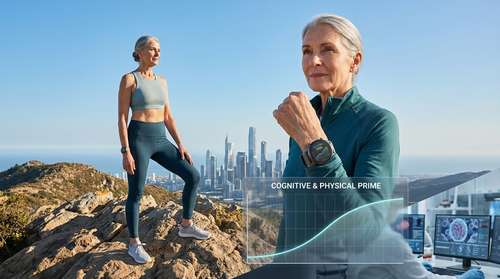
This physiological reality creates a massive discrepancy over the course of a modern human life. Because modern medicine routinely allows us to live into our 80s and beyond, humans now spend the vast majority of their adult lives in a "healthy but declined" state. The Peakspan framework forces us to confront this functional gap directly. It shifts the overarching objective from merely surviving without emergency medical intervention to actively maintaining the raw resilience, physical power, and sharp mental acuity of our absolute prime for as long as biologically possible.
The Role of Organ-Specific Aging
One of the most fascinating aspects of this new metric is that it is not a single, body-wide number. Instead, Peakspan is highly individualized and tissue-specific, reflecting recent insights into organ-specific aging, which show that our bodies age asynchronously. Your cardiovascular system may begin its functional decline at a completely different rate than your neurological or muscular systems.
In late March and early April 2026, this concept gained massive scientific traction. Scientists at UC Berkeley successfully utilized a miniaturized "organ-on-a-chip" system to accelerate human tissue aging by roughly 40 years in just four days, allowing them to test the exact mechanisms of localized cellular decline. Simultaneously, new clinical diagnostics like SystemsAge are enabling doctors to quantify biological aging across distinct organ systems from a simple blood draw. By tracking these disparate longevity benchmarks, preventive longevity experts can tailor highly specific lifestyle interventions—focusing therapies and conditioning exactly where a patient's Peakspan is beginning to slip.
Combating Cognitive Performance Aging and Physical Decline
Because every biological system follows its own unique timeline, extending the Peakspan health metric requires incredibly targeted strategies. Fluid intelligence and processing speed often peak in early adulthood, while crystallized intelligence (our accumulated knowledge) can remain robust for decades longer. Combating cognitive performance aging requires active, deliberate neurological stimulation rather than passive health maintenance.
Interestingly, physical interventions currently offer some of the most promising avenues for preserving cognitive function. A newly published study in the journal GeroScience in late March 2026 demonstrated that older adults engaging in regular resistance training actively slowed their biological brain aging. Advanced brain clock mathematical modeling revealed that consistent, heavy strength training over a one-year period reduced biological brain age by 1.4 to 2.3 years. Extending Peakspan vs Healthspan is heavily reliant on this type of cross-system stimulation—where preserving lean muscle mass and optimizing neuromuscular coordination directly safeguard neurological health.
Why Healthy Aging Trends in 2026 Focus on Optimization
Integrating the Peakspan health metric into daily life requires a fundamental shift in how we view longevity. Extending the time spent at 90% or more of your maximum capability isn't strictly about high-tech medical interventions or experimental pharmaceuticals. Prominent longevity experts emphasize that targeted, consistent lifestyle habits—such as progressive strength conditioning, maintaining robust aerobic capacity, optimizing cellular nutrition, and fostering a resilient psychological mindset—are the primary drivers of functional extension.
Tracking Early Indicators with AI
As we navigate the future of proactive medicine, artificial intelligence and foundational models of biological aging are making it exponentially easier to track the earliest, microscopic declines in performance. Recognizing these subtle drops before they manifest as clinical symptoms allows individuals to deploy corrective measures immediately.
Ultimately, optimizing for Peakspan ensures that the extra decades added to the modern human lifespan are filled with the dynamic vitality, strength, and intellectual capability that make those later years truly worth living.