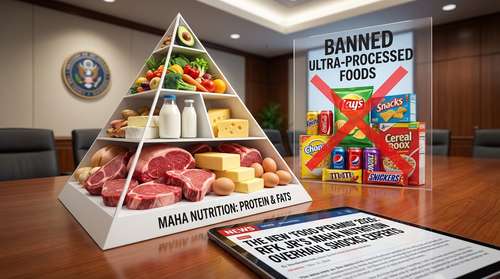
It is officially a new era for the American dinner plate. As of March 2026, the landscape of federal nutrition policy has been radically reshaped, marking the most significant departure from conventional dietary advice in nearly half a century. Following the release of the 2026 Dietary Guidelines for Americans in January, the nation is grappling with a "back to basics" approach that prioritizes animal proteins and full-fat dairy while declaring war on ultra-processed products. This pivot, driven by Health and Human Services Secretary Robert F. Kennedy Jr.’s MAHA nutrition policy, has effectively flipped the script—and the pyramid—on what constitutes a healthy diet.
The Return of the Food Pyramid: A 'Real Food' Revolution?
Gone is the complex, 100+ page technical report of previous cycles. The new 2025–2030 guidelines have been condensed into a streamlined, four-page manifesto centered on a single, uncompromising slogan: "Eat Real Food." The most visually arresting change is the reintroduction of a hierarchical guide, dubbed by the media as the new food pyramid 2026. Unlike its grain-heavy predecessor from the 1990s, this updated model places high-quality animal proteins, eggs, and full-fat dairy at the foundation of the American diet.
Officials argue this shift addresses the root causes of the chronic disease epidemic. "We are ending the fear-mongering around natural saturated fats," Secretary Kennedy stated during the rollout. The guidelines explicitly endorse butter, beef tallow, and olive oil as preferred cooking fats, a move that directly challenges decades of advice to favor vegetable and seed oils. This high protein whole food diet approach suggests that nutrient density, rather than calorie counting, should be the primary metric for health.
Crackdown on Ultra-Processed Foods
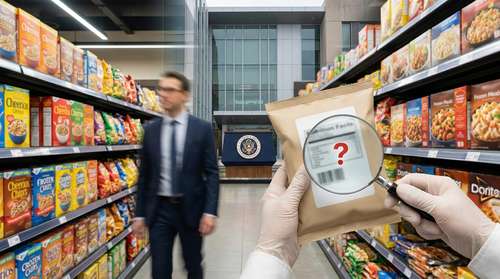
The other side of the coin is a strict new stance on industrial food products. For the first time, federal guidance does not just recommend limiting specific nutrients like sodium or sugar, but explicitly advises avoiding entire categories of food. The ultra-processed food regulations outlined in the document target items containing artificial dyes, high-fructose corn syrup, and non-nutritive sweeteners.
This policy is already having real-world ripples. As part of the rollout, the USDA has approved waivers for several states to restrict SNAP benefits, barring the purchase of soda and candy—a long-debated measure that is now federal reality. "If it contains ingredients you can't find in a home kitchen, it doesn't belong in a government-subsidized shopping cart," noted USDA Secretary Brooke Rollins.
MAHA Nutrition Policy: Beyond the Plate
The RFK Jr health initiatives extend beyond just dietary advice; they are reshaping the infrastructure of public health. In a major announcement this week coinciding with National Nutrition Month news, the HHS unveiled a new mandate for medical education. Starting in the fall of 2026, accredited medical schools will be required to provide a minimum of 40 hours of dedicated nutrition training to students—a massive increase from the current average.
The "Make America Healthy Again" (MAHA) agenda frames these changes as a matter of national security. With 70% of adults now classified as overweight or obese, the administration argues that the "failed experiment" of the low-fat, high-carb era has compromised military readiness and economic stability. By focusing on whole foods and eliminating toxic additives, the administration claims it can reverse these trends within a generation.
Controversy and Expert Pushback
The reaction from the established nutrition community has been swift and polarized. While some functional medicine practitioners prefer the shift toward whole foods, many traditional experts are sounding the alarm. Critics from major public health institutions warn that the unbridled promotion of saturated fats could lead to a spike in cardiovascular disease. There are also logistical concerns: a diet heavy in grass-fed beef and organic produce is significantly more expensive than the processed alternatives it replaces, raising questions about accessibility for low-income families.
"The simplification of the guidelines is dangerous," argued Dr. Sarah Jenkins, a leading epidemiologist. "While reducing processed foods is a positive goal, replacing them with unlimited red meat and butter contradicts decades of cardiovascular research." Environmental groups have also flagged the sustainability of a meat-centric national diet, noting the immense land and water resources required to support such a shift.
National Nutrition Month 2026: 'Discover the Power of Nutrition'
Amidst the policy storms, March’s National Nutrition Month has taken on a new urgency. The theme, "Discover the Power of Nutrition," feels particularly poignant as Americans navigate these conflicting narratives. Dietitians across the country are finding themselves on the front lines, helping patients reconcile the new federal advice with their personal health needs.
Whether this radical overhaul will succeed in making America healthy again remains the billion-dollar question. What is certain is that the 2026 guidelines have ignited a fierce conversation about what we eat, who profits from it, and what it truly means to be well-nourished in the modern age.