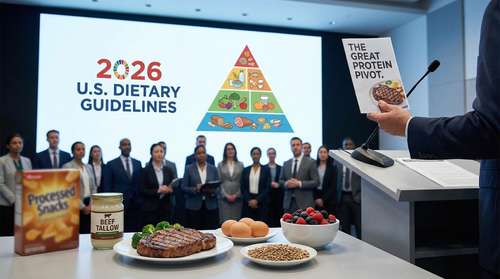
The American dinner plate is undergoing its most radical transformation in decades. As the dust settles on the rollout of the 2026 U.S. Dietary Guidelines, a seismic shift in federal nutrition policy is reshaping grocery lists across the nation. Under the banner of the new MAHA nutrition policy—"Make America Healthy Again"—the federal government has officially declared war on ultra-processed foods while doubling down on whole-food nutrient density. The headline shocker? A massive increase in high protein diet recommendations to 1.2–1.6 grams per kilogram of body weight, a standard that effectively flips the script on the low-fat, grain-heavy advice of the past forty years.
The New Protein Standard: 1.2–1.6g Per Kg
For decades, the recommended dietary allowance (RDA) for protein languished at a modest 0.8g per kilogram of body weight—a figure many experts argued was merely a survival minimum, not an optimal target for thriving. The 2026 U.S. Dietary Guidelines have shattered this ceiling, advising a new robust target of 1.2 to 1.6 grams per kilogram. For a 180-pound adult, this means consuming approximately 98 to 130 grams of high-quality protein daily, significantly higher than previous standards.
This "Protein Pivot" is driven by what the Department of Health and Human Services (HHS) calls "gold standard science" emphasizing muscle maintenance, metabolic health, and satiety. The new guidelines explicitly prioritize bioavailability, giving a green light to animal-based sources like eggs, poultry, and red meat alongside nutrient-dense plant options. Critics from the American Heart Association have raised concerns about potential saturated fat intake, but the administration maintains that the obesity epidemic requires a decisive shift away from empty carbohydrates toward satiating protein.
War on Ultra-Processed Foods (UPFs)
If protein is the protagonist of the new FDA food pyramid 2026, ultra-processed food health risks are the antagonist. For the first time, federal guidance does not just suggest limiting junk food but actively categorizes "highly processed packaged foods" as potential metabolic disruptors to be avoided entirely. The guidelines cite recent 2025 studies linking UPFs to chronic inflammation and metabolic disease, urging parents to eliminate added sugars completely for children under four.
This hardline stance has sent shockwaves through the food industry, with stock prices of major snack manufacturers tumbling in early January trading. The MAHA nutrition policy explicitly targets foods with "chemical additives and non-nutritive sweeteners," pushing instead for a return to "real food" ingredients that our great-grandparents would recognize.
Fat is Back: The Beef Tallow vs. Seed Oils Debate
Perhaps the most culturally charged aspect of the new standards is the vindication of saturated fats from whole foods. The guidelines have stepped directly into the viral beef tallow vs seed oils debate, siding with traditional fats. The new framework encourages the use of stable cooking fats like butter, ghee, and beef tallow over highly refined industrial seed oils (such as soybean or corn oil) for high-heat cooking.
This endorsement has fueled a consumer frenzy. Grocery chains are reporting shortages of rendered fats as Americans swap out their vegetable oil for tallow, driven by the administration's "Make Frying Oil Tallow Again" rhetoric. While mainstream lipidologists caution against disregarding LDL cholesterol risks, the new guidelines argue that the source of the fat matters more than the macronutrient itself, distinguishing between the stearic acid in beef tallow and the inflammatory markers often associated with heated industrial oils.
#Fibermaxxing: The Gut Health Trend Goes Mainstream
Parallel to the official government pivot is the explosion of the fibermaxxing gut health trend, which has moved from TikTok niche to national pastime in the wake of the guidelines' release. With the government recommending a "whole foods first" approach, Americans are obsessively tracking their fiber intake, aiming to exceed the standard 30 grams daily.
The 2026 U.S. Dietary Guidelines support this movement by emphasizing the microbiome-feeding properties of fiber found in fruits, vegetables, and legumes. Unlike the fiber-fortified processed snacks of the past, the "fibermaxxing" phenomenon—highlighted in a breaking AARP report just yesterday—focuses on whole-food volume eating. It's a rare instance where viral social media wellness culture and federal policy have perfectly aligned, driving a surge in sales for chia seeds, lentils, and leafy greens.
A New Era of Nutritional Sovereignty?
The release of the 2026 U.S. Dietary Guidelines marks a definitive break from the consensus-driven, industry-friendly pyramids of the past. By championing high protein, demonizing UPFs, and rehabilitating traditional fats, the government is betting the nation's health on a return to ancestral eating patterns. Whether this MAHA nutrition policy will reverse the chronic disease epidemic remains the decade's defining question, but one thing is certain: the era of the low-fat, high-sugar food pyramid is officially over.