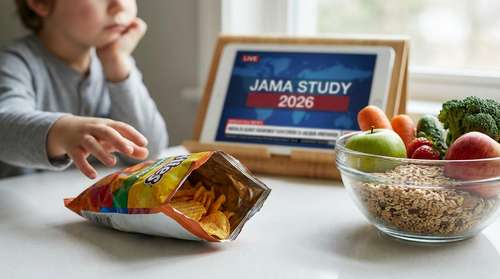
A groundbreaking new study has drawn a direct line between what children eat and how they behave, fundamentally shifting the conversation around childhood nutrition and mental health. Published on March 3, 2026, in JAMA Network Open, this landmark research reveals that high consumption of ultra-processed foods (UPFs) in early childhood is significantly associated with increased behavioral and emotional challenges later in life. For parents navigating the grocery aisles, the message is becoming increasingly clear: the convenience of processed snacks may come at a hidden cost to child development.
The 2026 JAMA UPF Study: Key Findings
The study, led by researchers from the University of Toronto, analyzed data from over 2,000 children participating in the Canadian CHILD Cohort Study. The team tracked dietary habits at age three and assessed behavioral outcomes at age five using the standardized Child Behavior Checklist.
The results were stark. Children with higher intake of ultra-processed foods at age three—specifically those whose diets consisted heavily of packaged snacks, sugary drinks, and instant meals—showed measurably higher scores for both internalizing behaviors (such as anxiety, social withdrawal, and fearfulness) and externalizing behaviors (including aggression and hyperactivity) by age five.
"We found that for every 10% increase in calories from ultra-processed foods, there was a consistent uptick in reported behavioral difficulties," noted the study's lead authors. This JAMA UPF study 2026 is among the first prospective studies to demonstrate a temporal link, suggesting that diet may precede and predict behavioral changes, rather than just correlating with them.
Why Processed Food May Trigger Behavioral Issues
Understanding the mechanism behind processed food behavioral issues is crucial for parents and policymakers. Experts suggest several biological pathways through which UPFs might impact a developing brain.
The Gut-Brain Connection
The emerging science of the gut-brain axis indicates that the additives, emulsifiers, and low-fiber content typical of UPFs can disrupt the gut microbiome. A compromised microbiome may alter the production of neurotransmitters like serotonin and dopamine, which are essential for mood regulation and impulse control.
Nutrient Displacement and Blood Sugar
When children fill up on calorie-dense but nutrient-poor foods, they often miss out on essential nutrients like Omega-3 fatty acids, zinc, and B vitamins that are critical for neurodevelopment. Furthermore, the high refined sugar content in many healthy snacks for kids (often marketed as such but technically UPFs) causes rapid spikes and crashes in blood glucose. These fluctuations can manifest physically as jitteriness and irritability, often mistaken for or exacerbating behavioral problems.
FDA Nutrition 2026: A Shifting Regulatory Landscape
The release of this study coincides with major policy shifts in the United States. Under the FDA nutrition 2026 priorities, the agency has announced a renewed focus on "Food Chemical Safety" and identifying risks associated with high UPF consumption.
As part of its 2026 deliverables, the FDA is moving to tighten regulations on additives and potentially introduce stricter front-of-package labeling requirements. The goal is to increase transparency, allowing parents to easily identify products high in added sugars, sodium, and saturated fats. This regulatory push aligns with the broader "Eat Real Food" movement, aiming to reduce the prevalence of diet-related chronic diseases and, increasingly, developmental and mental health issues in the pediatric population.
Implementing 'Eat Real Food' Guidelines at Home
For families, the transition away from UPFs doesn't have to be an all-or-nothing approach. The Eat Real Food guidelines emphasize progress over perfection, encouraging the substitution of ultra-processed items with whole or minimally processed alternatives.
Here are practical swaps to improve childhood nutrition and mental health:
- Swap sugary yogurts for plain Greek yogurt sweetened with fresh fruit and a drizzle of honey.
- Replace packaged chips with air-popped popcorn or homemade kale chips.
- Trade sugary breakfast cereals for oatmeal topped with nuts and seeds.
- Choose whole fruits instead of fruit snacks or fruit leathers, which often stick to teeth and contain concentrated sugars.
By focusing on nutrient-dense whole foods, parents can support their child's physical growth while potentially safeguarding their emotional stability. As the science evolves, the connection between what we eat and how we feel is becoming undeniable, empowering families to make choices that nourish both body and mind.