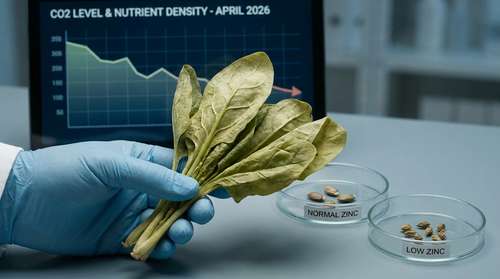
The vegetables on your dinner plate might look identical to the ones your grandparents ate, but chemically, they are shadows of their former selves. A landmark investigation updated on April 30, 2026, sheds light on an invisible crisis reshaping our agricultural systems: the nutrient collapse. Driven by steadily rising carbon dioxide emissions, this phenomenon is fundamentally altering plant biology, quietly stripping essential vitamins, protein, and minerals from the world's most critical foods.
The Science Behind the Nutrient Collapse
To understand the severe CO2 impact on nutrition, you have to look at how plants breathe. Carbon dioxide is the primary fuel for photosynthesis. As atmospheric CO2 levels have surged past 425 parts per million, crops are growing larger and faster than ever before. However, this accelerated growth comes with a steep biological cost.
Scientists compare this effect to feeding plants a strict diet of junk food. The excess carbon causes plants to go into overdrive, packing their cells with carbohydrates—specifically sugars and starches—while taking in fewer essential minerals from the soil. The result is a steep drop in nutrient density. While agricultural yields are visibly larger, the food itself is essentially diluted, lacking the robust mineral profiles that sustained previous generations.
Not all crops respond to this environmental shift identically. The vast majority of our food comes from C3 plants, a broad category encompassing wheat, rice, barley, and most everyday fruits and vegetables. These plants are exceptionally sensitive to carbon fluctuations. In contrast, C4 plants like corn and sugarcane utilize a different photosynthetic pathway and show slightly more resilience. Yet, because global diets are overwhelmingly dependent on C3 varieties, the biological tradeoff remains a massive vulnerability.
Staple Crop Nutrition: The April 2026 Assessment
Data synthesized this week from global agricultural monitoring projects paints a stark picture of staple crop nutrition. Analyzing tens of thousands of independent crop measurements, researchers found pervasive chemical declines across 43 different plant species. The numbers are deeply alarming for populations that rely heavily on a few key grains and legumes for survival.
- Plummeting Zinc: Zinc deficiency in crops has emerged as a primary concern for modern agriculture. The latest field reports confirm that zinc concentrations in chickpeas can plummet by as much as 37.5% under our current atmospheric conditions.
- Protein Deficits: Wheat and rice, two crops that feed billions daily, are experiencing consistent drops in protein content. Some modern wheat varieties are now losing over 7% of their total grain protein compared to historical baselines.
- Iron Depletion: Vital micronutrients like iron are consistently measuring lower across almost all heavily farmed C3 crops.
Perhaps one of the most alarming food quality trends 2026 has revealed is that as these vital nutrients decline, the absorption of toxic heavy metals appears to be shifting. Recent analyses indicate that while zinc drops, lead accumulation in certain leafy greens is actually increasing. We are facing a reality where our harvests are simultaneously more calorific, less nutritious, and potentially carrying higher trace toxicity.
The Silent Spread of 'Hidden Hunger'
This widespread botanical shift is fueling a dangerous public health crisis known as hidden hunger. Unlike traditional starvation, hidden hunger occurs when people consume adequate or even excessive daily calories but still suffer from severe, silent micronutrient deficiencies.
When rice, wheat, and soy lose their nutritional integrity, the cascading health consequences are devastating. Iron deficiency is already the most common nutritional disorder worldwide, affecting over two billion people. With the ongoing nutrient collapse, epidemiological models updated over the past 48 hours suggest that millions more will be pushed into severe anemia by the end of the decade. Zinc deficiency, which severely stunts growth in children and increases mortality rates from infectious diseases, is tracking closely behind.
Even in wealthy nations, the erosion of food quality means that maintaining a balanced diet requires consuming physically more food—and consequently more calories—just to hit the same nutritional benchmarks we reached easily in the 1990s. This dynamic is directly accelerating the dual burden of malnutrition and obesity.
Can We Reverse the Decline?
Addressing the dilution of our food supply requires an aggressive, multifaceted approach. Plant geneticists are currently racing to develop biofortified crop varieties that can maintain their mineral uptake even in high-CO2 environments. Simultaneously, a global pivot toward regenerative agriculture is proving critical.
Protecting the Soil and Your Plate
Healthy, microbe-rich soil can help offset the dilution effect by maximizing the raw minerals available to a plant's root system. Decades of intensive industrial farming have left much of our arable land depleted, making soil rehabilitation a matter of urgent national security.
While the broader agricultural sector fights to stabilize crop quality, consumers must adapt to these changing realities today. Relying solely on conventional, mass-produced grains is no longer a safe nutritional strategy. Diversifying your plate with ancient grains, prioritizing sustainably farmed produce, and focusing intensely on a wide variety of whole plant sources are the best personal defenses against the hidden hunger epidemic.
The declining nutritional value of our food stands as one of the most visceral arguments for immediate environmental action. We are learning the hard way that when we fundamentally alter the atmosphere, we do far more than change the weather. We compromise the very biology of the sustenance that keeps humanity alive.