A groundbreaking study published today in JAMA Network Open has revealed a significant link between the consumption of ultra-processed foods (UPFs) during preschool years and increased behavioral and emotional difficulties by age five. The research, led by scientists at the University of Toronto, suggests that what children eat during this critical developmental window may have lasting effects on their mental well-being, including higher risks of anxiety, aggression, and hyperactivity.
Breaking Down the Findings
The study, titled "Ultraprocessed Food Consumption and Behavioral Outcomes in Canadian Children," analyzed data from over 2,000 children enrolled in the longitudinal CHILD Cohort Study. Researchers assessed dietary habits at age three and followed up with standardized behavioral assessments at age five using the widely respected Child Behavior Checklist.
The results were stark: for every 10% increase in daily caloric intake from ultra-processed foods, children exhibited higher scores for both internalizing behaviors (such as anxiety, fearfulness, and social withdrawal) and externalizing behaviors (including aggression and hyperactivity). specifically, researchers noted a 0.8-point increase on internalizing scales and a 0.5-point increase on externalizing scales for each decile rise in UPF consumption.
"The preschool years are critical for child development, and it's also when children begin to establish dietary habits," said Dr. Kozeta Miliku, the study's principal investigator and an assistant professor of nutritional sciences at the University of Toronto. "Our findings underscore the need for early-life interventions such as professional advice for parents and caregivers."
The Impact of Processed Diets on Developing Brains
Ultra-processed foods—industrial formulations often containing additives, preservatives, and high levels of sugar, fat, and sodium—now make up nearly half (46%) of the daily caloric intake for preschoolers in North America. This study is among the first to move beyond physical health metrics like obesity to examine how these foods affect preschool nutrition and mental health.
The research team, including first authors Dr. Meaghan Kavanagh and Zheng Hao Chen, adjusted for various potential confounders such as socioeconomic status, maternal mental health, and screen time. Even after these adjustments, the correlation between high UPF intake and behavioral challenges remained significant.
Why Early Childhood Matters
The period between ages three and five is characterized by rapid brain development and the refinement of emotional regulation skills. The study suggests that poor quality diets high in processed foods might deprive the developing brain of essential nutrients needed for optimal neurodevelopment, or conversely, that additives in UPFs could directly impact neural pathways linked to behavior.
A Path Forward: Replacing UPFs with Whole Foods
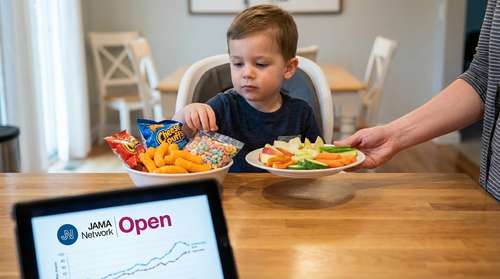
While the statistics are concerning, the study also offered a hopeful solution. Models simulating dietary changes showed that replacing just 10% of ultra-processed food energy with minimally processed foods (like fresh fruits, vegetables, and whole grains) was associated with better behavioral outcomes. This finding empowers parents to make small, manageable shifts rather than feeling pressured to overhaul entire diets overnight.
Dr. Miliku emphasized that the responsibility shouldn't fall solely on families. "Our findings support ongoing policy actions that promote minimally processed foods and underscore the need for nutrition standards for child-care providers and reformulation of some packaged foods," she noted.
Practical Tips for Healthy Eating for Preschoolers
Transitioning away from processed foods can be challenging for busy families. Here are actionable steps based on the study's insights to support healthy eating for preschoolers:
- Swap the Snacks: Replace pre-packaged crackers or gummies with whole fruit slices, cheese cubes, or plain yogurt.
- Read the Labels: Look out for long ingredient lists with unpronounceable additives—a hallmark of ultra-processed products.
- Incremental Changes: Focus on replacing one processed item per day with a whole-food alternative to gradually adjust your child's palate.
- Focus on Hydration: Swap sugar-sweetened beverages and artificially sweetened drinks, which showed strong associations with behavioral issues, for water or milk.
As evidence mounts linking diet and hyperactivity in children, this new research serves as a vital wake-up call. It highlights that nutrition is not just about physical growth but is deeply intertwined with how children feel, behave, and interact with the world around them.