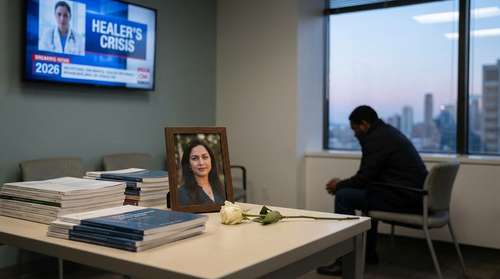
The mental health community is reeling this morning following the release of heartbreaking new details regarding the passing of Katherine Short, the 42-year-old daughter of comedy legend Martin Short. While the news of her death at her Hollywood Hills home first broke last week, the Los Angeles County Medical Examiner's office confirmed yesterday, March 3, 2026, that the beloved licensed clinical social worker died of a self-inflicted gunshot wound. This revelation has transformed a celebrity family's private grief into a flashing red light for the profession, igniting a national conversation about the Katherine Short suicide and the silent, growing epidemic known as the "Healer's Crisis."
The Tragedy of a Healer: Katherine Short's Legacy
Katherine Elizabeth Short was more than just Martin Short's daughter; she was a dedicated frontline warrior in the battle for mental wellness. A graduate of NYU and USC, she spent over a decade serving the most vulnerable, from veterans at the West LA VA to families in crisis through her private practice. Colleagues describe her as a "beacon of empathy" who worked tirelessly to destigmatize mental illness, notably through her involvement with the charity Bring Change 2 Mind.
Her death has left her family, including her father and brothers Oliver and Henry, "devastated," according to a statement released earlier. But for the professional community, the shock is compounded by a terrifying realization: the very people trained to save lives are losing their own. The confirmation of Katherine Short death news 2026 as a suicide has shattered the illusion that professional knowledge creates immunity to mental health struggles.
Therapist Burnout 2026: A Silent Epidemic
As tributes pour in, a disturbing pattern is emerging. Katherine's story is not an isolated incident but a high-profile example of therapist burnout 2026. Mental health professionals are currently facing unprecedented pressure. Following the global mental health surges of the mid-2020s, therapists have been operating at maximum capacity, often carrying unmanageable caseloads with high-acuity patients.
Dr. Elena Rodriguez, a psychiatrist and advocate for provider wellness, notes, "We are seeing a sharp rise in mental health professional suicide because the system is broken. We ask therapists to absorb the world's trauma without giving them the infrastructure to process their own. It is a hydraulic pressure cooker, and we are losing our best people."
The Double Stigma of the 'Healer's Crisis'
The term healer's crisis refers to the unique, dangerous paradox faced by medical and mental health providers. They are expected to be stoic pillars of strength, often fearing that seeking help for themselves will lead to professional repercussions, such as the loss of licensure or judgment from peers.
For therapists like Katherine, the "imposter syndrome" can be lethal. The thought process often spirals: "I am the expert; I should be able to fix myself." This professional shame drives the struggle underground, isolating therapists exactly when they need connection the most. The details released regarding the Katherine Short tragedy highlight that even those with the deepest understanding of the human mind can feel like there is no way out.
Systemic Failure and the Call for Reform
The loss of Katherine Short must serve as a watershed moment for the industry. Current support systems are woefully inadequate. While programs like the HEAR (Healer Education Assessment and Referral) initiative have made strides in hospital settings, private practitioners often work in silos, disconnected from peer support.
Experts are now calling for mandatory "healer care" protocols, including:
- Confidential Screening: Anonymous mental health check-ins for providers that do not jeopardize medical licenses.
- Reduced Caseload Mandates: strict caps on patient hours to prevent compassion fatigue.
- Peer Support Networks: Normalized, regular debriefing groups for private practice therapists.
Suicide Prevention for Therapists: Breaking the Silence
The most immediate legacy of this tragedy must be a change in culture. Suicide prevention for therapists begins with dismantling the myth of the invulnerable healer. We must normalize the fact that therapists are humans first and professionals second. They bleed, they hurt, and they burn out just like the patients they serve.
If you are a mental health professional struggling today, know that your pain is valid and you are not alone. The loss of Katherine Short is a somber reminder that intelligence, training, and a loving family are sometimes not enough to shield against the darkness—but reaching out can be the first step back to the light.
If you or someone you know is in crisis, call or text 988 to reach the Suicide and Crisis Lifeline, available 24 hours a day, 7 days a week.