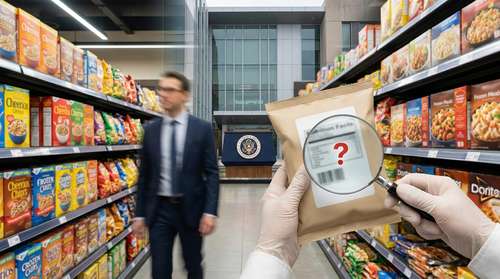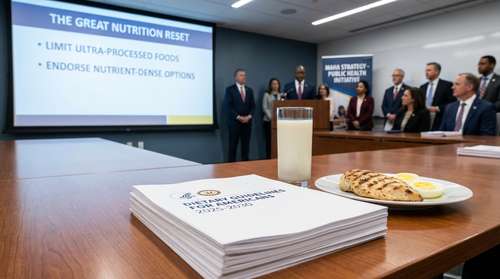
In a historic pivot that officials are calling the "Great Nutrition Reset," the federal government has officially released the Dietary Guidelines for Americans 2025-2030, marking the most aggressive crackdown on industrial food production in U.S. history. Released jointly by the USDA and HHS earlier this month, the new standards explicitly advise against the consumption of ultra-processed foods (UPFs) and introduce radical changes to protein and dairy recommendations. Under the influence of the MAHA strategy nutrition framework championed by HHS Secretary Robert F. Kennedy Jr., the guidelines signal a paradigm shift from calorie counting to a "Real Food" mandate.
The War on Ultra-Processed Foods Begins
For the first time, the federal dietary guidelines have established a distinct category for "highly processed" products, issuing a direct recommendation to limit them significantly. The new policy explicitly targets ultra-processed foods health risks, citing links to chronic disease and metabolic dysfunction. Unlike previous iterations that focused vaguely on "nutrient density," the 2025-2030 text specifically advises Americans to avoid products containing artificial flavors, petroleum-based dyes, and non-nutritive sweeteners.
"The era of prioritizing shelf life over human life is over," stated officials during the release. The guidelines encourage a return to whole ingredient supply chains, effectively challenging the business models of major snack food conglomerates. This regulatory shift aligns with the impending FDA food dye ban, which targets several synthetic coloring agents previously deemed "Generally Recognized as Safe" (GRAS) but now slated for elimination from the school lunch program by late 2026.
High Protein and the Return of Full-Fat Dairy
Perhaps the most controversial departure from traditional advice is the new high protein diet recommendations 2026. The guidelines have raised the recommended daily protein intake from 0.8 grams to a range of 1.2–1.6 grams per kilogram of body weight. This adjustment aims to combat sarcopenia and metabolic frailty but has drawn sharp criticism from plant-based advocacy groups.
In a move that reverses decades of low-fat dogma, the new standards also advocate for full fat dairy vs low fat options. The text suggests that the matrix of whole milk, butter, and cheese provides essential satiety signals and nutrient absorption that "stripped" skim versions lack. This endorsement of animal fats is a cornerstone of the Robert F. Kennedy Jr nutrition policy, which argues that natural fats have been unfairly demonized while processed seed oils and refined carbohydrates escaped scrutiny.
Zero Tolerance for Added Sugars in Early Childhood
The restrictions on sugar have tightened drastically. The new guidelines recommend a total avoidance of added sugars for children under age four—up from the previous age limit of two. For adults, the recommendation remains capped at 10% of daily calories, but with a new caveat: "No amount of added sugar is considered beneficial." This strict stance is expected to reshape the formulation of baby foods and toddler snacks, forcing manufacturers to reformulate or face exclusion from federal assistance programs like WIC.
Industry Pushback and Public Health Division
The Dietary Guidelines for Americans 2025-2030 have sparked a fierce debate within the nutrition community. While functional medicine practitioners hail the "Real Food" focus as a victory for metabolic health, traditional dietitians worry that the de-emphasis on saturated fat limits could spike cholesterol levels. Critics also point out the "internal inconsistency" of promoting beef tallow and butter while technically retaining the 10% saturated fat cap from previous years.
Despite the controversy, the administration is moving forward with implementation. The USDA is already overhauling school meal patterns to meet these new protein targets, and the MAHA strategy nutrition task force has announced plans to audit hospital food menus by mid-year. As the "Great Nutrition Reset" takes hold, the message to the American consumer is clearer than ever: If it was made in a lab, leave it on the shelf.