A landmark study published today, March 5, 2026, has fundamentally shifted our understanding of weight loss, revealing that the key to burning fat may not just be how much you eat, but specifically how much protein you consume. Researchers at the City of Hope, the Broad Institute of MIT and Harvard, and Keio University have discovered that a low-protein diet triggers a specific quartet of gut bacteria to transform energy-storing white fat into calorie-burning "beige fat."
Published in the prestigious journal Nature, this research identifies a novel biological mechanism where the gut microbiome acts as a command center for metabolism. The findings offer a promising new roadmap for treating obesity and metabolic diseases without relying solely on calorie restriction or synthetic drugs. For anyone searching for a low protein diet fat burning strategy or following nutrition breakthroughs 2026, this study represents a pivotal moment in metabolic science.
The Science of "Beiging": Turning Fat Into Fuel
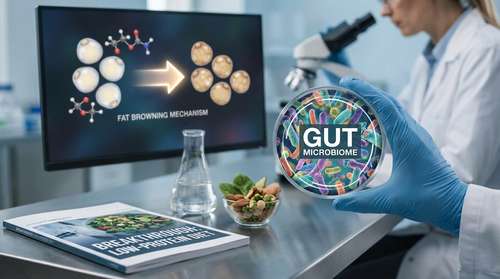
To understand the breakthrough, it is essential to distinguish between the two main types of fat in the body. White fat stores excess energy and accumulates around the waist and hips. Brown fat (and its inducible cousin, beige fat) is metabolically active; it contains iron-rich mitochondria that burn sugar and fat to generate heat. The process of converting white fat into this energy-burning form is known as "browning" or "beiging."
For years, scientists have sought ways to artificially stimulate this fat browning mechanism to combat obesity. The new City of Hope nutrition study provides the answer: it’s not just about cold exposure or exercise, but a specific dietary trigger acting on the microbiome.
"Fat tissue is not fixed—it's surprisingly adaptable," said Dr. Kenya Honda, co-senior author of the study and a professor at Keio University and City of Hope. "We found that certain gut bacteria can sense what the host is eating and translate that information into signals that tell fat cells to burn energy."
The Mechanism: A Bacterial Relay Team
The researchers found that when mice were fed a specific low-protein diet, four distinct strains of gut bacteria began to surge in population. These bacteria didn't just sit idly; they initiated a complex "relay race" of chemical signals that ultimately flipped the body's metabolic switch.
The study details a two-step communication pathway:
- Signal 1: Bile Acid Transformation. The bacteria first modified bile acids in the gut. These altered molecules acted as messengers, priming the body's fat cells for change.
- Signal 2: The FGF21 Trigger. Simultaneously, the bacterial activity prompted the liver to secrete Fibroblast Growth Factor 21 (FGF21), a powerful hormone known to regulate energy intake and glucose metabolism.
Crucially, this metabolism boosting gut bacteria effect was entirely dependent on the microbiome. When the researchers fed the same low-protein diet to "germ-free" mice (raised without any gut bacteria), the fat-burning effect completely disappeared. This proves that the diet alone isn't enough; the microbiome is the essential translator of dietary signals.
The Protein Paradox: Why Less Can Be More
In a fitness culture obsessed with high-protein intake for muscle growth, the concept of a low protein diet for fat burning seems counterintuitive. However, this study aligns with a biological concept called hormesis—where mild stress (in this case, temporary protein restriction) triggers beneficial adaptive responses.
By momentarily restricting amino acids, the body signals the gut microbiome to optimize energy efficiency. The bacteria essentially tell the host: "Resources are changing; let's burn stored energy to stay warm and active." This insight into the gut microbiome weight loss study field suggests that cycling protein intake—rather than maintaining constantly high levels—might be a key to metabolic flexibility.
Future Implications: Activating Beige Fat Without Extreme Diets
While the study utilized a low-protein diet to trigger this pathway, the researchers caution against extreme dietary changes for humans just yet. The ultimate goal is not to force people into protein deficiency, but to harness the mechanism itself.
Co-senior author Dr. Ramnik Xavier of the Broad Institute noted that identifying these specific bacterial strains opens the door to "next-generation probiotics" or postbiotic therapies. In the future, patients might take a supplement containing these four bacterial strains—or the specific bile acid metabolites they produce—to activate beige fat without needing to drastically alter their diet. This could revolutionize how we treat type 2 diabetes and severe obesity.
Key Takeaways for Metabolic Health
While we await clinical trials, this nutrition breakthrough of 2026 offers immediate actionable wisdom:
- Gut Health is Metabolic Health: Your microbiome is a full partner in your weight loss efforts.
- Dietary Diversity Matters: Rotating macronutrients (like protein) may keep metabolic pathways responsive.
- Future Treatments: Look for microbiome-based therapies targeting the FGF21 pathway in the coming years.