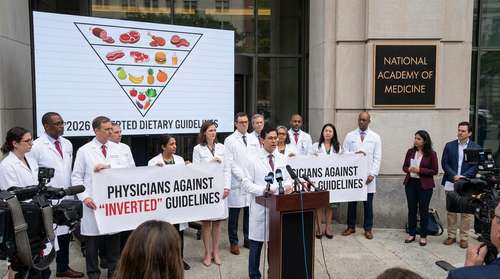
A heated battle over the future of American nutrition has reached a boiling point this week as more than 200 medical professionals and nutrition researchers signed an open letter demanding an immediate reform of the newly released 2026 U.S. Dietary Guidelines. The coalition of experts is sounding the alarm over what they describe as an "unscientific" and potentially dangerous overhaul of federal nutrition policy, specifically targeting the controversial "inverted food pyramid" introduced by HHS Secretary Robert F. Kennedy Jr. and USDA Secretary Brooke Rollins. This unprecedented revolt highlights a deepening fracture between the scientific community and the administration's MAHA health initiative.
200+ Experts Condemn "Unscientific" Overhaul
The open letter, delivered to the Department of Health and Human Services (HHS) and the USDA earlier this week, argues that the 2025–2030 Dietary Guidelines for Americans ignore decades of established nutrition science. The signatories, comprising leading cardiologists, epidemiologists, and dietitians, expressed "deep concern" that the new policy prioritizes ideology over evidence. At the heart of their grievance is the administration's decision to bypass the recommendations of the non-partisan Dietary Guidelines Advisory Committee (DGAC), which had largely advocated for a shift toward plant-forward diets to combat chronic disease.
Instead, the final guidelines rely heavily on reviews from a newly created "Scientific Foundation," which critics allege is comprised of individuals with significant conflicts of interest. "We are deeply concerned that the advice in the recently released guidelines is, at best, confusing, and, at worst, harmful to public health," the letter states. The doctors warn that disregarding the DGAC's findings in favor of a meat-centric approach could reverse years of progress in fighting heart disease and obesity.
The "Inverted Pyramid": A Radical Shift in Nutrition Policy
The most visible symbol of this controversy is the reintroduction of a food pyramid graphic—but with a radical twist. Dubbed the "inverted pyramid," the new visual turns traditional nutritional wisdom on its head. In this updated model, red meat, full-fat dairy, butter, and beef tallow occupy the widest section at the top, signaling they should be the foundation of the American diet. Meanwhile, whole grains, legumes, and carbohydrates have been demoted to the smallest tip at the bottom.
Supporters of the MAHA health initiative (Make America Healthy Again) argue that this shift is necessary to combat the "seed oil" and processed food epidemic. Secretary RFK Jr. has frequently criticized previous guidelines for demonizing natural animal fats while promoting processed grains. However, the inverted food pyramid has baffled public health experts. "Placing steak and butter above vegetables and whole grains contradicts virtually every major study on longevity and cardiovascular health," noted one signatory of the letter. The guidelines maintain a confusing recommendation to limit saturated fat to 10% of daily calories, despite visually promoting foods primarily composed of those very fats.
MAHA vs. Established Science: The Core Conflict
This clash represents a broader ideological struggle between the administration's MAHA health initiative and the traditional scientific establishment. The initiative, central to the Trump administration's health policy, aims to "Make America Healthy Again" by returning to whole, unprocessed foods and rejecting what it views as corporate-influenced nutritional dogma. Proponents argue that the USDA dietary updates act as a necessary correction to decades of bad advice that led to the obesity epidemic.
However, the 200+ doctors argue that the correction has swung too far into pseudoscience. The open letter highlights that the "Scientific Foundation" reviews used to justify the new guidelines were largely narrative rather than systematic, lacking the rigor required for federal policy. By promoting beef tallow over olive oil and red meat over lentils, critics argue the guidelines are catering to political narratives rather than biological reality. "This isn't just a difference of opinion; it's a rejection of the scientific method," said Dr. Sarah Miller, a cardiologist and signatory of the letter.
Public Health Implications: Confusion in the Aisle
The fallout from these 2026 U.S. Dietary Guidelines extends far beyond academic debates. These federal standards dictate the menus for school lunches, the WIC program, and nutrition assistance for millions of Americans. School nutrition directors are now facing a dilemma: adhere to the new "meat-first" standards which may increase food costs and saturated fat intake, or stick to previous standards and risk non-compliance.
For the average consumer, the mixed messaging is dizzying. While the text of the guidelines still advises limiting saturated fats, the accompanying graphics suggest an unlimited buffet of ribeyes and cheese. This cognitive dissonance is exactly what the 200 doctors fear will lead to "nutritional chaos." As the petition gains traction, it remains to be seen whether the USDA will address these concerns or double down on its controversial new vision for America's plate.