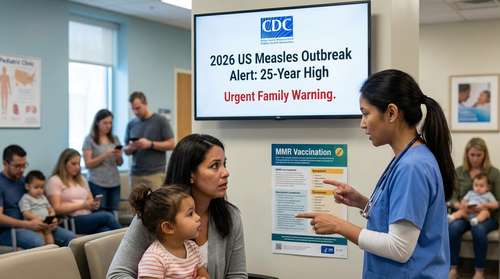
The United States is currently facing its most severe measles crisis in a quarter-century, with federal health data revealing a staggering surge in infections that has pediatricians and public health officials on high alert. Over 1,100 confirmed measles cases have been reported in the first two months of 2026 alone, a number that threatens to eclipse the record-breaking totals seen in 2025. As outbreaks spread across multiple states including Washington, Texas, and New Mexico, the Centers for Disease Control and Prevention (CDC) has issued urgent guidance for families to verify their immunization status immediately.
2026 Measles Outbreak: By the Numbers
The speed of this year's transmission is unprecedented in recent history. While 2025 was already a difficult year with approximately 2,280 cases recorded nationwide, 2026 is on track to more than double that figure if current trends persist. Data released this week indicates that the virus is moving aggressively through communities with lower vaccination rates.
Key statistics defining the 2026 crisis:
- 1,136 confirmed cases logged between January 1 and March 5, 2026.
- 90% of cases are associated with active outbreaks, rather than isolated travel-related incidents.
- 28 jurisdictions have reported cases, with significant clusters in the Pacific Northwest and the Southwest.
"We are seeing a resurgence of a disease that was declared eliminated in 2000," stated Dr. Tao Sheng Kwan-Gett, a state health official in Washington, where cases have more than doubled compared to last year's total. The sheer volume of infections in such a short window suggests that pockets of susceptibility have grown large enough to sustain widespread community transmission.
Why Is This Happening Now?
The primary driver of this resurgence is a decline in childhood immunization coverage. CDC data for the 2024-2025 school year showed that kindergarten MMR (measles, mumps, and rubella) vaccination rates dropped to roughly 92.5%, falling well below the 95% threshold required to maintain herd immunity. Concurrently, non-medical vaccine exemptions have risen, with 17 states now reporting exemption rates exceeding 5%.
This erosion of immunity has placed the United States in a precarious position. International health bodies are currently reviewing the U.S. status, with warnings that the country is "all but certain" to lose its measles elimination certification—a public health designation held since 2000. A critical review meeting by the Pan American Health Organization (PAHO) is scheduled for April, adding pressure on federal agencies to contain the spread.
Measles Symptoms in Children: What Parents Must Watch For
Measles is deceptively dangerous because early symptoms often mimic a common cold or flu. However, the virus is far more contagious—lingering in the air for up to two hours after an infected person leaves a room. Pediatric health alerts emphasize that recognizing the signs early is critical to preventing complications like pneumonia and encephalitis.
The Progression of Symptoms
- Days 1-3: High fever (often spiking above 104°F), cough, runny nose, and red, watery eyes (conjunctivitis).
- Days 2-4: Tiny white spots (Koplik spots) may appear inside the mouth before the skin rash develops.
- Days 3-5: A characteristic red, spotty rash erupts at the hairline and spreads downward to the neck, trunk, and limbs.
If you suspect your child has measles, do not go directly to a waiting room. Call your healthcare provider immediately so they can arrange a safe intake protocol that protects other patients.
MMR Vaccine Safety 2026: Addressing Concerns
Despite the rising cases, vaccine hesitancy remains a significant hurdle. Recent surveys indicate that while the vast majority of Americans (83%) still view the MMR vaccine as safe, this number has dipped slightly from previous years due to misinformation. Health experts are working overtime to reassure parents with concrete data.
The MMR vaccine remains one of the safest and most effective medical interventions available. Two doses are 97% effective at preventing measles for life. Recent clinical data from March 2026 has even reinforced the safety profile of MMR vaccinations in specific immunocompromised populations, further debunking unfounded fears about the shot's risks.
Prevention and Protection for Families
With the virus circulating actively in over two dozen states, the best protection is verification. Parents should check their children's vaccination records to ensure they have received both recommended doses of the MMR vaccine—typically given at 12-15 months and again at 4-6 years.
For families planning spring travel, particularly to outbreak hotspots like Texas or the Pacific Northwest, early vaccination for infants aged 6-11 months may be recommended. As the outbreak continues to evolve, staying informed through verified channels like the CDC and local health departments is your best defense against infection.