The fitness industry has long championed grueling, hours-long daily workouts, but a landmark scientific consensus published in March 2026 is completely rewriting the rules of aging. According to a sweeping new Position Stand from the American College of Sports Medicine (ACSM), mastering strength training for longevity does not require living in the weight room. In fact, the latest clinical research reveals that a minimalist fitness routine consisting of just two 30-minute sessions per week is enough to significantly slash mortality risk and transform your metabolic health.
The 2026 ACSM Paradigm Shift
The new guidelines mark the first major revision to the ACSM's resistance training recommendations in 17 years. Analyzing 137 systematic reviews that encompass over 30,000 participants, the message to the public is remarkably clear: chasing a "perfect" or overly complex regimen is unnecessary.
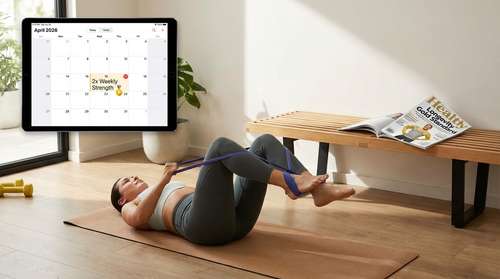
"The best resistance training program is the one you'll actually stick with," notes Stuart Phillips, an author on the ACSM Position Stand. This major fitness for longevity study breakthrough highlights that working major muscle groups through resistance training twice a week delivers nearly all the protective benefits of a daily habit. The data proves that consistency heavily outweighs total training volume. Whether you use dumbbells, resistance bands, or your own body weight, hitting that twice-weekly threshold provides profound, systemic biological protection.
Why Resistance Training Twice a Week Extends Lifespan
Recent data published in JAMA Network Open reinforces the ACSM's stance, tracking over 5,400 older women for an average of eight years. The researchers found that muscular strength independently predicted longevity. Remarkably, women who exhibited higher baseline strength levels saw a 12 percent lower death rate for every 15 pounds of grip strength they maintained, and a massive 30 percent reduction in overall mortality risk. This protective effect held strong regardless of how much walking or cardiovascular exercise the participants completed.
Beyond Just Muscles: Brain and Metabolic Health
The muscle strengthening benefits 2026 science extends far beyond aesthetics and basic mobility. Researchers are rapidly uncovering that skeletal muscle acts as a massive endocrine organ. When muscles contract, they release myokines-specialized proteins that communicate directly with the brain and internal organs. Just 30 to 60 minutes of weekly resistance work creates a "J-shaped curve" of mortality reduction, maximizing the biological benefits without the need for hours of exhausting labor.
These short, twice-weekly sessions trigger a powerful cascade of adaptations. They lower chronic systemic inflammation-a known precursor to cardiovascular and neurodegenerative diseases-and significantly improve insulin sensitivity. Furthermore, independent trials have shown that consistent strength training can slow the biological aging of the brain by up to two years, enhancing functional connectivity in areas responsible for decision-making and executive focus.
The Sarcopenia Prevention Protocol
As we age, we naturally lose muscle mass and bone density, a debilitating condition known as sarcopenia. This age-related physical decline is a primary driver of frailty, dangerous falls, and the eventual loss of independence. Effective sarcopenia prevention is arguably the single most critical component of this new longevity gold standard.
Heavy, frequent lifting is not required to halt this decline. The updated ACSM guidelines emphasize that even moderate effort twice a week sends a potent physiological signal to your body to preserve its lean mass. By maintaining the integrity of your skeletal muscle, you are essentially building a biological retirement fund for your later decades. It ensures you retain the raw power to perform basic life functions, from carrying heavy groceries to getting up from a chair without assistance.
Building a Minimalist Fitness Routine You Can Stick To
Adopting this evidence-based approach is remarkably accessible. You do not need an expensive health club membership or complex machinery to achieve these life-extending benefits. The true beauty of this scientific breakthrough is how seamlessly it fits into an already busy schedule.
At-Home Resistance Exercises That Work
For those looking to implement this strategy immediately, simple at-home resistance exercises are highly effective and clinically validated. A complete, full-body workout can be done right in your living room:
- Squats and Chair Stands: Perfect for targeting the quads, glutes, and core. The simple act of standing up from a chair and sitting back down slowly is a clinically recognized way to build functional longevity.
- Push-Ups (or Modified Wall Pushes): Essential for maintaining upper body strength and bone density in the arms, chest, and shoulders.
- Lunges: Critical for balance, lateral stability, and long-term hip health.
- Resistance Band Rows: A joint-friendly way to strengthen the back muscles and improve posture.
By dedicating just two days a week to these foundational movements, you align your habits with the absolute latest clinical evidence for a longer, healthier life. The era of the punishing, seven-day-a-week workout is giving way to a much smarter, science-backed approach: do the bare minimum, but do it consistently.