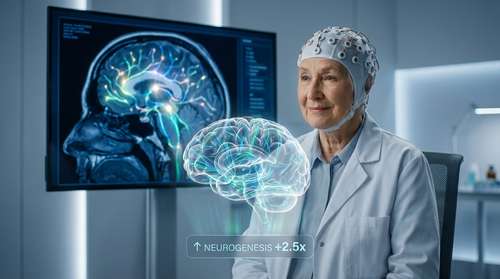
For decades, scientists believed that the adult brain's ability to generate new cells largely ceased after childhood. That dogma has been shattered this week. A groundbreaking new study published in Nature by researchers at the University of Illinois Chicago (UIC) and Northwestern University has uncovered the biological mechanism that allows "SuperAgers"—people over 80 with the memories of 50-year-olds—to defy mental decline. The findings reveal that these elite agers possess a unique "resilience signature" that allows their brains to produce new neurons in the hippocampus at rates two to two-and-a-half times higher than their peers, proving that robust neurogenesis is not only possible but active in late life.
The "Resilience Signature": A Biological Breakthrough
The study, released on February 25, 2026, offers the first cellular evidence explaining why some brains remain distinctively plastic while others succumb to dementia. By analyzing donated brain tissue from the Northwestern University SuperAging Program, the research team identified an abundance of immature neurons in the dentate gyrus of the hippocampus—the brain's command center for memory formation.
"We've always said that SuperAgers show that the aging brain can be biologically active, adaptable, and flexible, but we didn't know why," said co-author Dr. Tamar Gefen of Northwestern's Mesulam Institute. "This is biological proof that their brains are more plastic, and a real discovery that shows that neurogenesis of young neurons in the hippocampus may be a contributing factor."
This "resilience signature" isn't just about quantity; it involves a complex interplay of support cells. The researchers discovered that astrocytes—star-shaped glial cells that support neurons—in SuperAgers were functioning at high efficiency, creating a fertile environment for new cells to survive and thrive. In contrast, brains with Alzheimer's pathology showed a breakdown in this cellular ecosystem.
Baby, Toddler, and Teenage Neurons
To visualize the process, lead author Dr. Orly Lazarov from UIC describes the stages of neurogenesis like a growing family. The study tracked the presence of neural stem cells (the "babies"), neuroblasts (the "toddlers"), and immature neurons (the "teenagers").
While average 80-year-old brains contained some neural stem cells, they often failed to mature into functional neurons. SuperAgers, however, showed a continuous, robust pipeline of growth across all three stages. Their brains were effectively finishing the job, integrating these "teenage" neurons into existing memory circuits. This successful maturation process appears to be the critical difference preventing cognitive decline.
The Alzheimer’s Contrast
The findings were starkest when compared to individuals with early-stage dementia. In brains diagnosed with Alzheimer's disease, the production of new neurons was negligible to non-existent. The study suggests that the cessation of neurogenesis isn't just a symptom of Alzheimer's but potentially a driver of the disease itself. Without fresh neurons to replenish the hippocampus, the brain loses its ability to form new memories, a hallmark of the condition.
How to Be a SuperAger: Can We Jumpstart the Brain?
The most exciting implication of this 2026 study is that cognitive resilience might be malleable. The researchers found that the new neurons in SuperAgers carried distinct epigenetic signatures—chemical codes that tell genes when to switch on or off based on environmental factors.
This suggests that SuperAging isn't purely a genetic lottery win. Because epigenetic markers are influenced by lifestyle, the data supports the theory that behaviors such as vigorous aerobic exercise, rigorous mental stimulation, and rich social engagement can physically alter the brain's chemistry to promote hippocampus brain health.
- aerobic exercise: Known to boost BDNF (Brain-Derived Neurotrophic Factor), which acts like fertilizer for these new neurons.
- Novelty: Learning entirely new skills (like a language or instrument) may stimulate the survival of these "teenage" neurons.
- Stress Management: High cortisol levels are toxic to the hippocampus; resilience involves mitigating this stress response.
The Future of Memory Preservation
With this discovery, the medical community is shifting focus from merely treating symptoms to actively promoting regeneration. Dr. Lazarov notes that understanding the molecular machinery of this "resilience signature" could lead to drugs that mimic the SuperAger biology, potentially jumpstarting growing new brain cells in typical agers.
As we move further into 2026, the message is clear: the aging brain is not destined to wither. With the right biological support and lifestyle inputs, it remains capable of remarkable renewal, offering a blueprint for memory preservation in seniors that was unimaginable just a few years ago.