For decades, neurologists have hunted for the root cause of age-related memory loss squarely inside the human brain. If the hippocampus degrades over time, the logic dictates that the solution must reside within the skull. However, a landmark paper published in the journal Nature on March 11 is upending this conventional wisdom. According to the groundbreaking Stanford gut-brain study 2026, the true driver of forgetfulness might actually be sitting in your stomach.
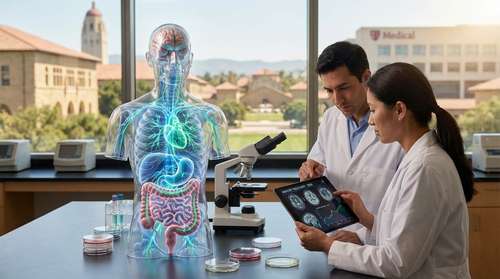
Researchers at Stanford Medicine and the Palo Alto-based Arc Institute have discovered that the gastrointestinal tract functions as a powerful remote control for the brain. By manipulating the bacterial composition of the intestines, scientists were able to completely restore cognitive function in older subjects. This revelation opens an entirely new frontier in our quest to reverse cognitive decline naturally, shifting the focus from brain-intrinsic therapies to non-invasive, microbiome-based treatments.
The Critical Link: Microbiome and Brain Health in Aging
Most of us are familiar with exteroception—how our five senses perceive the outside world. But we rely equally on interoception, the internal sensory network that continuously monitors our organs. The information superhighway facilitating this internal dialogue is the vagus nerve, which runs directly from the intestines to the brain.
As we get older, our biological ecosystems shift. The latest findings in healthy aging research 2026 highlight that the natural bacterial population living in the gut changes dramatically over time. Specifically, a bacterium known as Parabacteroides goldsteinii begins to dominate the digestive tract in later life. This microbial shift is far from harmless.
The Inflammatory Roadblock
When these specific aging microbes multiply, they produce fatty acid metabolites that trigger immune cells within the gastrointestinal wall. This sparks a localized inflammatory response that severely compromises the vagus nerve's ability to transmit clear signals. Without strong, continuous interoceptive input from the gut, the hippocampus—the brain region responsible for memory formation and spatial navigation—begins to struggle. The result is the forgetfulness and disorientation we typically associate with getting older.
Vagus Nerve Stimulation for Memory: A Path to Restoration
To prove that this gut-driven inflammation directly causes mental degradation, the researchers conducted a fascinating experiment. They housed young, two-month-old mice with older, eighteen-month-old mice. Through shared living environments, the young mice gradually acquired the aged microbiomes of their older counterparts. Within just one month, the young mice exhibited severe cognitive deficits, failing basic maze tests and showing no curiosity toward novel objects. Their brains were young, but their gut bacteria had aged them prematurely.
The turning point in the study occurred when researchers intervened. By utilizing broad-spectrum antibiotics to wipe out the aged bacterial populations, or by applying vagus nerve stimulation for memory, they successfully reversed the damage. The older subjects quickly regained their cognitive sharpness, matching the memory formation capabilities of the younger control group. As senior author Christoph Thaiss explained, the progression of memory loss isn't a fixed, inevitable biological program; rather, it is actively controlled by the body, with the digestive tract serving as the master regulator.
Transforming the Gut-Brain Axis and Dementia Prevention
The implications of these findings are staggering for the future of medicine. If age-related memory loss is not an inevitable, structural brain failure but rather a reversible signaling problem, the medical community can entirely rethink its approach to neurodegeneration. Maayan Levy, co-senior author of the study, noted that peripheral interventions targeting the gut could become a primary strategy for controlling brain function without requiring invasive neurological procedures.
While this specific mechanism was demonstrated in animal models, the biological pathways are remarkably similar in humans. Researchers are currently investigating how these microbial interactions influence the human gut-brain axis and dementia prevention. Because vagus nerve stimulation is already FDA-approved for treating conditions like epilepsy and depression, clinical trials adapting this technology for cognitive restoration could begin much faster than typical experimental therapies.
How to Improve Memory in Seniors Right Now
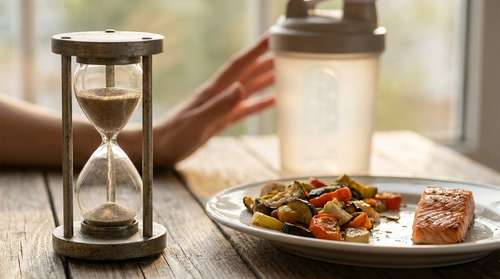
While we await targeted microbial pills or advanced vagal stimulators, this research strongly validates lifestyle choices that protect intestinal integrity. When families ask doctors how to improve memory in seniors, the prescription may soon start in the kitchen rather than the pharmacy.
- Feed the Good Bacteria: Diets rich in soluble fiber, prebiotics, and fermented foods help suppress the overgrowth of inflammatory microbes like P. goldsteinii.
- Reduce Systemic Inflammation: Limiting ultra-processed foods can prevent the immune cells in the gastrointestinal tract from misfiring and blocking vagal communication.
- Engage the Vagus Nerve: Practices like deep, slow breathing and mindful meditation have been shown to naturally tone and stimulate the vagus nerve, potentially keeping the gut-brain highway clear of interference.
The notion that our brains are isolated supercomputers degrading on a fixed timeline is officially obsolete. Your memories, your spatial awareness, and your cognitive longevity are intrinsically tied to the microscopic ecosystem in your digestive tract. By learning to tune this internal remote control, we are standing on the precipice of a new era where keeping your mind sharp simply means trusting your gut.