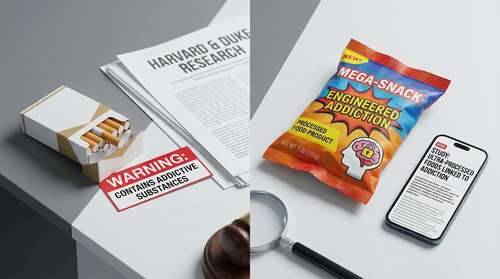
In a landmark development that challenges the foundation of the modern diet, a groundbreaking new report released Monday in The Milbank Quarterly argues that ultra-processed foods (UPFs) are not merely food, but industrially engineered substances that should be regulated as strictly as cigarettes. The study, conducted by leading researchers from Harvard, Duke University, and the University of Michigan, presents compelling evidence that UPFs are designed to hijack human biology, driving an addiction crisis that rivals the tobacco epidemic.
The 'New Tobacco': Engineered for Addiction
The report's findings are stark: ultra-processed foods are chemically formulated to bypass the body's natural satiety signals. According to the research team, these products—ranging from sugary cereals to mass-produced frozen meals—deliver unnaturally high doses of sugar, fat, and sodium that trigger rapid reward responses in the brain. This mechanism mirrors the way nicotine in cigarettes hooks smokers, leading to compulsive consumption despite known health risks.
"These products are engineered less like food and more like cigarettes," explains Dr. Ashley Gearhardt, a professor of psychology at the University of Michigan and one of the study's lead authors. The research highlights that, much like the tobacco industry optimized nicotine delivery, food manufacturers have perfected the "bliss point" of UPFs to ensure maximum craving and rapid intake. The study suggests that treating these items as standard groceries ignores their true nature as addictive biological disruptors.
Exposing 'Health-Washing' Tactics
A critical component of the report focuses on "health-washing"—a marketing strategy used to disguise the harmful nature of processed goods. The researchers draw a direct parallel between modern food labels and the "low tar" or "light" cigarette campaigns of the mid-20th century. By slapping terms like "low fat," "fortified," or "natural" on packaging, manufacturers create a false halo of health around products that are fundamentally detrimental to metabolic wellness.
This deception is particularly dangerous as we navigate the landscape of healthy eating 2026. Consumers trying to make better choices are often misled by these front-of-package claims, unaware that the underlying industrial processing remains the primary health risk. The report calls for an immediate ban on such misleading terminology for any product classified as ultra-processed, arguing that accurate labeling is a matter of life and death.
The Human Cost of Inaction
The urgency of this UPF regulation is underscored by grim statistics included in the study. Researchers estimate that one American now dies every four minutes from preventable diseases linked to the consumption of ultra-processed foods. These conditions—including type 2 diabetes, heart disease, and certain cancers—are rising in correlation with the dominance of UPFs in the national diet.
A Call for Radical Policy Reform
The Harvard nutrition research team and their colleagues are not just presenting data; they are demanding a policy overhaul. The report outlines a regulatory framework modeled after successful anti-tobacco initiatives. Proposed measures include strictly limiting marketing to children, implementing graphic warning labels on high-UPF products, and removing these items from schools and hospitals.
Comparing the processed food vs tobacco industries, the authors note that voluntary self-regulation has failed. Just as Big Tobacco required federal intervention to curb smoking rates, the food industry's grip on public health requires legislative action. "We are at a tipping point," the report concludes. "Continuing to treat these engineered products as food is a policy failure that costs lives every single day."