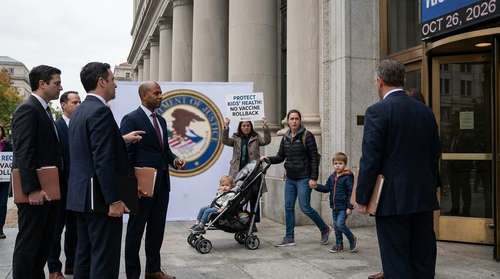
A coalition of more than a dozen states has launched a major legal challenge against the Trump administration, filing a lawsuit on Tuesday to block recent sweeping changes to the national childhood immunization schedule. The lawsuit, led by attorneys general from Arizona and California, argues that the Centers for Disease Control and Prevention (CDC) acted unlawfully when it rolled back universal recommendations for standard childhood vaccines—including those for the flu, rotavirus, and RSV—sparking fears of a potential pediatric health crisis in 2026.
States Unite Against "Illegal" Policy Shift
The legal action, filed in the U.S. District Court for the Northern District of California, represents a significant escalation in the conflict between state health officials and the federal government. At the heart of the childhood vaccine lawsuit 2026 is the administration's decision to strip seven common vaccines of their "universally recommended" status for healthy children. The complaint names Health and Human Services (HHS) Secretary Robert F. Kennedy Jr. and Acting CDC Director Jay Bhattacharya as defendants, accusing them of dismantling decades of public health progress.
"The health and safety of children across the country is not a political issue," said Arizona Attorney General Kris Mayes during a press conference announcing the suit. "It is not a culture war talking point." The coalition, which includes Colorado, Washington, and Oregon, contends that the new Trump administration vaccine policy violates federal administrative procedures and ignores established medical science, effectively endangering millions of students as they prepare for the next school year.
The End of Universal Recommendations?
The lawsuit specifically targets a January 5, 2026, "Decision Memo" issued by the CDC that fundamentally altered the landscape of pediatric care. Under the new guidance, vaccines for flu and rotavirus vaccine rollback were moved from the routine schedule for all children to a new category of "shared clinical decision-making." Additionally, immunizations for hepatitis A, hepatitis B, and RSV are now recommended only for "high-risk" groups rather than the general pediatric population.
Federal officials have defended the CDC immunization schedule changes, arguing that the move is intended to align U.S. policy with "peer nations" like Denmark and to rebuild public trust by recommending fewer mandates. However, public health experts warn that this shift places an undue burden on parents and pediatricians. "This approach creates unnecessary doubt, fear, and confusion for parents," stated a representative from a leading pediatric alliance. The lawsuit argues that by abandoning universal guidance, the CDC is effectively dismantling the herd immunity that protects vulnerable communities.
"Shared Decision-Making" Creates Confusion
The concept of "shared clinical decision-making" has become a focal point of the controversy. Critics argue that this designation is vague and leaves pediatricians without clear federal backing when recommending life-saving preventative care. Instead of a clear directive, doctors must now negotiate vaccine recommendations for children on a case-by-case basis, a process that state officials argue will inevitably lead to lower immunization rates and outbreaks of preventable diseases like measles and whooping cough.
A Battle Over Science and Authority
Beyond the specific schedule changes, the lawsuit challenges the structural overhaul of federal health agencies. The complaint alleges that Secretary Kennedy unlawfully replaced the entire roster of the Advisory Committee on Immunization Practices (ACIP)—the independent panel of experts that traditionally guides U.S. vaccine policy—with hand-picked appointees. California Attorney General Rob Bonta described the move as an "attack on science," asserting that the new board lacks the requisite independence and expertise.
The administration has pushed back, dismissing the legal challenge as political theater. Emily G. Hilliard, press secretary for the Department of Health and Human Services, characterized the complaint as a "publicity stunt dressed up as a lawsuit," maintaining that the Secretary has the legal authority to determine the composition of advisory committees. This clash highlights the deepening divide over the role of federal agencies in public health, with states suing the Trump administration to assert their own authority to protect residents.
What Parents Need to Know
Despite the legal turmoil, experts emphasize that access to vaccines remains largely unchanged for now. Federal law still requires insurance plans to cover immunizations that were recommended as of December 2025. This means that families should not face out-of-pocket costs for the vaccines in question, even under the new "shared decision-making" guidance. However, the confusion generated by the conflicting federal and state messages could lead to gaps in coverage and care.
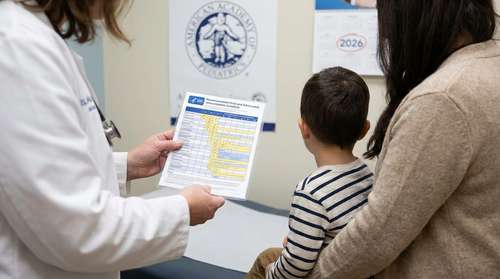
As the legal battle unfolds, pediatricians are urging parents to consult with their healthcare providers and adhere to the guidelines set by the American Academy of Pediatrics (AAP), which has maintained its endorsement of the full vaccine schedule. With the pediatric health crisis 2026 looming as a potential consequence of reduced immunity, the outcome of this lawsuit will likely determine the future of public health policy in America for decades to come.