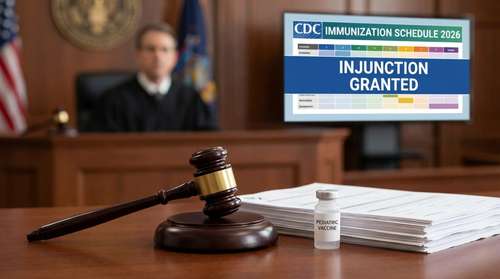
On Monday, March 16, 2026, a federal judge in Massachusetts issued a nationwide preliminary injunction that effectively pauses a highly controversial overhaul of the childhood vaccine schedule 2026. This sweeping CDC immunization injunction arrives just months after the Department of Health and Human Services (HHS) significantly reduced the number of recommended pediatric immunizations. For parents, educators, and healthcare providers navigating the latest shifts in pediatric health news, the court’s decision temporarily restores the traditional, evidence-based standards that have guided pediatric care for decades.
The Catalyst: The American Academy of Pediatrics Lawsuit
The legal challenge, spearheaded by major medical organizations, argued that the recent HHS directives bypassed standard scientific protocols and endangered children. Central to the American Academy of Pediatrics lawsuit was the assertion that the government violated both the Administrative Procedure Act and the Federal Advisory Committee Act. Plaintiffs argued that longstanding, rigorous vetting processes were abandoned when 17 previous advisory members were dismissed and quickly replaced with individuals lacking adequate vaccine expertise.
The AAP did not fight this battle alone. They were joined by a broad coalition of health organizations, including the American Public Health Association, the Infectious Diseases Society of America, the Society for Maternal-Fetal Medicine, and the Massachusetts Public Health Alliance. Public health officials across the country pushed back against the changes, with at least 20 state health departments announcing they would continue following the AAP schedule rather than the newly reduced federal guidelines.
In his written opinion, U.S. District Judge Brian E. Murphy noted that historical methods for determining vaccine guidelines are "scientific in nature and codified into law through procedural requirements". The court found that recent administrative actions disregarded these established frameworks, thereby undermining the integrity of public health recommendations. Dr. Andrew Racine, president of the American Academy of Pediatrics, called the ruling an essential step toward restoring the scientific decision-making that traditionally protects children's health.
Unpacking the ACIP Committee Ruling
A critical component of the judge's order involves the Advisory Committee on Immunization Practices (ACIP). The ACIP committee ruling immediately suspends 13 new panel members appointed over the past year and nullifies their recent voting record. The judge pointed out that, even under the most generous interpretation, only six of the newly installed members possessed any meaningful experience in vaccinology. He described the lack of routine vetting as a procedural failure that broke with decades of ACIP tradition.
By invalidating these recent ACIP votes, the court has officially reversed the January 5th revisions to the childhood vaccine schedule 2026. The controversial schedule had removed routine infant recommendations for several shots, including rotavirus, RSV, flu, and meningococcal disease, while downgrading Hepatitis A and Hepatitis B vaccines primarily to high-risk groups. The injunction also overturns a May 2025 directive that removed COVID-19 vaccines from the recommended list for healthy children and pregnant women.
What This Means for School Vaccine Requirements 2026
When federal guidelines undergo dramatic shifts, local jurisdictions often scramble to adjust. Many parents have been left wondering how these sweeping administrative changes would affect school vaccine requirements 2026. Because state health departments and local school districts historically base their enrollment mandates on CDC and ACIP recommendations, the previous reduction from 17 down to 11 recommended shots created significant confusion among school administrators and families alike.
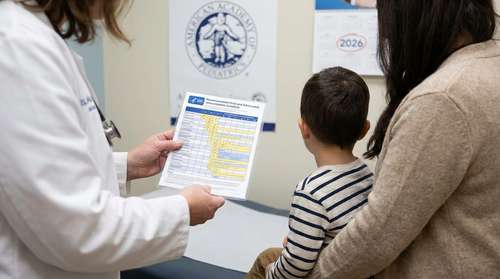
With the preliminary injunction now in place, the benchmark for school compliance effectively reverts to the earlier, 17-vaccine schedule. State health boards that were considering adopting the reduced framework will likely pause any legislative or administrative updates regarding the childhood vaccine schedule 2026 while the lawsuit proceeds through the federal courts. Parents finalizing school enrollment paperwork for the upcoming academic year should consult directly with their pediatricians to ensure their children meet the restored standards.
Navigating Family Health Policy Moving Forward
The rapid pace of changes in family health policy over the last year has undoubtedly placed a strain on the doctor-patient relationship. Medical professionals have voiced concerns that abruptly altering established immunization schedules breeds mistrust, fuels misinformation, and leaves vulnerable populations susceptible to preventable diseases.
Next Steps for Parents
While the legal battles continue, stability is returning to pediatric clinics across the country. Here is what leading healthcare providers recommend for families right now:
- Maintain Routine Care: Continue scheduling annual wellness visits and rely on your pediatrician's guidance regarding necessary immunizations.
- Review Your Records: Check your child’s vaccination history against the restored pre-2026 schedule to identify any potential gaps, particularly concerning Hepatitis A, Hepatitis B, RSV, or COVID-19 protections.
- Stay Informed: Keep an eye on local health department updates, as state-level responses to federal injunctions can vary slightly depending on your location.
As this unprecedented legal dispute unfolds, the medical community remains focused on one primary goal: safeguarding public health through rigorous, evidence-based care. The recent federal court intervention guarantees that, for the immediate future, the foundational science protecting our nation's children remains intact.