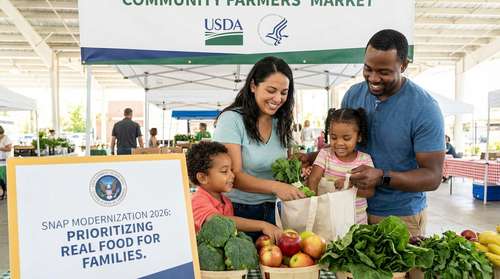
The federal government has officially declared war on ultra-processed diets. In a sweeping announcement this week, officials outlined the framework for the highly anticipated SNAP modernization 2026 initiative. The overhaul represents a dramatic pivot in how taxpayer dollars fund nutritional assistance, targeting a shocking health statistic: 40% of American children currently live with at least one chronic medical condition. By fundamentally changing what can be purchased with federal benefits, the administration aims to reverse this escalating childhood chronic disease crisis.
On March 19, U.S. Secretary of Agriculture Brooke L. Rollins and Health and Human Services Secretary Robert F. Kennedy Jr. cemented this policy shift, confirming that the new dietary framework will aggressively restrict subsidized junk food. The move attempts to dismantle a system where federal food assistance has historically bankrolled the very products driving skyrocketing rates of metabolic dysfunction in minors.
The Urgency Behind the Childhood Chronic Disease Crisis
For decades, nutritional assistance programs focused primarily on caloric intake rather than nutritional quality. That legacy has culminated in unprecedented medical burdens. Recent federal data reveals that nearly 78% of SNAP recipients currently rely on Medicaid to manage diet-related conditions. This massive overlap between food assistance and chronic illness forced a reckoning within regulatory agencies. The financial math is staggering: treating diet-linked illnesses consumes the vast majority of national healthcare spending.
The SNAP modernization 2026 agenda directly acknowledges that simply providing empty calories is no longer a viable public service. Health officials estimate that reducing national rates of obesity and type 2 diabetes could save the healthcare system approximately $600 billion annually. By addressing the root cause of these conditions at the grocery checkout counter, the updated USDA HHS health policy aims to relieve both the physical toll on younger generations and the long-term financial strain on Medicare and Medicaid.
Implementing the SNAP Real Food Rules
At the core of this legislative overhaul is the implementation of new SNAP real food rules. In recent days, the USDA formalized impending Stocking Standards for retailers who accept federal nutrition benefits. Stores will now be held to a significantly higher minimum standard, requiring them to carry a wider variety of fresh produce, quality proteins, and unprocessed staples.
Simultaneously, the administration has authorized new restriction waivers for multiple states, including recent approvals for Florida and Iowa. These state-level initiatives explicitly prohibit benefit funds from being used to purchase sugary sodas, energy drinks, candy, and prepared desserts. The strategy removes the financial incentive for major beverage and snack conglomerates to target low-income communities, ensuring that federal assistance directly translates to healthy food for families. Officials note that this redirects federal subsidies away from products with zero nutritional value.
Prioritizing Nutrient-Dense Food for Kids
Under the revised dietary guidelines supporting this overhaul, the traditional food pyramid has been essentially inverted. The updated recommendations prioritize meat, healthy fats, and vibrant vegetables over carbohydrate-heavy, highly processed items. For households relying on federal assistance, these new stocking requirements mean that corner stores and local grocers must provide genuine access to these fundamental ingredients.
By forcing retailers to expand their fresh food inventory, the USDA ensures that nutrient-dense food for kids becomes accessible regardless of a family's zip code. Retailers who wish to continue benefiting from the multi-billion dollar assistance market must adapt their business models to align with these strict public health objectives.
Combating Childhood Obesity Through Interagency Alignment
This initiative represents a rare level of coordination between the agricultural and health sectors. With National Nutrition Advisor Dr. Ben Carson heavily involved in the rollout, the unified USDA HHS health policy bridges the gap between agricultural subsidies and preventative medicine. The focus on combating childhood obesity is no longer just a healthcare directive; it is now a foundational pillar of agricultural policy.
The message from leadership is uncompromising: taxpayer dollars should nourish vulnerable populations, not subsidize the products degrading their health. As the SNAP modernization 2026 mandates take effect over the coming months, the entire food supply chain—from local farmers to nationwide mega-retailers—will need to recalibrate. Farms producing whole foods and fresh produce are positioned to see increased demand, while manufacturers of ultra-processed goods face a sudden contraction in government-funded revenue.
The Future of American Nutritional Assistance
This week's policy finalizations signal the end of the calories at all costs era. By establishing strict quality benchmarks for food assistance, the administration is treating nutrition as the frontline defense against metabolic disease. If you rely on federal assistance, or even if you just shop at a participating local grocer, you will soon navigate aisles where the easiest, most accessible choices are also the healthiest.
While industry pushback from processed food manufacturers is actively occurring, the bipartisan alarm over youth health metrics has provided the momentum necessary for these sweeping changes. For millions of American households, this overhaul promises more than just food security—it offers a tangible pathway toward long-term generational health, fundamentally reshaping the trajectory of the childhood chronic disease crisis.