In a monumental leap for longevity science, researchers have identified a specific protein capable of reversing the biological clock of aging brain cells. This groundbreaking discovery, announced this week by scientists at the National University of Singapore (NUS), centers on a transcription factor called DMTF1. Dubbed a potential "youth protein," DMTF1 acts as a master regulator for neural stem cell activity, offering the first tangible hope for restoring memory and learning capabilities in brains affected by age-related decline. With DMTF1 protein brain rejuvenation now at the forefront of neurological research, we may be witnessing the dawn of a new era in treating dementia and cognitive deterioration.
The Discovery of the DMTF1 'Youth Protein'
The study, led by Assistant Professor Ong Sek Tong Derrick and Dr. Liang Yajing at the Yong Loo Lin School of Medicine, uncovers a critical mechanism that has long puzzled neuroscientists: why the brain loses its ability to repair itself as we get older. The team found that levels of DMTF1 (cyclin D-binding myb-like transcription factor 1) drop significantly in aging neural stem cells. These cells are responsible for producing new neurons, a process essential for maintaining sharp cognitive function.
When the researchers artificially restored DMTF1 levels in aged laboratory models, the results were nothing short of miraculous. Dormant neural stem cells, which had effectively "retired" due to age, were reactivated and began to regenerate new neurons with the vigor of a much younger brain. This confirms that DMTF1 protein brain rejuvenation is not just a theoretical concept but a biological reality that can be manipulated to reverse cellular aging.
How DMTF1 Wakes Up Sleeping Stem Cells
To understand the magnitude of this breakthrough, it helps to look at the cellular machinery involved. As we age, the protective caps on our DNA, known as telomeres, shorten. This process triggers a shutdown in neural stem cells, preventing them from dividing. The NUS team discovered that DMTF1 is the key to bypassing this blockade.
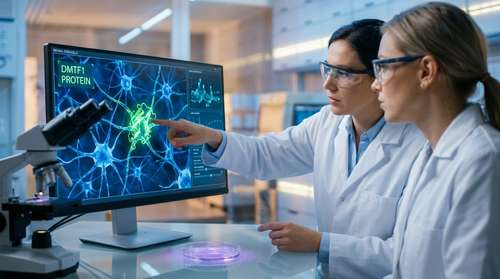
DMTF1 functions as a molecular switch. It doesn't work alone; instead, it recruits two "helper" genes known as Arid2 and Ss18. Together, this trio acts like a skeleton key, unlocking tightly packed DNA (chromatin) to allow growth-related genes to function again. By restoring neural stem cell activity through this specific pathway, the protein effectively tricks the cells into ignoring the signals of old age, jumpstarting the production of fresh neurons.
The Telomere Connection
One of the most fascinating aspects of this research is its relationship with telomeres. Typically, short telomeres are a death sentence for cell division. However, the study revealed that boosting DMTF1 could restore regenerative capacity without needing to lengthen the telomeres themselves. This suggests a powerful workaround where the brain's regenerative potential can be salvaged even in the presence of significant genetic wear and tear.
Implications for Cognitive Health Breakthroughs 2026
The implications of this discovery extend far beyond the laboratory. As we move further into 2026, the potential to translate this into a therapy for humans is becoming a realistic goal. Cognitive health breakthroughs 2026 have largely focused on slowing decline, but this research pivots the conversation toward actual reversal. By targeting DMTF1, pharmaceutical companies may soon be able to develop drugs that restore the brain's plasticity, offering new hope for patients with Alzheimer's disease and other forms of dementia.
"Our findings suggest that DMTF1 can contribute to neural stem cell multiplication in neurological aging," noted Dr. Liang Yajing. If therapeutic agents can safely elevate this protein in human patients, we could see treatments that not only halt memory loss but actively work to reverse aging brain cells, restoring the neural networks necessary for learning new skills and retaining old memories.
The Path Forward: Balancing Growth and Safety
While the excitement is palpable, the path to a commercially available treatment involves careful calibration. Because DMTF1 is a powerful driver of cell growth, simply flooding the brain with it could theoretically increase the risk of uncontrolled cell division, or tumors. The next phase of research will focus on finding small molecules—drugs that can be taken as a pill—that precisely modulate DMTF1 levels within a safe therapeutic window.
Researchers are now prioritizing these safety studies, aiming to harness the regenerative power of DMTF1 while neutralizing any cancer risks. As longevity science research accelerates, this protein stands out as one of the most promising targets for extending not just lifespan, but "healthspan"—ensuring our minds remain as agile as our bodies in our later years.