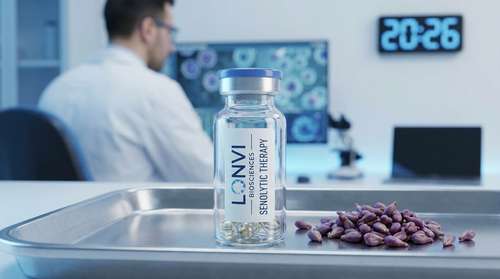
In a groundbreaking announcement that has sent shockwaves through the global scientific community, Lonvi Biosciences has unveiled a new experimental longevity pill promising to redefine the limits of human mortality. Revealed this week at a biotechnology summit in Shanghai, the treatment utilizes a highly potent form of grape-seed extract for longevity to selectively eliminate senescent cells—often called 'zombie cells'—that drive the aging process. As experts debate the feasibility of this new senolytic therapy 2026, questions are swirling: Could this natural compound truly help us increase human lifespan to 150?
The Science Behind the Hype: Clearing Zombie Cells
To understand the potential of Lonvi's new pill, you must first understand the enemy it targets: senescent cells. These are aging cells that have stopped dividing but refuse to die. Instead of being cleared away by the immune system, they linger in tissues like zombies, secreting a toxic cocktail of inflammatory chemicals that damage neighboring healthy cells. This process, known as 'inflammaging,' is a primary driver of age-related diseases, from Alzheimer's to heart failure.
The new treatment focuses on a specific flavonoid called Procyanidin C1 (PCC1), derived from grape seeds. While the anti-aging properties of grape seed extract have been studied for years, Lonvi Biosciences claims to have isolated a purified, highly bioavailable form of PCC1 that acts as a 'smart bomb' for zombie cells. According to their released data, the compound works by inducing apoptosis (programmed cell death) specifically in senescent cells while leaving healthy, youthful cells completely unharmed. This precision addresses one of the biggest hurdles in how to clear zombie cells safely.
Breaking the 120-Year Barrier
For decades, the 'absolute limit' of human lifespan was believed to be around 120 years, famously capped by Jeanne Calment who lived to 122. However, Lonvi Biosciences anti-aging researchers argue that this ceiling exists primarily due to a loss of physiological resilience—the body's ability to bounce back from stress. They contend that by systematically reducing the burden of senescent cells, the body can maintain this resilience for decades longer than previously thought possible.
The company's bold claim is that their protocol could increase human lifespan to 150 years. This aligns with recent theoretical models suggesting the human body has the structural integrity to last that long if internal repair mechanisms are maintained. "We are not just adding years to life, but life to years," a company spokesperson stated during the unveiling. "By clearing the biological debris that slows down repair, we are potentially unlocking the human body's true warranty period."
Grape-Seed Extract: Nature's Senolytic?
The use of grape-seed extract for longevity represents a shift toward natural senotherapeutics. Early generations of senolytics relied on harsh leukemia drugs like Dasatinib, which, while effective, came with significant toxicity risks. Lonvi's approach uses advanced phytosomal absorption technology to deliver the natural PCC1 molecule directly to tissues, purportedly offering a safer alternative that can be used as a prophylactic against aging.
The Protocol: Pulse Therapy
One of the most intriguing aspects of this healthy aging breakthrough is the administration method. Unlike daily supplements, the treatment follows a 'hit-and-run' or pulse therapy approach. The protocol involves taking the compound for just three consecutive days once a month. This intermittent dosing is designed to flush out accumulated zombie cells without overwhelming the system, allowing the body to regenerate during the 'off' weeks. Early pilot studies cited by the company suggest this method reduced markers of biological age significantly after just three cycles.
Skepticism and Hope in the Scientific Community
Despite the excitement, the scientific community remains cautiously optimistic. While PCC1 showed incredible results in extending the lifespan of mice by over 60% in preclinical trials, translating these results to humans is a massive leap. Critics warn that the leap from a longevity pill that works in a lab to one that works in the complex human ecosystem is fraught with challenges.
"The mechanism is sound, and the target is right," says Dr. Elena Rostova, a theoretical biologist not involved in the study. "But claiming we can reach 150 is an extraordinary assertion requiring extraordinary evidence. We need to see long-term safety data to ensure that clearing these cells doesn't have unforeseen consequences on immune function."
As senolytic therapy 2026 moves from fringe science to mainstream medicine, the release of Lonvi's data marks a pivotal moment. Whether or not we essentially double the average human lifespan remains to be seen, but the war on zombie cells has officially escalated. For now, the world watches and waits, wondering if the secret to immortality was hiding in a grape seed all along.