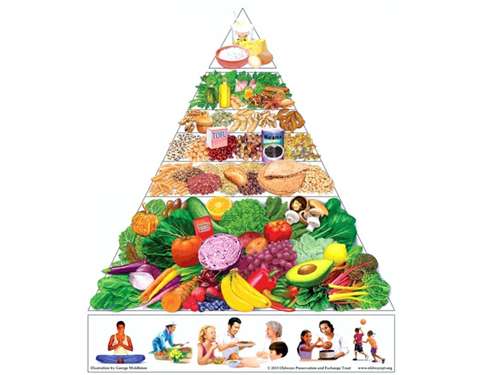
Today marks Registered Dietitian Nutritionist Day 2026, making it a fitting moment for the fierce national debate surrounding federal nutrition policy to reach a boiling point. Health and Human Services (HHS) Secretary Robert F. Kennedy Jr. is aggressively defending the administration's controversial 2025-2030 Dietary Guidelines for Americans. The newly adopted framework, which features the hotly debated inverted food pyramid RFK Jr championed during recent rallies, represents a historic departure from decades of established scientific consensus.
By flipping traditional advice upside down, the guidelines place whole animal proteins, full-fat dairy, and healthy fats at the widest top section of the pyramid, while relegating whole grains to the narrow bottom. Coupled with a strict crackdown on synthetic additives, the administration is pushing a "real food" mandate that has nutrition professionals, food industry executives, and public health advocates completely divided.
The Radical Shift: Unpacking the Inverted Pyramid
For decades, Americans were told to build their diets on a foundation of grains and complex carbohydrates. The latest HHS nutrition policy update shatters that model. Kennedy, alongside Agriculture Secretary Brooke Rollins, has made the Make America Healthy Again diet a cornerstone of federal policy. The inverted pyramid visual completely replaces the MyPlate icon used since 2011, prominently featuring red meat, eggs, and cheese as primary dietary staples.
"As secretary of Health and Human Services, my message is clear: Eat real food," Kennedy stated at a White House briefing earlier this year, a sentiment he doubled down on during recent appearances at the Annual Meat Conference and the MAHA Rally for Real Food in Austin, Texas. He argues that past recommendations unfairly demonized saturated fats and pushed Americans toward highly refined carbohydrates. Kennedy even mocked previous advisory panels, claiming the old guidelines were written by "characters who had put Froot Loops at the top of the food pyramid".
Cracking Down on Ultra-Processed Foods Health Risks
While the promotion of red meat has drawn fierce criticism from the medical establishment, Kennedy's war on synthetic ingredients has found unexpected bipartisan support. The new guidelines mark the first time the federal government has explicitly warned against ultra-processed foods health risks. Currently, more than 55% of the calories consumed by the U.S. population come from heavily processed, ready-to-eat products. Research published in The BMJ links these diets to 32 damaging health outcomes, including increased risks of cardiovascular disease and metabolic harm.
To enforce this paradigm shift, Kennedy recently confirmed his intent to act on a legal petition filed by former FDA Commissioner David Kessler. The petition argues that processed refined carbohydrates and high-fructose corn syrup should no longer be classified as "generally recognized as safe" due to their metabolic dangers. This move paves the way for strict new FDA food labeling rules that could force food manufacturers to radically reformulate their products or face removal from grocery store shelves. An official federal definition for ultra-processed foods is expected to be finalized next month.
Reshaping Federal Procurement
The economic ripple effects of these guidelines are massive. The inverted pyramid dictates over $40 billion in federal spending annually, directly impacting what goes into 45 million daily school meals and foods eligible for SNAP benefits. The administration's goal is to purge schools of petroleum-based synthetic food dyes and ultra-processed snacks, leveraging federal procurement to force the agriculture sector to produce healthier, whole-food options.
Dietitians Divided on the New Era of Nutrition
As professionals across the country celebrate Registered Dietitian Nutritionist Day 2026 today, the clinical community remains deeply polarized. Some practitioners are thrilled to see the government finally taking a hardline stance against added sugars and ultra-processed junk food, viewing the streamlined, 10-page document as a necessary course correction for public health.
However, a highly vocal contingent of healthcare providers is raising alarm bells. Recently, an open letter signed by more than 200 doctors and nutrition researchers urged an immediate return to previous science-based recommendations. Critics—who have sarcastically dubbed the new visual "MyTriangle"—argue that promoting unlimited red meat contradicts extensive research linking high saturated fat intake to chronic illness. They also point out a glaring internal contradiction in the text: the guidelines advise Americans to keep saturated fats below 10% of their daily caloric intake while simultaneously promoting a diet heavily reliant on beef and full-fat dairy.
Nutrition experts note that relegating whole grains—like oats, brown rice, and quinoa—to the smallest segment of the pyramid ignores substantial clinical evidence showing that high-fiber grain consumption lowers the risk of type 2 diabetes and stroke. Furthermore, environmental advocates worry about the ecological footprint of a federally endorsed, meat-heavy diet. Yet, the administration remains steadfast. Kennedy insists that the primary driver of America's chronic disease epidemic is not animal protein, but the cocktail of artificial flavors, sweeteners, and seed oils found in factory-made foods.
Whether this policy overhaul is viewed as a long-overdue public health revolution or a dangerous departure from clinical science, one thing is certain: the American dinner plate is undergoing its most dramatic transformation in a generation.