For decades, pinpointing exact cellular fatigue required painful finger pricks, expensive laboratory treadmills, and a high tolerance for clinical settings. But following sweeping regulatory updates finalized this weekend in late March 2026, a groundbreaking shift is occurring in sports science. A new wave of FDA-cleared non-invasive metabolic sensors has officially hit the consumer market, democratizing elite-level physiological data. By continuously analyzing sweat and cellular fluid without breaking the skin, these advanced wearables are creating what industry experts are dubbing the 'metabolic athlete'—a fitness enthusiast who trains based on instantaneous molecular feedback rather than generic heart rate zones.
The Science Behind Lactate Threshold Monitoring
The biggest hurdle in endurance training has always been identifying the exact moment your body shifts from aerobic to anaerobic energy production. Previously, lactate threshold monitoring was a cumbersome process involving intermittent blood draws that interrupted workouts and provided delayed results. The latest bio-sensors utilize continuous microfluidic sweat analysis to bypass this entirely.
Companies innovating in the health-tech space have recently launched patches that adhere to the skin without aggressive adhesives, reading lactate and electrolyte concentrations in real time. Because the FDA's newly expanded General Wellness Guidance explicitly clears non-invasive devices measuring lactate and hemoglobin as low-risk wellness products, manufacturers have rapidly accelerated consumer availability over the past 48 hours. The technology works by transmitting biomarker signals via Bluetooth Low Energy directly to your smartphone, eliminating the traditional laboratory processing delay.
Mastering Real-Time Muscle Recovery Tracking
Knowing when to push harder is only half the performance equation; knowing when to rest is where true athletic progression happens. Traditional fitness trackers estimate recovery using sleep scores and resting heart rates, which are often lagging indicators of central nervous system fatigue. The integration of continuous glycogen depletion metrics introduces true real-time muscle recovery tracking to the everyday consumer.
Glycogen is the primary fuel source for high-intensity exertion. Historically, athletes only knew they had depleted their glycogen stores when they hit a wall of severe systemic fatigue. Now, non-invasive metabolic sensors monitor the proxy markers of this energy drain continuously. Instead of guessing if your muscles have adequately repaired from yesterday's heavy lifting session, these sensors detect the actual metabolic byproducts of muscle breakdown and repair. If your cellular fatigue markers remain elevated, your wearable will adjust your daily readiness score before you even tie your running shoes.
Fueling the Boom in Biohacking for Fat Loss
While endurance runners and triathletes are the obvious early adopters, the weight loss community is heavily driving current metabolic athlete trends. Relying on standard calculations to find a fat-burning zone is notoriously inaccurate. Individual metabolic responses vary wildly depending on sleep, stress, and nutrition.
By reading continuous metabolic outputs, these patches help users identify the exact physiological state where their body oxidizes fat most efficiently. This precision takes the guesswork out of biohacking for fat loss. When paired with smart nutrition platforms, the sensors can immediately indicate if a pre-workout meal caused a glucose spike that suppressed fat oxidation, allowing users to adjust their carbohydrate intake dynamically rather than following rigid, one-size-fits-all diet plans.
The Role of AI Fitness Wearables 2026
Raw data is essentially useless without context. This is where the newest software ecosystems differentiate themselves from older trackers. The leading AI fitness wearables 2026 are acting less like data loggers and more like proactive, pocket-sized exercise physiologists.
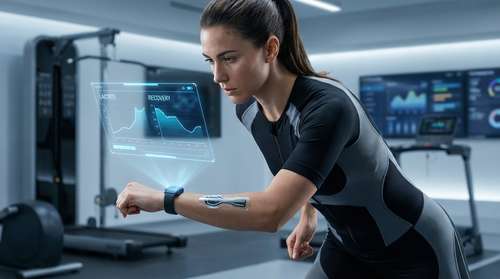
Machine learning algorithms process the constant stream of molecular data coming from your non-invasive metabolic sensors, comparing it against your historical performance. Consider the integration with existing health platforms. When your smartwatch communicates with your sweat patch, the ecosystem builds a highly personalized digital twin of your metabolism. If the AI detects that your lactate levels are spiking earlier than they did last Tuesday at the same running pace, it will intervene. Your smartwatch might vibrate with a prompt to decrease your speed or suggest cutting the workout short to preserve recovery.
What This Means for Smart Fitness Technology
We are witnessing the end of estimated metrics. As these FDA-cleared devices flood the market this week, smart fitness technology is shifting from external motion tracking—like step counts and accelerometer data—to internal biochemical monitoring. The ability to peer inside your cellular engine while you are moving completely changes how we approach physical exertion.
For the everyday athlete, training is no longer about blindly following a static program. It is about listening to the exact biochemical language of your body, translating those signals through advanced AI, and executing the precise workout you need on any given day. The era of the true metabolic athlete is here.