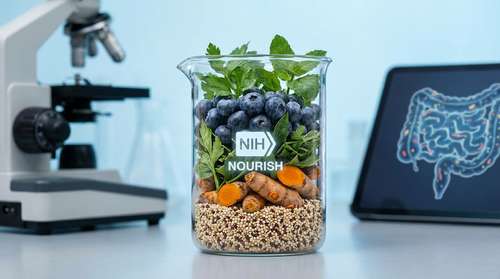
In a definitive pivot toward integrating dietary science into chronic illness care, the National Institutes of Health (NIH) announced the 15 winning scientific teams of its highly anticipated 'NOURISH: Autoimmunity Challenge' today, March 30, 2026. This crowdsourcing competition marks a decisive federal endorsement of the food as medicine NIH movement, shifting institutional focus toward how our daily diets influence immune system health. The award-winning projects offer groundbreaking blueprints for integrating dietary strategies into the treatment of the 50 million Americans living with conditions ranging from lupus and rheumatoid arthritis to Crohn's disease and multiple sclerosis.
A Historic Step for Autoimmune Research
Autoimmune diseases currently affect more than 8% of the United States population, and chronic autoimmunity is rising faster than genetics alone can explain. This rapid increase points heavily to environmental and lifestyle factors, yet the clinical role of diet has remained largely underexplored.
Led by the NIH's Office of Autoimmune Disease Research (OADR) and co-sponsored by the Office of Nutrition Research and the Office of Dietary Supplements, the Nutrition for OUR Immune System Health (NOURISH) initiative aimed to bridge this critical gap. The agency distributed a $150,000 total prize pool, awarding $10,000 each to 15 multidisciplinary teams. These NIH NOURISH challenge winners submitted highly feasible, scalable approaches to better understand how dietary interventions influence disease onset, progression, flares, and everyday symptom management.
Four Pillars of Autoimmune Disease Nutrition Breakthroughs
The winning proposals did not simply reiterate broad, generic dietary recommendations. Instead, they mapped out rigorous, scientifically sound frameworks spanning four specific thematic areas designed to revolutionize nutrition for autoimmune disease.
1. Effectiveness of Dietary Interventions
Several winning concepts proposed testing specific dietary patterns and therapeutic diets directly in autoimmune populations. Previous background research has highlighted links between the Mediterranean diet, iodine intake, and thyroid autoimmunity, as well as early studies on specific plant compounds in multiple sclerosis. The winning teams aim to create structured pathways to test these interventions rigorously, measuring exactly how processed foods and specific nutrients impact systemic inflammation.
2. Microbiome, Immune System, and Multi-Omic Innovations
A significant portion of the awards highlighted advanced diet and gut health research. By exploring the microbiome and employing multi-omic technologies, researchers hope to decode how specific food compounds interact with gut bacteria to either trigger or suppress immune responses. This foundational science aims to explain the mechanisms of molecular mimicry and dysbiosis, clarifying why a dietary profile that triggers a severe rheumatoid arthritis flare in one patient might have no adverse effect on another.
3. Personalized Nutrition Trends 2026
The era of one-size-fits-all dietary advice is rapidly ending. A core theme among the winners involved data-driven predictive nutrition. Utilizing digital health tools, continuous monitoring, and predictive modeling, these teams are pushing personalized nutrition trends 2026 into the clinical spotlight. Their goal is to integrate patient-reported outcomes to create actionable, real-time dietary protocols optimized for individual biological profiles.
4. Patient-Centered Research Frameworks
The NOURISH challenge explicitly mandated that successful submissions involve direct collaboration with the people most affected. By bringing patients, caregivers, and advocacy groups to the table alongside physicians and scientists, the NIH ensures that upcoming clinical trials will measure outcomes that truly matter to patients. This community-centered framework was a key judging criterion and a defining characteristic of the winning submissions.
Managing Lupus With Diet: Real-World Applications
For patients navigating complex and exhausting conditions, these scientific frameworks offer immense practical hope. Managing lupus with diet, for instance, has historically relied on frustrating trial-and-error elimination protocols. Patients are frequently left guessing which specific foods worsen their joint pain, skin rashes, or chronic fatigue.
The newly awarded proposals seek to translate complex clinical mechanisms into practical, everyday symptom management. By identifying feasible, scalable dietary interventions, the initiative aims to provide patients with scientifically backed tools to regain control over their immune health.
The Future of Nutritional Immunology
While the NOURISH initiative is an ideation challenge rather than an immediate clinical trial, these 15 winning concepts will heavily influence the NIH's research priorities and funding allocations for the next decade. The immediate goal is to rapidly transition these theoretical frameworks into actionable clinical trials.
Physicians have long needed rigorous, peer-reviewed data to prescribe specific dietary interventions alongside traditional immunosuppressive therapies. By funding and validating these autoimmune disease nutrition breakthroughs, the NIH is laying the necessary groundwork for a future where a rheumatologist's prescription pad includes targeted, data-backed dietary protocols just as frequently as pharmaceutical medications.
The transition toward a fully integrated approach to chronic care is gaining unprecedented momentum. As these diverse scientific teams move forward to develop their innovative solutions, the millions of Americans navigating autoimmune conditions stand on the brink of a new, scientifically validated era of nutritional medicine.