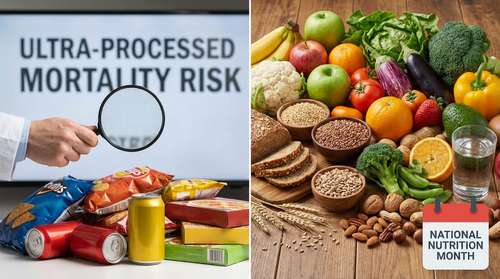
As health advocates worldwide recognize National Nutrition Month, a groundbreaking long-term study has sent shockwaves through the medical community. Released today, the comprehensive research tracked over half a million adults across a 23-year period, delivering a stark warning about the modern American diet. The findings are unequivocal: high consumption of heavily manufactured items directly correlates with a 10% increase in all-cause mortality. Unpacking this ultra-processed foods mortality risk reveals that the sheer degree of industrial alteration a food undergoes is a critical danger to longevity, completely independent of a person's overall diet quality. For decades, experts warned about empty calories, but this latest data confirms the factory processing itself is silently driving chronic disease.
Decoding the Longevity Nutrition Research
The massive investigation utilized dietary data from more than 540,000 participants initially surveyed in their 50s and 60s. Throughout the median 23-year follow-up, researchers meticulously adjusted for confounding lifestyle factors, including smoking habits, body mass index, and overall physical activity. Even when accounting for individuals who adhered closely to standard dietary guidelines, the underlying penalty of food processing remained.
By tracking their health outcomes over more than two decades, scientists gained unprecedented insight into how dietary patterns dictate lifespan. According to the American Society for Nutrition latest updates, researchers compared individuals in the 90th percentile of processed food consumption against those in the lowest 10th percentile. The results illuminate exactly how these dietary staples shorten lives. The increased death rate wasn't uniformly distributed across all illnesses. Instead, the data pointed specifically to heightened vulnerabilities concerning cardiovascular disease and diabetes. Strikingly, the study found no direct association with cancer-related deaths, pinpointing metabolic and heart health as the primary casualties of industrial diets. This robust longevity nutrition research proves that we must look past simple macronutrient counts and scrutinize the actual physical composition of what sits on our plates.
The NOVA Food Classification System 2026 Explained
To standardize their analysis, the research team relied heavily on the recognized framework for categorizing food preparation methods. Under the NOVA food classification system 2026 guidelines, dietary intake is separated into four distinct buckets, ranging from unprocessed or minimally processed whole foods to the hyper-palatable, heavily engineered products dominating grocery store aisles. Originally developed by public health researchers, this framework has become the global standard for nutritional epidemiology. It cuts through the confusion of misleading marketing labels by focusing strictly on the nature, extent, and purpose of industrial processing.
Ultra-processed items are essentially industrial formulations made entirely or mostly from substances extracted from foods, often combined with cosmetic additives. The researchers highlighted two specific subcategories as the absolute worst offenders for human health: soft drinks and highly processed meats, such as hot dogs, sausages, and pre-packaged deli cuts. These specific items drove the sharpest spikes in the mortality data, signaling that cutting out sugary beverages and cured meats offers the highest return on investment for extending your lifespan. Public health officials have long recommended limiting sugar-sweetened beverages and processed meats, but this longitudinal data quantifies the exact lethal toll of ignoring that advice.
Severe Health Risks of Processed Foods
Why exactly does aggressive manufacturing damage the human body so severely? The health risks of processed foods extend far beyond their notoriously high levels of sodium, added sugars, and saturated fats. The mechanical and chemical processes required to create shelf-stable products strip away natural fibers and beneficial micronutrients. When food structures are pulverized and reconstituted, the human digestive system absorbs them far too rapidly, causing aggressive spikes in blood glucose and insulin levels.
Furthermore, these items are explicitly engineered to bypass our natural satiety signals. Manufacturers calibrate the perfect crunch, sweetness, and mouthfeel, making it incredibly difficult to consume them in moderation. Over time, the cumulative cellular damage from digesting synthetic emulsifiers, artificial flavorings, and chemical preservatives shaves years off a person's life, especially for those already metabolically vulnerable. Nutritionists point out that it is not necessarily that one specific snack is highly toxic on its own. Rather, diets dominated by these products displace nutrient-dense whole foods like vegetables, legumes, and lean proteins, creating a dangerous double-edged sword of malnutrition and caloric surplus.
How to Identify Ultra-Processed Foods
Navigating the modern supermarket requires a critical eye. If you want to know how to identify ultra-processed foods, simply turn the package around and read the ingredient list. The golden rule is straightforward: if you spot substances that you would never keep in a standard home kitchen, the item is ultra-processed.
Watch out for:
- High-fructose corn syrup and modified starches
- Emulsifiers like soy lecithin or carrageenan
- Artificial colors and synthetic flavorings
- Hydrogenated oils and protein isolates
Even products aggressively marketed as healthy or organic, such as certain protein bars, flavored yogurts, and plant-based meat alternatives, often fall squarely into the ultra-processed category due to their complex industrial engineering. Rebuilding a wholesome pantry starts with recognizing these hidden chemical cocktails and making smarter swaps at the grocery store. Focus on the perimeter of the store where fresh produce, dairy, and fresh meats reside, and treat the center aisles with caution.
National Nutrition Month News: Actionable Steps
This sobering National Nutrition Month news arrives at a critical juncture for public health. While completely eliminating manufactured foods from a contemporary lifestyle borders on impossible, the study emphasizes that incremental reductions yield substantial benefits. Swapping a daily soda for sparkling water, or replacing a pre-packaged deli sandwich with roasted chicken, directly mitigates your risk profile. As the medical community continues to digest this monumental data, the mandate for everyday consumers remains clear. The evidence is now undeniable. By stepping away from the convenience of the drive-thru and returning to basic, unadulterated ingredients, you hold the power to safeguard your health and rewrite your biological timeline.