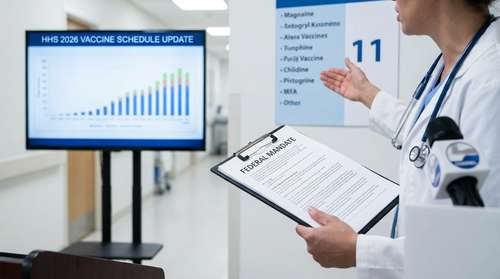
February 14, 2026 – In a historic and polarizing shift for American public health, the Department of Health and Human Services (HHS) has officially finalized the implementation of a reduced national childhood immunization schedule, cutting the number of routine vaccines from 17 to 11. The overhaul, championed by HHS Secretary Robert F. Kennedy Jr., was solidified in new operational guidelines released late Friday, marking the most significant change to pediatric health standards in decades. The move comes as the Centers for Disease Control and Prevention (CDC) reports a surging measles outbreak 2026 USA, prompting urgent debate over the safety and necessity of the new childhood vaccine schedule 2026.
The New "Consensus" Schedule: 17 to 11
The revised federal guidelines, which Secretary Kennedy states are designed to align the United States with "international consensus" found in nations like Denmark, fundamentally alter the roster of new routine immunizations for kids. Under the new mandate, vaccines for Influenza, Hepatitis A, Hepatitis B, COVID-19, Rotavirus, and Meningococcal disease have been removed from the universally recommended "routine" list.
Instead, these immunizations have been reclassified under a new category of "Shared Clinical Decision Making" (SCDM), meaning they are no longer automatically required for standard pediatric visits but are optional based on discussions between parents and doctors. The core schedule maintains recommendations for 11 diseases deemed critical, including Measles, Mumps, Rubella (MMR), Polio, Diphtheria, Tetanus, Pertussis (Whooping Cough), Hib, Pneumococcal disease, Chickenpox (Varicella), and a reduced-dose regimen for HPV.
Measles Outbreak 2026: A Crisis in Context
The timing of the policy shift has intensified scrutiny, as new data released Thursday reveals a rapidly expanding health crisis. According to the latest pediatric health alerts today, the CDC confirmed 910 measles cases nationwide as of February 12, 2026, with active outbreaks in 24 jurisdictions. The surge is currently headlined by a severe cluster in South Carolina, where cases have exceeded 870, making it the largest single-state outbreak since the disease was declared eliminated in 2000.
Critics, including the American Academy of Pediatrics (AAP), argue that the RFK Jr health policy changes could exacerbate these trends by signaling to parents that previously routine shots are unnecessary. "Removing barriers to disease is dangerous when transmission is already spiraling," noted a statement from the AAP, emphasizing that the reduction in routine guidance correlates with the sharpest rise in vaccine-preventable illnesses seen in twenty years.
School Vaccine Requirements 2026: What Parents Need to Know
For families, the most immediate confusion surrounds school vaccine requirements 2026. While the federal government sets recommendations, individual states hold the legal authority to mandate vaccines for school entry. However, the new HHS guidance creates a complex patchwork: some states may move to align their mandates with the slimmer federal list, potentially dropping requirements for Hepatitis B and Meningitis, while others may maintain stricter standards, leading to legal friction between state health departments and federal oversight.
Secretary Kennedy defended the changes this week, stating, "This decision protects children, respects families, and rebuilds trust in public health by focusing on the most essential immunizations." The HHS immunization guidelines update also includes a promise of new double-blind safety studies for the remaining vaccines, a key pillar of Kennedy's "Make America Healthy Again" agenda.
Impact on Insurance and Access
Despite the reclassification, HHS has confirmed that vaccines moved to the SCDM category will remain covered by insurance plans and the Vaccines for Children program. Parents who wish to continue the previous 17-vaccine schedule can do so, though pediatricians report that the removal of the "routine" label has already led to a significant drop in uptake for shots like the flu and rotavirus vaccines.
Looking Ahead: A New Era of Pediatric Care
As the measles outbreak 2026 USA continues to grow, the coming months will be a stress test for the new policy. Public health officials are closely monitoring whether the "streamlined" schedule will improve public trust as intended or lead to a resurgence of other diseases like Hepatitis A. For now, parents are advised to consult directly with their pediatricians to navigate the changing landscape of childhood vaccine schedule 2026 and determine the best protection plan for their families.