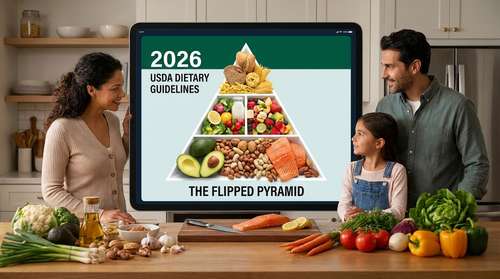
It’s the most radical shift in federal nutrition policy in over three decades. This week, the conversation around American dinner tables changed forever as the 2026 Dietary Guidelines fully entered the public consciousness, bringing with them a shocking visual overhaul: a "flipped" food pyramid. For the first time, the USDA is prioritizing nutrient-dense animal proteins and healthy fats at the foundation of the American diet, while relegating refined carbohydrates and ultra-processed foods to the "limit" tip. As schools across the country scramble to adapt to these new USDA dietary updates, parents are left wondering: what does this mean for child health and nutrition?
The "Flipped" Pyramid: A Return to Whole Foods
The defining feature of the 2025-2030 Guidelines, released under the banner "Eat Real Food," is the inversion of the traditional carbohydrate-heavy base. The new graphic, which critics and supporters alike are calling the "Flipped Pyramid," places high-quality proteins—including steak, eggs, and full-fat dairy—alongside vegetables as the primary staples of a healthy diet. This marks a decisive departure from the grain-centric advice of the past.
"The message is clear: nutrient density over caloric volume," explains Dr. Sarah Jensen, a nutrition policy analyst following the rollout. "For years, we told families to base their meals on bread and pasta. The new food pyramid flips that script, suggesting that healthy fats like butter and tallow, previously demonized, have a place in healthy family nutrition when sourced from whole foods."
The War on Ultra-Processed Foods
Perhaps the most aggressive stance in the new documentation is the explicit warning against "highly processed" foods. Unlike previous iterations that focused on specific nutrients like sodium or saturated fat, the 2026 standards target the processing itself. The guidelines now recommend avoiding "packaged, ready-to-eat foods" that contain chemical additives, a move that directly challenges the ubiquity of convenient, shelf-stable snacks in children's diets.
School Meal Standards 2026: The Cafeteria Overhaul
For parents, the most immediate impact will be visible on the school lunch tray. The school meal standards 2026 implementation plan, which school districts began reviewing this week, mandates a phased reduction of added sugars that is far stricter than anticipated. By the start of the fall semester, breakfast cereals served in schools must contain no more than 6 grams of added sugar per ounce.
Key changes hitting cafeterias include:
- Sugar Caps: strict limits on flavored milk and yogurts to combat childhood obesity and metabolic dysfunction.
- "Real Food" Priority: Incentives for schools to source local, unprocessed proteins and produce instead of heat-and-serve nuggets.
- Whole Milk Return: Schools are now permitted—and in some cases encouraged—to offer whole and reduced-fat milk options, reversing the non-fat mandates of the previous decade.
These shifts align with broader family wellness trends that have seen parents increasingly reject industrial food products in favor of "farm-to-table" eating at home. However, the logistical challenge for school districts to pivot from processed foods to scratch cooking remains a significant hurdle.
The Controversy: Fats vs. Facts?
The release has not been without fierce debate. Public health organizations like the Center for Science in the Public Interest (CSPI) have voiced concern, arguing that the new emphasis on red meat and saturated fats contradicts established cardiovascular health advice. Critics argue that while the crackdown on sugar is welcome, the promotion of beef tallow and butter as "healthy cooking fats" could confuse consumers and undermine decades of heart health messaging.
"We are seeing a collision of ideologies," notes nutrition researcher Dr. Frank Hu. "While reducing ultra-processed foods is universally supported, the scientific consensus on saturated fat hasn't shifted as drastically as this new pyramid suggests." Despite the pushback, the administration maintains that the "Eat Real Food" initiative is necessary to halt the epidemic of chronic disease, placing the blame squarely on processed ingredients rather than natural fats.
Adapting Your Family's Plate
Navigating these changes doesn't require a degree in nutritional science. The core takeaway of the 2026 Dietary Guidelines is a return to simplicity. For families looking to align with the new standards, the focus should be on single-ingredient foods. Swap the morning boxed cereal for eggs or plain yogurt with fruit. Replace the seed-oil based margarine with butter or olive oil. Most importantly, read labels not just for calorie counts, but for ingredient length.
As the USDA dietary update ripples through the food industry, we can expect to see reformulated products and new marketing tactics. But for now, the "Flipped Pyramid" stands as a bold symbol of a new era in American nutrition—one that challenges us to look backward to whole foods to move forward in health.