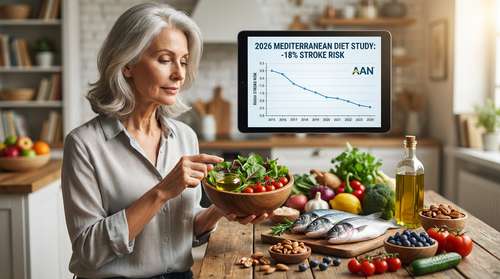
Women who strictly follow a Mediterranean eating pattern may significantly lower their risk of all types of stroke, according to a landmark Mediterranean diet stroke study 2026 released today. The research, published in Neurology Open Access, offers compelling new evidence that women's nutrition for stroke prevention is more powerful than previously understood, particularly for the deadliest forms of brain bleeds.
Groundbreaking Findings for Women's Brain Health
The study, which analyzed data from over 105,000 women over two decades, found that those with the highest adherence to a Mediterranean diet reduced their overall stroke risk by 18%. Most notably, the research highlighted a massive 25% risk reduction in hemorrhagic stroke—a less common but often more fatal type of stroke caused by bleeding in the brain. This finding is significant because previous research has largely focused on ischemic strokes (caused by clots).
"Our findings support the mounting evidence that a healthy diet is critical to stroke prevention," said study author Sophia S. Wang, PhD, of the City of Hope Comprehensive Cancer Center. "We were especially interested to see that this finding applies to hemorrhagic stroke, as few large studies have looked at this type of stroke."
Inside the California Teachers Study
This new American Academy of Neurology study drew from the California Teachers Study, a massive project that began in 1995. Researchers followed 105,614 women with an average age of 53 who had no history of stroke. Over an average follow-up period of 21 years, the team documented 4,083 strokes.
The participants were scored on how closely they followed healthy eating for women based on the Mediterranean model: high intake of vegetables, fruits, legumes, nuts, whole grains, and fish, with moderate alcohol and predominantly olive oil for fat. The results were adjusted for other risk factors like smoking, physical activity, and high blood pressure, yet the strong link between diet and brain protection remained.
Why This Matters Now
Stroke remains the fifth leading cause of death for women in the United States. While plant-based diet benefits are well-documented for heart health, this study provides specific, actionable data for brain health through diet. The fact that the benefits extended to hemorrhagic stroke suggests that the diet's protective mechanisms go beyond just preventing clogged arteries.
The Power of Olive Oil and Stroke Prevention
Why does this diet work so well? Experts believe the secret lies in the synergy of its components. Olive oil and stroke prevention have been linked in numerous smaller studies, but this long-term data solidifies the connection. The high levels of monounsaturated fats and antioxidants in extra virgin olive oil help reduce inflammation and improve the health of blood vessel linings.
Furthermore, the diet is low in saturated fats and refined sugars, which are known to drive hypertension—the single biggest risk factor for both ischemic and hemorrhagic strokes. By naturally lowering blood pressure and cholesterol, the Mediterranean diet acts as a shield for the brain's delicate vascular system.
Actionable Steps: How to Eat for Brain Longevity
Adopting this lifestyle doesn't require complex calorie counting. Here is how to incorporate the findings of the Mediterranean diet stroke study 2026 into your daily life:
- Prioritize Plants: Make vegetables, beans, and lentils the center of your plate, not just a side dish.
- Switch Your Fats: Replace butter and margarine with high-quality extra virgin olive oil.
- Fish over Meat: Aim for fatty fish like salmon or mackerel at least twice a week instead of red or processed meats.
- Snack Smart: Choose raw nuts and fresh fruit instead of processed snacks.
"Stroke is a leading cause of death and disability, so it's exciting to think that improving our diets could lessen our risk for this devastating disease," Dr. Wang noted. As this new research confirms, the path to a healthier brain may be as simple as changing what's on your dinner plate.