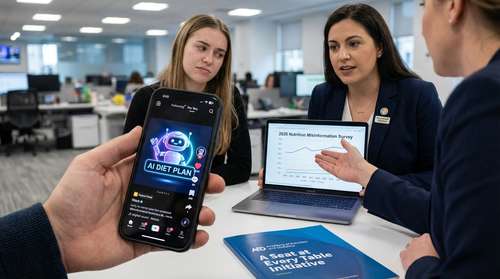
A national nutrition crisis is unfolding across America as millions turn to artificial intelligence and social media influencers for dietary guidance, bypassing credentialed experts. A groundbreaking survey released today, January 26, 2026, by the Academy of Nutrition and Dietetics reveals that nearly 50% of Americans are now acting on nutrition advice from social media personalities, while one in three are utilizing AI generated diet plans like ChatGPT for weight loss without professional consultation. These alarming statistics have prompted the Academy to launch the "A Seat at Every Table" initiative, a nationwide campaign designed to combat the profound risks of unverified health guidance and re-establish the critical role of science-based expertise.
The Rise of the Algorithm: A Public Health Emergency
The allure of instant, free advice has created a dangerous shift in how Americans approach their health. According to the Academy's 2026 survey, 46% of respondents admitted to changing their eating habits based on recommendations from influencers on platforms like TikTok and Instagram. Even more concerning is the rapid adoption of large language models for clinical-level decisions; 33% of adults report generating detailed meal plans using AI tools, often failing to verify the safety of these protocols with a healthcare provider.
"As a registered dietitian, I've seen firsthand how powerful evidence-based nutrition guidance can be—yet too many people are making decisions without access to credible guidance," stated Deanne Brandstetter, MBA, RDN, CDN, FAND, the 2025-2026 President of the Academy of Nutrition and Dietetics. She emphasized that while technology offers convenience, it lacks the clinical nuance required to safely manage complex health needs, leading to a landscape where nutrition misinformation 2026 is outpacing factual science.
TikTok Nutrition Advice Risks vs. Science-Based Care
Social media algorithms are designed for engagement, not accuracy, creating a fertile ground for dangerous trends. The survey highlights that misinformation is not merely an annoyance but a tangible threat to public health. TikTok nutrition advice risks include the promotion of extreme elimination diets, unproven supplements, and "what I eat in a day" videos that often normalize disordered eating patterns. Unlike science-based diet plans tailored by professionals, these viral trends rarely account for individual medical histories, allergies, or metabolic differences.
The distinction between a Registered Dietitian vs AI is stark. While an AI can calculate calories, it cannot interpret lab results, recognize early signs of an eating disorder, or adjust recommendations based on medication interactions. Recent independent analyses from late 2025 suggest that while AI models have improved, they still frequently hallucinate nutritional data or suggest potentially harmful advice for individuals with chronic conditions like diabetes or kidney disease.
'A Seat at Every Table': Reclaiming Nutritional Truth
In direct response to these findings, the Academy has unveiled the A Seat at Every Table initiative. This multi-year campaign aims to ensure that qualified nutrition and dietetics professionals are present wherever food decisions are made—from corporate boardrooms and school cafeterias to legislative hearings and community health centers.
Goals of the Initiative
- Elevate Expert Voices: Positioning Registered Dietitian Nutritionists (RDNs) as the primary authority on food and health.
- Combat Misinformation: actively debunking viral myths with accessible, evidence-based content.
- Policy Advocacy: Pushing for regulations that distinguish between credentialed health advice and unregulated influencer content.
Wylecia Wiggs Harris, PhD, CAE, Chief Executive Officer of the Academy, noted that the initiative is about more than just professional recognition; it is about consumer safety. "Nutrition touches every part of our lives," Harris explained. "This campaign ensures our expertise is not just available but actively shaping the nation's nutrition decisions."
The Future of Digital Health: Collaboration, Not Replacement
The Academy's stance is not anti-technology but pro-safety. The Academy of Nutrition and Dietetics 2026 survey underscores that while AI has a place in streamlining meal planning or idea generation, it should never replace the personalized care of a human expert. The nuances of culture, socioeconomic status, and emotional health are variables that current AI models struggle to navigate effectively.
As the digital landscape evolves, the "A Seat at Every Table" initiative serves as a crucial reminder: in a world flooded with data, wisdom remains a uniquely human asset. For those seeking sustainable health changes, the path forward involves integrating modern tools with the irreplaceable judgment of credentialed professionals, ensuring that dietary choices are safe, effective, and truly personalized.