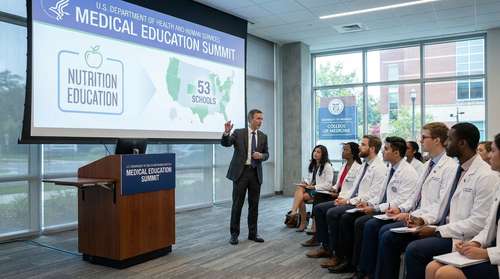
In a transformative shift for American healthcare, 53 of the nation's top medical schools have committed to requiring mandatory nutrition education for future doctors. Announced on Thursday by the U.S. Department of Health and Human Services (HHS), this landmark agreement pledges that medical students starting in Fall 2026 will complete at least 40 hours of comprehensive nutrition training before graduation. The initiative, championed by HHS Secretary Robert F. Kennedy Jr. as a cornerstone of the "Make America Healthy Again" agenda, aims to equip the next generation of physicians with the tools to fight the country's escalating chronic disease epidemic through prevention rather than just pharmaceutical intervention.
A New Standard: 40 Hours of Nutrition Education
For decades, nutrition has been a footnote in medical education. Currently, the average medical student receives less than two hours of nutrition instruction per year, with nearly 75% of schools requiring no clinical nutrition coursework at all. This new initiative marks a radical departure from that status quo.
Under the voluntary agreement facilitated by HHS and the Department of Education, participating institutions across 31 states will integrate a minimum of 40 hours of nutrition science and practical application into their curricula. Alternatively, schools may demonstrate a "competency equivalent" that ensures graduates master 71 core nutrition competencies developed by HHS. These competencies cover critical areas such as identifying nutrient deficiencies, understanding the impact of ultra-processed foods on metabolic health, and using food as medicine to reverse chronic conditions.
"Chronic disease is bankrupting our health system, and poor nutrition sits at the center of that crisis," Secretary Kennedy stated during the announcement. "Today, medical schools are committing to change how America trains its doctors—by putting nutrition back where it belongs: at the heart of patient care."
Addressing the Chronic Disease Epidemic
The push for curriculum reform is driven by alarming public health statistics. Six in ten American adults live with at least one chronic disease, and 90% of the nation's $4.5 trillion annual healthcare expenditure goes toward managing these conditions. By prioritizing physician nutrition education, the initiative aims to shift the healthcare paradigm from reactive symptom management to proactive disease prevention.
The "Make America Healthy Again" agenda posits that empowering doctors with deep nutritional knowledge will allow them to guide patients toward lifestyle changes that can prevent or even reverse conditions like type 2 diabetes, heart disease, and obesity. Instead of reaching for a prescription pad as a first resort, future physicians will be trained to analyze a patient's diet and prescribe specific nutritional interventions.
Industry-Wide Support
Crucially, this initiative has garnered support from major medical establishment figures, bridging the gap between political agendas and clinical best practices. Leaders from the American Medical Association (AMA) and the Association of American Medical Colleges (AAMC) attended the announcement, signaling a unified front.
"We applaud the administration for recognizing that if we're serious about prevention, nutrition must be foundational in medical education," said Dr. Bobby Mukkamala, President of the AMA. "Giving physicians the skills to have impactful conversations with our patients about food and lifestyle is one of the most practical, immediate steps we can take to improve health."
Participating Schools and Federal Funding
The 53 committed institutions represent a diverse cross-section of American medical education, including prestigious research universities and osteopathic colleges. Notable participating schools include:
- Tufts University School of Medicine
- George Washington University School of Medicine
- University of Florida
- University of Alabama at Birmingham
- Indiana University School of Medicine
To support this transition, HHS is allocating $5 million to a National Institutes of Health (NIH) challenge. This funding will help schools, residency programs, and nursing colleges develop evidence-based coursework and clinical training opportunities. The goal is to create scalable models of nutrition education that can eventually be adopted by all accredited medical schools nationwide.
What This Means for Future Patient Care
For patients, this curriculum change promises a different kind of doctor visit in the coming decade. Physicians graduating under these new standards will be better prepared to answer questions about diet, interpret metabolic biomarkers related to nutrition, and collaborate effectively with dietitians.
While the full impact will take years to materialize as these students enter the workforce, the commitment represents a pivotal acknowledgement: that food is medicine, and that the doctors of tomorrow must understand nutrition just as thoroughly as they understand anatomy or pharmacology.