For decades, public health guidelines have treated physical activity like a strict numbers game. Hit 150 minutes of moderate sweat a week, and you have essentially checked the box for a healthy lifestyle. But newly published data from late April 2026 flips that conventional wisdom entirely on its head. A massive analysis recently highlighted by major health institutions reveals that longevity exercise variety—the practice of intentionally mixing different types of movement—is actually a stronger predictor of a long life than simply piling on hours of the exact same routine.
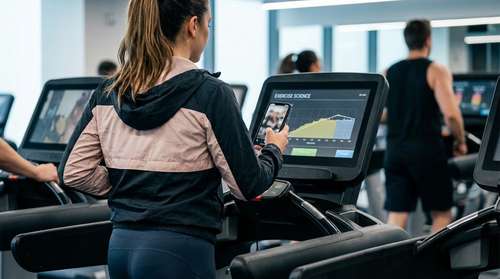
If you religiously run the exact same five-mile loop every morning or exclusively lift weights, you are undeniably improving your cardiovascular system or muscular strength. However, researchers are now pointing out that specializing in a single fitness modality leaves crucial life-extending benefits on the table.
The 30-Year Fitness Study 2026: A Paradigm Shift in Movement
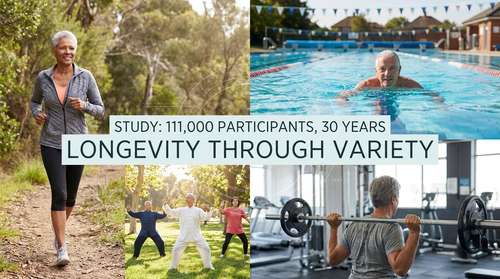
The underlying research, published in BMJ Medicine and led by investigators from the Harvard T.H. Chan School of Public Health, is staggering in its scope. Scientists tracked the habits of more than 111,000 adults—drawing from the Nurses' Health Study and the Health Professionals Follow-Up Study—for over three decades. They weren't just looking at who exercised and who sat on the couch. They mapped precisely how people moved, creating a complex "variety score" based on activities like walking, jogging, cycling, weightlifting, racquet sports, and even heavy yard work.
For over 30 years, participants submitted questionnaires every two years detailing exactly how they chose to sweat. Researchers stringently adjusted the data for variables like diet, smoking, and family history, ensuring the benefits observed were genuinely tied to movement habits rather than other lifestyle factors.
What emerged is a major headline for health science news 2026: participants who engaged in the widest array of physical activities slashed their risk of all-cause premature mortality by 19 percent. They also experienced a 13 to 41 percent lower risk of dying from cardiovascular disease, cancer, and respiratory illnesses.
Multimodal Exercise Benefits: Why Volume Isn't Everything
Perhaps the most striking revelation from the data is how exercise volume eventually plateaus. The research team measured total exertion in MET-hours per week (metabolic equivalent of task). They found that the protective effects of sheer exercise volume largely maxed out around 20 MET-hours—roughly equivalent to an hour of brisk walking a day. Pushing past that threshold with the same repetitive activity offered severely diminishing returns.
However, physical activity diversity operated independently of this plateau. Two people could log the exact same 20 MET-hours per week, but the individual who split their time between the tennis court, the weight room, and neighborhood walks lived significantly longer than the one who spent all their time chained to a treadmill.
The Science Behind Cross-Training for Longevity
Why does a varied routine yield such distinct advantages? Different activities stimulate the body through entirely different biological pathways. Cardiovascular routines like running primarily enhance heart health, lipid profiles, and lung capacity. Resistance training builds muscular strength, bone density, and metabolic resilience. Less structured movements like gardening or stretching foster functional mobility and joint health.
When you routinely face more than one physical stimulus, you force your body to continually adapt. This ongoing adaptation prevents the overuse injuries, repetitive strain, and neuromuscular stagnation that often plague single-sport enthusiasts. Cross-training for longevity builds a fundamentally more robust, resilient human machine.
Building the Best Workouts for Living Longer
Translating this epidemiological data into a daily routine doesn't require a complicated spreadsheet or an expensive gym membership. The goal is to consistently shock your system with different forms of mechanical and metabolic stress. Based on the study's specific findings, here is how you can incorporate the protective power of longevity exercise variety into your week:
- Vigorous Walking: Consistently linked to a 17 percent reduction in early death, brisk walking provides a highly accessible, low-impact baseline for cardiovascular health.
- Resistance Training: Lifting weights or performing bodyweight exercises like push-ups yielded a 13 percent mortality drop. Muscle mass directly correlates with metabolic health and fall prevention in later years.
- Racquet Sports: Tennis, squash, and racquetball demand lateral movement, hand-eye coordination, and sudden bursts of speed, offering a 15 percent risk reduction.
- Flexibility and Balance: Integrating yoga or mobility work preserves the joint range of motion necessary to stay active and injury-free into your seventies and eighties.
Embracing the Spice of Fitness Life
Public health officials have long pushed the standard metric of 150 minutes of activity. While that baseline remains crucial, it lacks nuance. A physician's prescription for the best workouts for living longer should look less like a single dosage of running and more like a balanced dietary plate: a heavy portion of cardio, a side of strength training, and a sprinkle of flexibility work.
You don't need to force yourself through endless, monotonous hours of an activity you despise just to hit a quota. If you usually lift heavy, try booking a spin class or taking a brisk hike. If you are a devoted marathoner, trade one of your weekly runs for a session in the weight room. By treating your body to a diverse menu of physical challenges, you are actively building a system capable of weathering the decades to come.