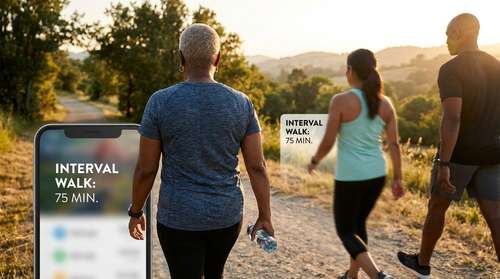
If your social media feed has been flooded this week with influencers strolling in alternating bursts of speed, you aren't alone. As of February 21, 2026, a specific form of interval training known as "Japanese walking" has officially overtaken high-intensity gym classes to become the year's fastest-growing fitness trend. According to a breaking report from PureGym released just days ago, interest in this low-impact cardio method has surged by a staggering 2,968% compared to last year. But unlike fleeting viral challenges, this method is rooted in decades of scientific research aimed at longevity and metabolic health.
What Is the Japanese Walking Method?
At its core, Japanese walking—or sokuho—is an interval walking technique developed by Dr. Hiroshi Nose at Japan's Shinshu University. The protocol is deceptively simple but metabolically potent. It involves alternating between three minutes of high-intensity power walking (at about 70% of your maximum heart rate) and three minutes of slow, recovery-paced strolling (at 40%).
This "3-minute fast, 3-minute slow" cycle is typically repeated for five sets, totaling just 30 minutes. Unlike steady-state walking, where your heart rate remains relatively flat, this interval approach forces your cardiovascular system to constantly adapt, triggering greater improvements in aerobic capacity and leg strength without the joint-pounding impact of running.
The Science Behind the Viral Hit
While the trend is exploding on TikTok in 2026, the science dates back to a landmark 2007 study. Dr. Nose’s research found that older adults who practiced this interval walking method for five months increased their VO2 max (a key longevity marker) by 20% and saw significant reductions in systolic blood pressure. In contrast, those who simply walked at a steady pace saw almost no improvement in aerobic fitness.
Why It Is the Fastest Growing Fitness Trend of 2026
The sudden viral explosion of Japanese walking this week isn't accidental. It perfectly aligns with the massive shift in the fitness industry toward longevity and sustainable health. After years of punishing HIIT classes and complex bio-hacking routines, 2026’s fitness landscape is defined by "accessible wellness."
A report highlighted by PureWow on February 19, 2026, notes that exercisers are increasingly rejecting the "no pain, no gain" mentality in favor of workouts that support metabolic health without cortisol spikes. Japanese walking fits this bill perfectly. It requires no equipment, no gym membership, and can be done by anyone, anywhere. The #JapaneseWalkingTrend hashtag has garnered millions of views in just the last 48 hours, with users sharing their "interval timer" screenshots and weight loss success stories.
Low-Impact Cardio for Weight Loss and Metabolic Health
One of the primary drivers of this boom is the method's efficiency for weight loss. Interval walking 2026 protocols are proving that you don't need to sprint to burn fat. The fluctuating intensity creates an "afterburn" effect (excess post-exercise oxygen consumption), keeping your metabolism elevated long after the walk ends.
Dr. Nose’s research indicated that participants lost significant thigh fat and improved their insulin sensitivity. For those focused on metabolic health walking, this variation is superior to a standard 10,000-step goal. The rapid changes in pace demand more energy from your muscles, specifically targeting the fast-twitch fibers that steady walking often neglects. This makes it a powerful tool for blood sugar management and preventing age-related muscle loss (sarcopenia).
How to Start Walking for Longevity Today
Ready to join the movement? You don't need a fancy tracker, though many smartwatches have already updated their software this week to include "Interval Walking" profiles in response to the trend. Here is the optimal routine recommended by experts:
- Warm-up: Walk at a comfortable, steady pace for 5 minutes.
- The Interval: Walk as fast as you can for 3 minutes. You should be breathing heavily enough that having a conversation is difficult.
- The Recovery: Slow down to a casual stroll for 3 minutes to let your heart rate drop.
- Repeat: Aim for 5 cycles (30 minutes total).
- Cool-down: Finish with a 3-minute slow walk.
Aim to do this four times a week. As this PureGym fitness trend continues to dominate headlines in late February, it is clear that the future of fitness isn't about doing more—it's about walking smarter.