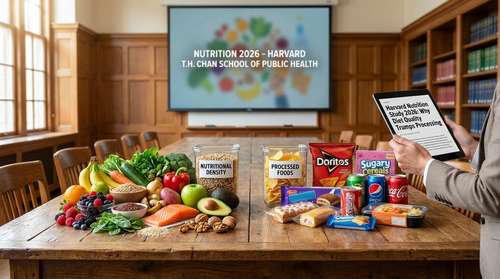
Decades of nutritional wisdom suggest that filling your plate with fruits, vegetables, and whole grains is a reliable defense against chronic disease. Yet, a striking presentation at the April 17, 2026 American Association for Cancer Research (AACR) Annual Meeting has revealed an unsettling anomaly. According to a new USC Norris Comprehensive Cancer Center study, high-quality plant intake is unexpectedly correlated with an increased risk of lung cancer in non-smokers under the age of 50. The findings have sparked intense debate among oncologists, unearthing a complex "healthy diet paradox" that challenges everything we know about nutrition and lung cancer research.
The AACR 2026 Nutrition Study: Unpacking the Data
Researchers from the Epidemiology of Young Lung Cancer (YLC) project analyzed the dietary patterns of 187 patients diagnosed with early-onset lung cancer. The vast majority were women—comprising 84 percent of the cohort—and nearly all had never smoked. To evaluate their nutritional habits, the team utilized the Healthy Eating Index-2015, a validated 100-point scale measuring overall diet quality.
The results were entirely counter-intuitive. These young, non-smoking lung cancer patients boasted an average Healthy Eating Index lung cancer score of 65, significantly eclipsing the U.S. national average of 57. When breaking down the specific foods consumed, the disparity widened. The cancer cohort consumed an average of 4.3 daily servings of dark green vegetables and legumes, compared to the national baseline of just 3.6 servings. They also ate 3.9 servings of whole grains daily, easily surpassing the average American's 2.6 servings.
"Our research shows that younger non-smokers who eat a higher quantity of healthy foods than the general population are more likely to develop lung cancer," said Dr. Jorge Nieva, the lead investigator and a medical oncologist at Keck Medicine of USC.
A Pesticide Problem? The Plant-Based Diet Paradox Explained
If cruciferous vegetables and leafy greens traditionally reduce lung cancer risk by up to 15 to 19 percent, why are they suddenly appearing as a risk factor in this demographic? The USC team suspects the answer lies not in the plants themselves, but in what is sprayed on them.
Conventionally grown fruits and vegetables are the primary source of pesticide exposure for the general public. Nieva and his colleagues hypothesize that carcinogenic residues on non-organic crops might act as an overlooked environmental trigger, creating a dangerous plant-based diet paradox. Because health-conscious young women tend to consume far more fresh produce than the average person, they may be unwittingly ingesting higher concentrations of these agricultural chemicals.
This theory aligns with the unique biological markers found in the YLC cohort. The tumors seen in younger, non-smoking patients are heavily driven by targetable genetic mutations—such as those in the EGFR, ALK, and ROS1 pathways—which are distinctly different from the cellular damage caused by tobacco smoke. Researchers are now investigating whether persistent dietary pesticide exposure directly interacts with these genetic vulnerabilities to accelerate tumor growth.
Expert Pushback on the Fruit and Vegetable Consumption Study
Before anyone clears their refrigerator of fresh produce, the broader scientific community is urging caution. Several medical statisticians and oncology experts have criticized the preliminary nature of the findings, pointing out that correlation does not equal causation.
Dr. Baptiste Leurent, an Associate Professor in Medical Statistics at University College London, highlighted significant methodological flaws in the AACR 2026 nutrition study abstract. He emphasized that comparing a specific subset of young, non-smoking patients to the broader, older, smoking-heavy U.S. population is inherently skewed. Younger people and non-smokers naturally maintain healthier diets than the general public.
"To illustrate the point, the study's headline could just as well have been that non-smokers eat healthier diets than smoking Americans," Leurent stated, calling the jump to implicate pesticides "quite a stretch" without a proper, non-cancer control group of the same demographic. The well-documented benefits of a healthy diet in preventing cardiovascular disease and other cancers still far outweigh the speculative risks proposed by the fruit and vegetable consumption study.
Navigating Healthy Diet and Cancer Risk Today
The findings from this latest study do not rewrite the rules of healthy eating, but they do highlight a shifting frontier in oncology. Lung cancer in non-smokers is rising among adults under 50, and experts agree that uncovering hidden environmental exposures is a critical medical priority.
For health-conscious individuals concerned about the intersection of a healthy diet and cancer risk, the simplest mitigation strategy is washing produce thoroughly or opting for organic varieties of highly sprayed crops, such as strawberries and spinach. However, oncologists remain unified on one core message: avoiding fresh produce out of fear is far more dangerous than the theoretical risks posed by conventional farming methods.
As nutrition and lung cancer research continues into the nuanced relationship between whole foods and environmental contaminants, maintaining a balanced, nutrient-dense diet remains a cornerstone of long-term wellness.