The eternal debate over nature versus nurture just got a profound update. A groundbreaking healthy aging genetic study has uncovered that your unique genetic code fundamentally dictates how lifestyle choices—ranging from your diet to your nightly sleep—impact your biological decline.
For decades, public health advice has offered blanket recommendations: eat your greens, hit the gym, and get eight hours of rest. Yet, we all know someone who routinely survives on five hours of sleep while remaining sharp well into their eighties. The secret isn't just luck. It's a dynamic interplay between our daily habits and our DNA.
The Adelaide University Aging Breakthrough
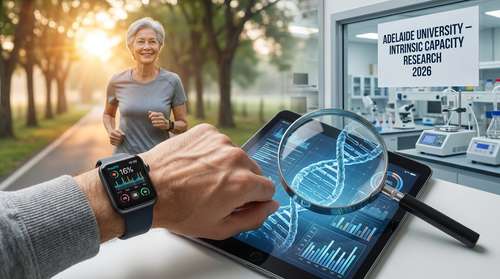
Published in early April 2026, this landmark international research represents a massive leap forward in intrinsic capacity research 2026. "Intrinsic capacity" is a comprehensive metric endorsed by the World Health Organization that encompasses the total sum of an individual's physical and mental functional abilities. It goes beyond merely dodging disease to measure our actual ability to perform daily tasks, communicate, and stay independent.
What exactly makes up intrinsic capacity? It comprises key domains like cognition, vitality, sensory function, psychological health, and locomotor ability. By quantifying these traits together, rather than just checking for the presence of a chronic disease, scientists get a much more accurate read on true physiological age.
Led by experts at Adelaide University, including Associate Professor Azmeraw Amare and Geriatric Medicine specialist Professor Renuka Visvanathan, the team analyzed data from more than 13,000 participants in the Canadian Longitudinal Study on Aging (CLSA). They weren't just looking at basic health outcomes. They were mapping how specific gene profiles interact with environmental factors.
This Adelaide University aging breakthrough revealed that genetic predisposition significantly modifies the effectiveness of our habits. Your baseline DNA could essentially act as a shield against the negative effects of a sedentary lifestyle or, conversely, amplify the biological damage caused by smoking and poor nutrition. This core finding from the healthy aging genetic study proves that our bodies process identical behaviors in vastly different ways.
DNA and Sleep Aging Impact: Beyond the Standard Eight Hours
One of the most striking revelations centers on the restorative power of rest. When looking at the DNA and sleep aging impact, researchers found that both insufficient rest (failing to reach seven hours) and excessive time in bed (more than nine hours) actively diminish intrinsic capacity.
However, the lifestyle vs genetics aging dynamic is incredibly complex. For younger adults genetically predisposed to higher intrinsic capacity, oversleeping carries a surprisingly distinct negative interaction, while older adults face steeper functional declines from sleep deprivation depending on their genetic scores.
Some people genuinely carry genetic variants that make their bodies highly resilient to short sleep duration. Others lack this genetic armor, meaning a string of sleepless nights accelerates their cellular decline at a much faster rate. Understanding this DNA and sleep aging impact helps explain why generic sleep guidelines frequently fail in clinical practice.
Moving Past the Lifestyle vs Genetics Aging Debate
The latest intrinsic capacity research 2026 also tracked the effects of diet, education, and physical activity. Adhering to a Mediterranean-style diet, securing higher education, and maintaining regular physical exercise all correlated with elevated health outcomes. In addition, socioeconomic factors like employment status and active social participation strongly correlate with healthier aging trajectories.
But again, the benefits are not uniform. The specific polygenic scores participants carried meant that some individuals extracted far greater anti-aging benefits from a healthy diet than others. Someone with a lower genetic baseline for intrinsic capacity might require significantly more physical activity or stricter adherence to a Mediterranean diet to achieve the same functional baseline as someone who won the genetic lottery.
This permanently shifts the perspective from a simple lifestyle vs genetics aging debate to a model of gene-environment synergy. Rather than an either-or scenario, it is the precise collision of what you inherit and how you live that sets off specific biological aging markers.
The New Era of Personalized Longevity Plans
These findings sound the death knell for one-size-fits-all medical advice. Recognizing how biological aging markers fluctuate based on this genetic interaction opens up entirely new avenues for targeted healthcare.
As Professor Visvanathan highlighted, understanding these interactions is crucial for designing targeted prevention and health promotion strategies. We are rapidly approaching a reality where personalized longevity plans become the absolute gold standard. Instead of guessing which habits to prioritize, doctors could soon sequence your specific genetic risk profile to pinpoint exactly which behavioral changes will offer you the highest return on investment.
If your DNA indicates high vulnerability to sleep-related aging, your personalized longevity plans would heavily prioritize sleep hygiene over minor dietary tweaks. Ultimately, this monumental healthy aging genetic study shows that while your DNA deals the cards, it also provides the exact instruction manual for how to play the hand. By tailoring our daily choices to match our unique genetic architecture, we gain unprecedented control over how gracefully we age.