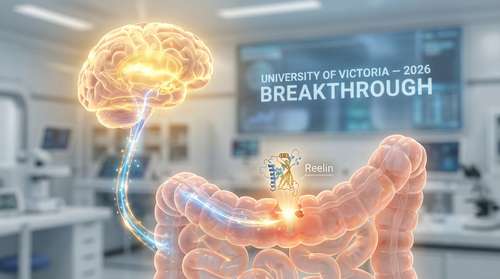
In a landmark development for mental health research, scientists have identified a dual-action protein capable of repairing intestinal damage while simultaneously reversing symptoms of severe depression. Published yesterday, February 2, 2026, in the journal Chronic Stress, this groundbreaking study from the University of Victoria (UVic) reveals that a glycoprotein called Reelin may hold the key to treating the elusive gut-brain connection. For the millions suffering from treatment-resistant depression, this discovery offers the first concrete hope of a therapy that addresses the physiological root of the disorder rather than just its chemical symptoms in the brain.
The Hidden Link Between Stress and Leaky Gut
For decades, psychiatrists have observed a strong correlation between gastrointestinal issues and mood disorders, yet the precise biological mechanism remained largely a mystery. The new findings clarify this relationship, demonstrating how chronic stress actively degrades the intestinal barrier—a condition often called "leaky gut."
Under healthy conditions, the gut lining acts as a strict border control agent, allowing nutrients to pass into the bloodstream while blocking harmful bacteria and toxins. However, the UVic research team found that sustained stress depletes the body's natural stores of Reelin, a protein essential for maintaining this cellular shield. When Reelin levels drop, the barrier weakens, allowing toxins to leak into circulation. This breakage triggers a systemic immune response and chronic inflammation, which travels along the gut-brain axis to exacerbate symptoms of Major Depressive Disorder (MDD).
University of Victoria Reelin Research: A Biological Band-Aid
The study, led by Dr. Hector Caruncho and Ph.D. candidate Ciara Halvorson, provides the first evidence that replenishing this protein can halt the cycle of inflammation. In preclinical trials, the researchers observed that chronic stress reduced Reelin levels in the small intestine by approximately 50%. Most remarkably, a single injection of Reelin was sufficient to restore the gut barrier to full functionality.
"The gut-brain axis is becoming essential to understanding many psychiatric disorders," noted Dr. Caruncho in the study's release. By acting as a sort of "biological band-aid," Reelin promotes the rapid renewal of epithelial cells, sealing the leaks that allow pro-inflammatory agents to escape. Once the physical integrity of the gut was restored, the subjects showed immediate and significant improvements in depressive behaviors, suggesting that healing the gut is a viable pathway to healing the brain.
Metabolic Psychiatry News: Beyond Serotonin
This breakthrough comes at a pivotal moment for metabolic psychiatry news. Traditional antidepressants, which primarily target neurotransmitters like serotonin and dopamine, fail to provide relief for nearly one-third of patients. This failure rate has driven a shift toward gut-brain axis breakthroughs 2026, which view depression as a systemic metabolic issue rather than solely a neurological one.
The UVic study suggests that for many patients, depression may be a symptom of an unchecked immune response to a compromised gut. By ignoring the physiological damage in the intestines, standard treatments may be missing the fire while trying to wave away the smoke. Reelin represents a paradigm shift: a potential physiological treatment for a psychological condition.
New Depression Treatments 2026 and Beyond
While human clinical trials are the next necessary step, the implications of this leaky gut mental health study are vast. Currently, there are no approved drugs on the market specifically designed to fortify the gut barrier as a means of treating mental illness. If Reelin-based therapeutics can be successfully translated to human medicine, they could offer a lifeline to patients with co-occurring depression and gastrointestinal disorders, such as IBS or Crohn's disease.
The research team highlights that Reelin appears to work quickly. Unlike SSRIs, which can take weeks to show efficacy, the protein's restorative effects on the gut lining were observed rapidly after administration. This aligns with the urgent demand for new depression treatments 2026 that act faster and with fewer side effects than current pharmacotherapy.
Looking Forward: A Holistic Approach to Mental Health
As the medical community digests these findings, the focus is shifting toward holistic diagnostic tools that measure gut health alongside mental acuity. Future protocols might involve testing patients for Reelin deficiency or markers of intestinal permeability before prescribing medication. This personalized approach could prevent years of trial-and-error with psychiatric drugs that do not address the underlying physiological cause.
For now, the discovery of Reelin's protective role stands as one of the most significant gut-brain axis breakthroughs of 2026. It confirms what many holistic practitioners have long suspected: the path to a healthy mind truly does begin in the gut.