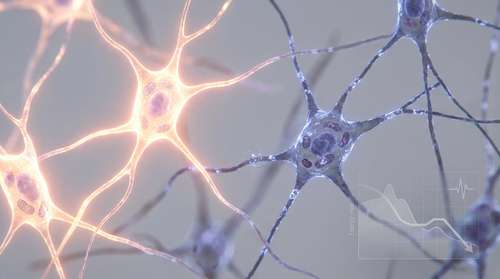
For decades, medical science has treated profound exhaustion as a secondary psychological symptom of low mood. But newly published findings are flipping that narrative entirely, revealing a profound depression energy imbalance. In a landmark paper released in March 2026 in the journal Translational Psychiatry, international researchers have identified a literal cellular power failure inside the bodies of young adults. This discovery provides a concrete biological explanation for the crushing physical exhaustion patients experience every day.
Coinciding with Brain Awareness Week 2026, the discovery was made by a collaborative team from the University of Queensland and the University of Minnesota. By analyzing the way cellular powerhouses operate, investigators found that patients' cells are actively overworking at rest, leaving them with no reserve capacity to handle normal stress.
Uncovering the Cellular Exhaustion in Major Depressive Disorder Research
The human brain is a notoriously power-hungry organ. While it accounts for roughly two percent of our total body weight, it consumes nearly twenty percent of our biological fuel. To investigate how this immense power requirement factors into mental illness, scientists designed a highly advanced brain cell ATP study. Led by Dr. Kathryn R. Cullen at the University of Minnesota and Dr. Susannah J. Tye at the University of Queensland's Brain Institute, the team sought to look beyond conventional neurochemistry.
ATP, or adenosine triphosphate, serves as the primary molecular currency for energy in all living things. Our mitochondria constantly manufacture ATP to power everything from muscle twitches to the complex firing of neural networks. Historically, the neuroscience of mood disorders relied on tracking chemical messengers like serotonin and dopamine. Measuring real-time cellular fuel production in a living human brain was simply too difficult in the past.
However, utilizing cutting-edge 7-Tesla MRI scanners, the research team successfully mapped the exact rate at which mitochondria synthesized ATP. They focused on young adults aged 18 to 25 diagnosed with clinical depression, comparing them against a healthy control group. To their surprise, the patients were not suffering from a sluggish metabolism as initially hypothesized.
The Surprising Reality: Why Cells "Redline" Before Crashing
The most striking revelation from this major depressive disorder research is the paradoxical nature of the cellular dysfunction. When healthy individuals rest, their cellular energy production drops to a sustainable idle. When faced with a cognitive or physical stressor, their mitochondria rapidly ramp up ATP production to meet the sudden demand.
In young adults with depression, the system behaves completely differently. The researchers found that these patients produce exceptionally high levels of ATP while totally at rest. Their internal cellular engines are essentially "redlining" all the time, aggressively overproducing energy to compensate for a biological crisis that the body senses but cannot easily fix.
Because the mitochondria are already pushed to their absolute limits during periods of rest, they hit a hard ceiling when the patient tries to perform a task. Dr. Roger Varela, a key investigator on the project, noted that this biological compensation mechanism leaves cells without any reserve tank. When exposed to metabolic stress or cognitive demands, the depressed cells simply fail to surge. This inability to adapt to stress forms the biological root behind the causes of depression fatigue. Patients feel profoundly tired not because they lack willpower, but because their cellular batteries are literally exhausted from running at maximum output around the clock just to maintain basic survival functions.
A System-Wide Energy Crisis
Fascinatingly, this phenomenon isn't confined to the central nervous system. The research team drew blood samples to analyze peripheral blood mononuclear cells (PBMCs) on the exact same days the brain scans were conducted. They found the identical hyperactive ATP production in the patients' circulating immune cells. The severity of a patient's self-reported fatigue correlated directly with how aggressively their cells were overworking at baseline. This dual-discovery confirms that depression is not merely a localized brain chemistry issue, but a system-wide metabolic condition affecting the entire body.
Mental Health Breakthroughs 2026: What This Means for Patients
Identifying this specific depression energy imbalance opens the door to entirely new paradigms in psychiatric care. Moving away from subjective mood questionnaires toward concrete biological markers ranks among the most significant mental health breakthroughs 2026 has offered the medical community.
This pivot in understanding suggests several immediate future applications:
- Blood-Based Diagnostics: Because the ATP dysfunction is mirrored in peripheral circulating blood, doctors are conceptualizing a simple blood test that could diagnose clinical depression objectively.
- Mitochondrial Therapeutics: Future pharmaceutical interventions might target cellular function directly, rather than relying exclusively on traditional SSRI antidepressants that tweak serotonin levels.
- Early Intervention Strategies: By detecting overworked mitochondria early in the illness, clinicians could repair the capacity for stress adaptation before long-term physical damage occurs.
The Evolving Neuroscience of Mood Disorders: Changing the Stigma
For years, patients suffering from chronic low mood and lethargy have faced societal stigma suggesting their exhaustion is imagined or a sign of laziness. The recent brain cell ATP study dismantles this harmful misconception. As scientists highlighted during Brain Awareness Week 2026, finding a biological signature of fatigue in the blood and brain proves that every patient is fighting a very real, microscopic battle.
Understanding that depression forces the body into an invisible metabolic overdrive validates the lived experiences of millions. As researchers continue to explore how to stabilize this cellular energy deficit, the medical community moves one step closer to treating the whole body, rather than just the mind.