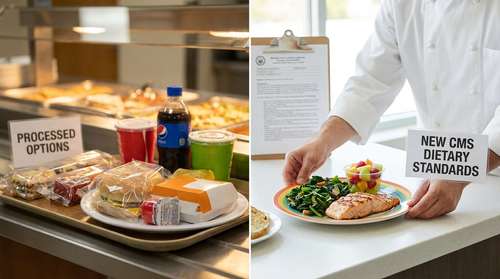
In a sweeping move to overhaul patient care, the Centers for Medicare & Medicaid Services (CMS) has issued a nationwide directive requiring healthcare facilities to drastically improve the quality of food served on patient trays. The new CMS dietary guidelines mandate, issued on March 30, 2026, aims to align facility menus with the recently updated federal nutrition standards. This aggressive shift in policy establishes rigorous hospital nutrition standards 2026, explicitly targeting the removal of sugary drinks and heavily refined products from healthcare settings.
The CMS Quality and Safety Special Alert
The directive arrived via a Quality and Safety Special Alert memorandum released by CMS Administrator Dr. Mehmet Oz and Health and Human Services (HHS) Secretary Robert F. Kennedy Jr. Speaking at a press conference at Nicklaus Children's Hospital in Miami earlier this week, federal officials outlined the urgent need to treat patient nutrition as a core component of medical recovery rather than an administrative afterthought.
Currently, approximately 90% of the nation's roughly $5 trillion in annual healthcare expenditures are tied to chronic diseases, many of which are diet-driven. During the Miami roundtable, officials highlighted the paradox of serving inflammatory, low-nutrient foods to patients recovering from cardiometabolic conditions. Calley Means, a senior advisor to HHS, pointed out the systemic failures in current facility catering, noting that a vast majority of pediatric wards treating children with prediabetes and obesity still house full-sugar soda machines.
"For too long, we have treated the food served in the hospitals as an afterthought," Dr. Oz stated during the Monday press conference. He criticized standard hospital fare as bland, poorly prepared, and lacking the essential nutrients required for a full recovery. By integrating the latest dietary science directly into Medicare's quality and safety standards, the agency is signaling that poor nutrition in a clinical setting will no longer be tolerated.
Enforcing the 2025-2030 Dietary Guidelines for Americans
To retain compliance and federal funding, Medicare-participating hospitals must now adapt their food procurement and preparation protocols to mirror the 2025-2030 Dietary Guidelines for Americans. Released by the Trump administration in January 2026, the updated framework flips traditional dietary advice. The new guidelines emphasize high-quality proteins, healthy fats, and whole foods while aggressively limiting refined carbohydrates and artificial additives.
While the CMS memo stops short of an outright ultra-processed food hospital ban, it strongly urges facilities to eliminate these items whenever clinically feasible. Key recommendations from the federal alert include:
- Slashing Added Sugars: Patient meals should contain fewer than 10 grams of added sugar, moving away from heavily sweetened yogurts and desserts.
- Eliminating Sugary Beverages: Sugar-sweetened sodas and fruit drinks are to be removed from standard menus unless clinically indicated.
- Rethinking Liquid Diets: Post-surgical patients on clear liquid diets should receive lower-sugar or no-added-sugar alternatives to traditional gelatin and sweetened clear juices.
- Upgrading Proteins: Facilities must transition away from processed deli meats and deep-fried foods. Menus should prioritize minimally processed animal proteins alongside plant-based options like legumes, nuts, and seeds.
Pioneering Healthy Hospital Meals in Florida
Meeting these rigorous new standards requires a massive logistical pivot for hospital catering departments. To facilitate the transition to healthy hospital meals, the Florida Department of Agriculture and Consumer Services announced a first-of-its-kind "farm-to-hospital" partnership on Monday. Nicklaus Children's Hospital became the first facility to sign the "Food is Health: Take Back Your Health" pledge, committing to source nutrient-dense, locally grown produce directly from Florida farmers.
This direct-sourcing model is expected to serve as a blueprint for healthcare networks nationwide. By bypassing massive institutional food suppliers that traffic heavily in packaged goods, hospitals can put fresh, healing ingredients directly onto patient trays while supporting local agricultural economies.
The Rise of the Nutrition as Medicine Federal Policy
This week's sweeping mandate is the cornerstone of a broader Nutrition as Medicine federal policy championed by the current HHS leadership under the "Make America Healthy Again" (MAHA) initiative. For decades, the Medicare Conditions of Participation have required hospitals to meet individual patient nutritional needs under the oversight of a qualified dietitian. The March 30 memo does not rewrite these foundational rules; rather, it drastically raises the bar for what the federal government considers compliant, therapeutic nutrition.
Federal officials are urging hospitals to integrate nutrition into their broader quality and performance improvement programs. Aligning food services with the updated guidelines is no longer just a dietary suggestion—it is an urgent priority to reduce cardiometabolic risks and ensure responsible stewardship of Medicare resources.
What This Means for the Future of Healthcare
Hospital administrators across the country now face a critical compliance window. Healthcare networks must immediately begin reviewing their therapeutic diet manuals, standard menus, and vendor contracts. The shift away from deep-fried cooking methods and refined grains toward steel-cut oats, fresh berries, and lean proteins will likely disrupt traditional procurement but promises long-term dividends in patient recovery times and reduced readmission rates.
As federal agencies continue to enforce these updated benchmarks, staying informed on policy shifts is crucial for healthcare providers and patients alike. Keep following healthvot nutrition news for ongoing coverage of how these dietary mandates will reshape the American healthcare system in the coming months.