In a sweeping regulatory shift that promises to reshape the American grocery landscape, the FDA’s Human Foods Program (HFP) has officially released its 2026 priority deliverables. The announcement, made earlier this week, outlines a bold agenda under the “Make America Healthy Again” (MAHA) framework, signaling the end of the road for petroleum-based food dyes and the beginning of mandatory, high-visibility nutrition reporting. With the agency’s Deputy Commissioner for Human Foods calling this the most significant modernization of food safety in decades, consumers can expect drastic changes to product formulations and packaging as early as next year.
The End of Petroleum-Based Food Dyes
One of the most explosive components of the FDA 2026 nutrition priorities is the targeted phase-out of synthetic color additives. The agency has set a definitive timeline to eliminate six widely used petroleum-based dyes—including Red No. 40, Yellow No. 5, and Yellow No. 6—from the U.S. food supply by the end of 2027. Immediate action is already being taken to revoke authorizations for lesser-used additives like Citrus Red No. 2 and Orange B.
This move aligns with the food dye ban 2026 initiatives championed by HHS Secretary Robert F. Kennedy Jr., who has long criticized the use of neurotoxic chemicals in American food products. While the phase-out relies partially on industry cooperation, the FDA’s aggressive stance has prompted major manufacturers to fast-track the transition to natural alternatives such as beetroot extract, spirulina, and butterfly pea flower. “Parents have demanded this for years,” noted an FDA spokesperson. “We are finally closing the gap between U.S. standards and those in Europe, ensuring our children’s snacks are free from unnecessary chemical risks.”
Mandatory Front-of-Pack Labeling: No More Hiding Sugar
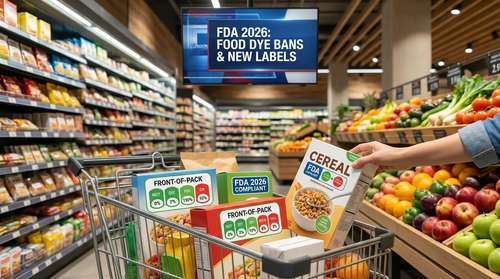
The days of hunting for nutritional data on the back of a box are numbered. The FDA is finalizing regulations for a mandatory front-of-package labeling FDA system designed to interrupt unhealthy purchasing habits at the shelf edge. The new “Nutrition Info” box will feature high-contrast, interpretive markers—classifying levels of saturated fat, sodium, and added sugars as “Low,” “Medium,” or “High.”
This standardized system addresses the confusion caused by inconsistent industry-created labels. By forcing brands to display a “High Added Sugar” warning on the front of cereal boxes and snack packs, the agency aims to drive reformulation across the processed food sector. The healthy food labeling standards update is expected to be finalized later this year, giving manufacturers a strict window to update their packaging. This transparency initiative is a cornerstone of the administration's strategy to combat the chronic disease epidemic by empowering shoppers with instant, unspinable data.
Closing the ‘GRAS’ Loophole
Perhaps the most technical yet impactful change is the overhaul of the GRAS substance regulation update. For decades, a regulatory loophole allowed food companies to “self-affirm” ingredients as “Generally Recognized as Safe” (GRAS) without ever notifying the FDA. This practice allowed thousands of chemicals to enter the food supply with little to no federal oversight.
Under the new 2026 priorities, the FDA will propose a rule requiring mandatory submission of safety data for any new substance claimed to be GRAS. This effectively ends the era of secret ingredients. “If you want to put a chemical in American food, you have to show us the science first,” stated FDA Commissioner Dr. Marty Makary. This shift is anticipated to trigger a wave of safety reviews for preservatives and additives that have flown under the radar for years, fundamentally altering how food tech companies bring new ingredients to market.
Operation Stork Speed: Safer Infant Formula
The deliverables also highlight a critical focus on the youngest consumers. Under the initiative dubbed “Operation Stork Speed,” the FDA is conducting the first comprehensive review of infant formula nutrient requirements 2026 in over 40 years. This modernization isn't just about nutrition; it includes setting strict new action levels for toxic heavy metals like cadmium and inorganic arsenic in baby foods.
These measures respond to recent alarming reports of heavy metal contamination in commercial baby products. By tightening these standards, the FDA is ensuring that the Make America Healthy Again nutrition promise starts from day one of life. The agency is also expanding its oversight of imported formulas to prevent the supply chain fragilities seen in previous years, ensuring that American families have access to formula that is both safe and nutritionally complete.
What This Means for Shoppers
For the average consumer, these changes will manifest as a cleaner, more transparent grocery store experience. Over the next 18 months, shoppers will start seeing “High Sugar” warnings on favorite treats and a disappearance of neon-bright artificial colors in candies and yogurts. While industry lobbyists have warned of potential price adjustments due to reformulation costs, health advocates argue that the long-term savings in public health costs—and the immediate benefit of toxic-free food—are invaluable.