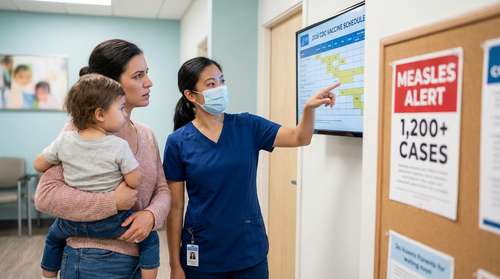
March 7, 2026 – The United States is facing a pediatric health emergency as federal data confirms the measles case count has surged past 1,200 in the first nine weeks of the year. The Centers for Disease Control and Prevention (CDC) reported 1,281 confirmed cases as of yesterday, marking the highest infection rate for children in over three decades. This 2026 measles outbreak is unfolding against a backdrop of confusion and controversy following the CDC’s January decision to overhaul the childhood immunization schedule, scaling back universal recommendations from 17 diseases to 11.
Pediatric Cases Surge Amidst Regulatory Shifts
Health officials are sounding the alarm as the childhood measles surge accelerates across 31 states, with significant clusters identified in Texas, Utah, and the Midwest. According to the latest figures, 93% of the infected patients are unvaccinated, and nearly a quarter of cases involve children under five years old. The speed of transmission has caught many communities off guard, threatening to strip the U.S. of its measles-elimination status.
Dr. Sarah Jenkins, a pediatric infectious disease specialist in Dallas, describes the situation on the ground as unprecedented. "We are seeing waiting rooms filled with anxious parents and sick children," she says. "The tragedy is that this was preventable. The new regulatory environment has created a false sense of security, and we are now seeing the direct consequences of dropped guards."
Understanding the New CDC Vaccine Schedule
The current crisis is inextricably checking linked to the new CDC vaccine schedule announced on January 5, 2026. Under the direction of the Department of Health and Human Services (HHS), the federal government reduced the number of universally recommended vaccines, aiming to align U.S. policy with nations like Denmark. While the MMR vaccination for children (Measles, Mumps, Rubella) remains on the "core" list of 11 protected diseases, the removal of other shots—including those for Hepatitis A, Hepatitis B, and Influenza—from the routine mandate has had a ripple effect.
Public health experts argue that the shift has eroded overall confidence in immunization. "When you tell parents that six previously standard vaccines are now optional or 'situational,' it naturally leads them to question the necessity of the remaining ones, including MMR," explains Dr. Jenkins. Data suggests that MMR vaccination for children has dropped by 8% nationally since the year began, creating the immunity gaps now being exploited by the virus.
The Role of Shared Clinical Decision Making
A central component of the new guidelines is the concept of shared clinical decision making (SCDM). Vaccines for diseases like Rotavirus and Meningococcal disease have been moved to this category, meaning they are no longer automatically administered but require a conversation between doctor and parent to weigh individual risks. While intended to empower families, the policy has reportedly overwhelmed pediatric clinics and left many parents unsure of what is truly necessary.
"SCDM is valuable in complex medicine, but for routine childhood protection, it is creating decision fatigue," notes the American Academy of Pediatrics (AAP) in a recent statement opposing the changes. "Parents are interpreting 'choice' as 'unnecessary,' and we are seeing a spillover effect where families are opting out of the core measles sequence as well."
Family Health Alerts 2026: What Parents Must Do
As the pediatric health emergency widens, experts are urging families to verify their immunization status immediately. Measles is one of the most contagious viruses known to science; a single infected child can spread the disease to up to 18 unprotected individuals. The virus remains active in the air for two hours after an infected person leaves a room.
Symptoms to Watch For:
- High fever (often >104°F)
- Cough, runny nose, and red eyes
- Tiny white spots inside the mouth (Koplik spots)
- A flat, red rash spreading from the hairline downward
Doctors emphasize that the new CDC vaccine schedule still recommends two doses of the MMR vaccine for all children—the first at 12-15 months and the second at 4-6 years. If your child has missed a dose due to the recent confusion or scheduling changes, catch-up vaccination is strongly advised to prevent severe complications like pneumonia and encephalitis.
Navigating the Path Forward
The months ahead will be critical for U.S. public health. With family health alerts 2026 issuing daily updates, the tension between federal policy changes and state-level responses is growing. Over 20 states have rejected the federal reduction, instructing their health departments to adhere to the traditional 17-disease schedule. For parents, the best course of action is to consult a trusted pediatrician who can navigate the noise and focus on the immediate safety of their children.
"The virus doesn't care about policy debates," warns Dr. Jenkins. "It finds the vulnerable. Our job is to make sure there are as few vulnerable children as possible."