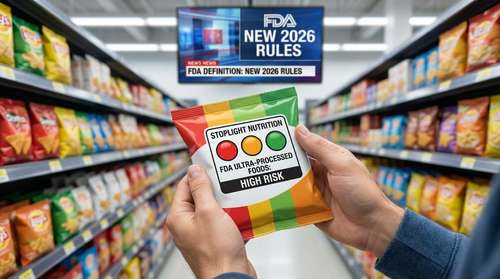
The grocery aisle is about to look drastically different. In a watershed moment for American public health, regulators officially released the first-ever FDA ultra-processed foods definition this week. The sweeping new framework establishes strict legal boundaries for what constitutes an industrially formulated food product. This isn't just a bureaucratic update—it is the direct catalyst for mandatory front-of-package food labels 2026, designed to bluntly warn shoppers about exactly what they are putting in their carts.
Decoding the Historic FDA Framework
For years, scientists and nutritionists relied on the international Nova classification system to categorize food processing, but the United States lacked a legally binding federal standard. That changed today. The new FDA ultra-processed foods definition specifically targets products engineered with ingredients you would never find in a home kitchen.
Under the new regulatory language, a product is classified as ultra-processed if it contains specific industrial additives—such as artificial flavors, synthetic colors, chemical emulsifiers, and non-nutritive sweeteners—combined with high thresholds of sodium, added sugars, or saturated fats. This concrete definition removes the ambiguity that food manufacturers have long exploited. Rather than just targeting standard junk food, the rule captures thousands of seemingly healthy items like flavored yogurts, mass-produced whole wheat breads, and popular protein bars that rely heavily on chemical thickeners and flavor enhancers.
Red, Yellow, Green: The Era of Stoplight Nutrition Labeling
The establishment of this definition immediately triggers the next phase of the government's regulatory overhaul: aggressive, highly visible packaging warnings. Moving away from the confusing black-and-white charts hidden on the back of boxes, the agency is rolling out mandatory stoplight nutrition labeling.
This intuitive system will force brands to display a prominent graphic on the front of the packaging. Ingredients are color-coded: green for healthy levels, yellow for caution, and a glaring red for dangerously high levels of sugars, fats, or sodium. If a product meets the legal criteria for an ultra-processed food, it will also carry a distinct warning icon. The front-of-package food labels 2026 mandate is expected to force massive industry reformulations, as major consumer packaged goods companies scramble to avoid branding their flagship snacks with a literal red light.
Why the Food Industry is Panicking
Industry pushback has been swift. Trade associations argue that the mandatory graphics villainize convenient foods, violate commercial free speech, and will ultimately drive up grocery costs. However, public health advocates point out that countries like Chile and Mexico successfully implemented similar warning signs years ago, which directly resulted in reduced consumption of sugary drinks and heavily engineered snacks.
The Architect: RFK Jr. Nutrition Policy and the MAHA Movement
You cannot separate this monumental policy shift from the political engine driving it. Since his confirmation, Health and Human Services Secretary Robert F. Kennedy Jr. has made overhauling the American diet a primary focus. This new definition is the cornerstone of the broader RFK Jr. nutrition policy, which aggressively targets the root causes of the nation's chronic disease epidemic.
The initiative falls squarely under the Make America Healthy Again health agenda, a priority of the current administration aimed at slashing the massive healthcare costs associated with metabolic dysfunction. By legally defining these engineered products, HHS and the FDA can now systematically target them. Future phases of the Make America Healthy Again health agenda are already slated to address the removal of these newly classified ultra-processed items from federally funded nutrition programs.
Combating Ultra-Processed Food Health Risks
Why the sudden urgency? The clinical data has become impossible to ignore. A mounting body of peer-reviewed research directly links the consumption of chemically altered ingredients to a severe spike in diet-related chronic diseases. The well-documented ultra-processed food health risks include skyrocketing rates of type 2 diabetes, cardiovascular disease, obesity, and even certain forms of cancer.
When food is broken down to its molecular base and reconstructed with synthetic emulsifiers, it bypasses the body's natural satiety signals. We overeat these products by design. Regulators are hoping that by slapping a bright red warning label on a box of modified cereal, shoppers will think twice before serving it to their children.
Shifting Back to Real Food Dietary Guidelines
As these regulations take full effect over the coming months, consumers have a unique opportunity to rethink their daily habits. You don't have to wait for the new packaging to arrive on shelves to make a change. The updated real food dietary guidelines urge Americans to prioritize whole, single-ingredient foods—think fresh vegetables, whole cuts of meat, legumes, and unprocessed grains.
Start reading ingredient lists with a critical eye. If a label reads like a chemistry textbook, it will almost certainly fall under the new federal definition. While the upcoming stoplight nutrition labeling will make identifying these products effortless, the ultimate goal is simple: return to eating real food and leave the industrial science experiments on the shelf.